ความสัมพันธ์ระหว่างวัฒนธรรมองค์กรและพลังเสริมสร้างอำนาจด้านจิตใจในนักฟุตบอลอาชีพไทย
Article Sidebar
Main Article Content
บทคัดย่อ
วัตถุประสงค์ เพื่อศึกษาความสัมพันธ์ระหว่างวัฒนธรรมองค์กรและพลังเสริมสร้างอำนาจด้านจิตใจในนักฟุตบอลอาชีพไทย รวมถึงเพื่อศึกษาความแตกต่างของระดับพลังเสริมสร้างอำนาจด้านจิตใจในนักฟุตบอลอาชีพไทยโดยจำแนกตามอายุงานของนักฟุตบอลอาชีพ
วิธีดำเนินการวิจัย ผู้วิจัยใช้วิธีวิจัยเชิงสำรวจ กลุ่มตัวอย่างนักฟุตบอลอาชีพไทยในไทยลีก ฤดูกาล 2017 จำนวน 246 คน ทำการเก็บรวบรวมข้อมูลโดยใช้แบบสอบถามจากงานวิจัยที่ผ่านมาและผ่านการตรวจสอบจากผู้เชี่ยวชาญ การวิเคราะห์การถดถอยพหุคูณและการทดสอบความแตกต่าง ANOVA ถูกนำมาใช้ในการวิเคราะห์สมมติฐานในการวิจัย
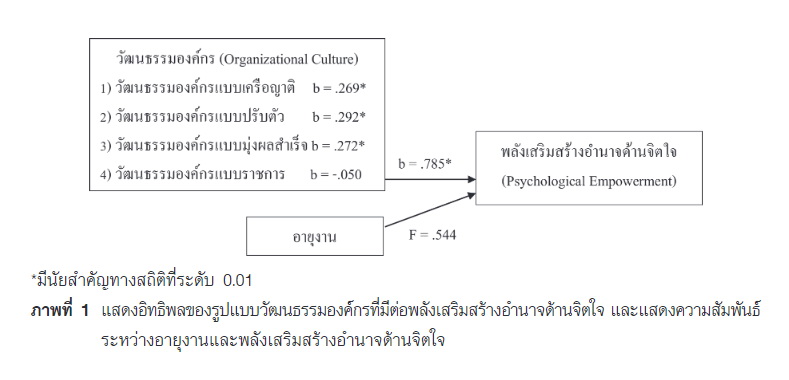
ผลการวิจัย พบว่าวัฒนธรรมองค์กรมีความสัมพันธ์เชิงบวกกับพลังเสริมสร้างอำนาจด้านจิตใจอย่างมีนัยสำคัญ และสามารถอธิบายความแปรปรวนของพลังเสริมสร้างอำนาจด้านจิตใจได้ร้อยละ 63.3 (= 0.633) ซึ่งวัฒนธรรมองค์กรมีค่าสัมประสิทธิ์การถดถอยเท่ากับ 0.785 เป็นไปตามสมมติฐานวิจัยที่ว่า วัฒนธรรมองค์กรมีความสัมพันธ์ทางบวกกับพลังเสริมสร้างอำนาจด้านจิตใจ เมื่อวิเคราะห์ลงไปในแต่ละแบบของวัฒนธรรมองค์กร พบว่า วัฒนธรรมองค์กรแบบปรับตัว วัฒนธรรมองค์กรแบบมุ่งผลสำเร็จ และวัฒนธรรมองค์กรแบบเครือญาติ มีความสัมพันธ์เชิงบวกกับพลังเสริมสร้างอำนาจด้านจิตใจในนักฟุตบอลอาชีพไทย อย่างไรก็ตาม ผลการวิจัยพบว่าระดับของพลังเสริมสร้างอำนาจด้านจิตใจในนักฟุตบอลอาชีพไทยโดยจำแนกตามอายุงานไม่มีความแตกต่างกันอย่างมีนัยสำคัญ ซึ่งไม่เป็นไปตามสมมุติฐานการวิจัยที่ว่าอายุงานแตกต่างกันส่งผลต่อระดับพลังเสริมสร้างอำนาจด้านจิตใจแตกต่างกัน
สรุปผลการวิจัย วัฒนธรรมองค์กรมีความสัมพันธ์เชิงบวกกับพลังเสริมสร้างอำนาจด้านจิตใจของนักฟุตบอลอาชีพไทย โดยแบบวัฒนธรรมองค์กรที่เหมาะสมกับพลังเสริมสร้างอำนาจด้านจิตใจของนักฟุตบอลอาชีพไทย เรียงตามลำดับ คือ วัฒนธรรมองค์กรแบบปรับตัว วัฒนธรรมองค์กรแบบมุ่งผลสำเร็จ และวัฒนธรรมองค์กรแบบเครือญาติ นอกจากนั้นระดับของพลังเสริมสร้างอำนาจทางด้านจิตใจของนักฟุตบอลอาชีพไม่สามารถอธิบายได้โดยอายุงานในสโมสร
Article Details
เอกสารอ้างอิง
Cameron, K. S., and Quinn, R. E. (1999). Diagnosing and Changing Organizational Culture. New York: Addison – Wesley Publishing Company.
Chaiwong, A. (2015). The Motivation effects on Thailand’s professional football players. Master’s Thesis, Chiang Mai University.
Chatpunyakul, C., and Tanchaisak, K. (2016). Psychological Empowerment and Innovative Behavior among Professional Football Team Staff in Thailand. Journal of Sports Science and Health, 17(3).
Chonwit, K. (2015). Antecedent and consequence of psychological empowerment of teacher in school under the Office of Basic Education Commission. Doctorate’s Thesis, Kasetsart University.
Garg, A. (2012). The Missing Link: The Role of Organizational Culture in Technology Change Management Communication. Master’s Thesis, University of Southern California.
Jaktheemongkol, V. (2005). Relationship between type of organizational culture and job satisfaction of employees of catering department of Thai airways international company limited at Donmuang international airport. Master’s Thesis, Valaya Alongkorn Rajabhat University under the Royal Patronage.
Kseanela, S. (2014). Organizational Culture Impact on Psychological Empowerment of Academic Staff. European Journal of Sustainable Development, 119-124.
Lorsuwannarat, T. (2003). Modern organization theory. Bangkok: Pimakson Limited Partnership.
Poolsawat, P. (2005). Organizational culture and teachers' organization service area 2. Master’s Thesis, Silpakorn University.
Sazgar, S., Hssaani, M., and Kabiri, A. (2015). Relationship between Psychological Empowerment and Job Satisfaction, Organizational Culture and Performance of Primary School Teachers in Public Schools of District I of Urmia city in academic years of 2013-2014. Arts & Humanities Journal, 7(2), 88-95.
Singnoi, C. (2004). Motivation to participate in sport of youth and club football players. Master’s Thesis, Burapha University.
Spreitzer, G. M. (1995). Psychological Empowerment in The Workplace: Dimensions, Measurement, and Validation. Academy of Management Journal, 38, 1442-1465.
Thomas, K. W., and Velthouse, B. A. (1990). Cognitive elements of empowerment. Academy of Management Review, 15(4), 666-681.
Yuwanon, P. (2009). Sport Management. Bangkok: Pimdeekarnpim Company.
