ผลของโปรแกรมการฝึกแบบวงจรที่มีต่อสมรรถภาพทางกายของนักเรียนเตรียมทหาร
Article Sidebar
Main Article Content
บทคัดย่อ
วัตถุประสงค์: เพื่อศึกษาผลของการฝึกแบบวงจรที่มีผลต่อสมรรถภาพทางกายในนักเรียนเตรียมทหาร
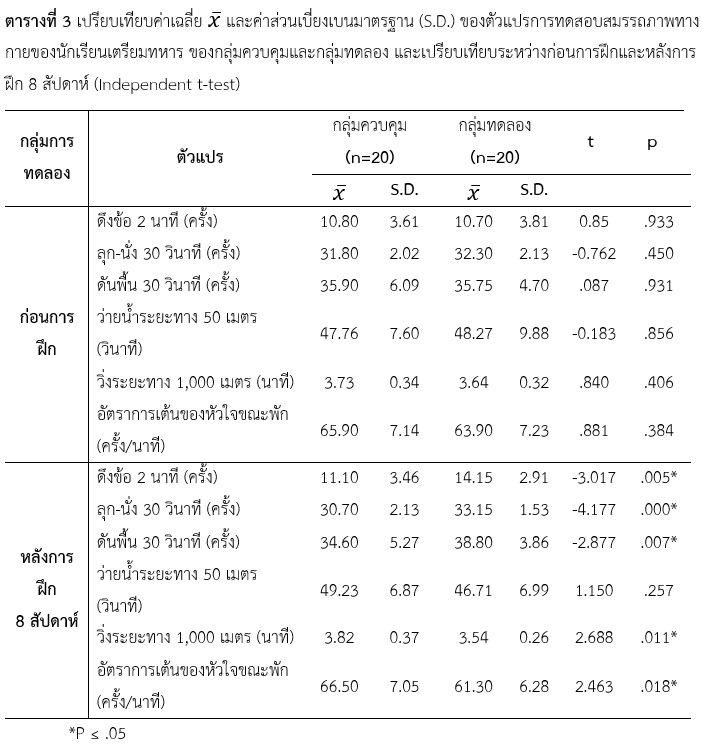
วิธีการดำเนินงานวิจัย: นักเรียนเตรียมทหารชั้นปีที่ 2 โรงเรียนเตรียมทหาร สถาบันวิชาการป้องกันประเทศ เพศชาย อายุระหว่าง 17–18 ปี จำนวน 40 คน แบ่งออกเป็น 2 กลุ่ม ได้แก่ กลุ่มทดลองได้รับการฝึกเสริมด้วยโปรแรมการฝึกแบบวงจร จำนวน 20 คน และกลุ่มควบคุมซึ่งดำเนินชีวิตประจำวันตามปกติ จำนวน 20 คน ฝึก 3 วันต่อสัปดาห์ เป็นระยะเวลา 8 สัปดาห์ ก่อนและหลังการฝึกทำการทดสอบสมรรถภาพทางกาย 5 รายการ ได้แก่ ดึงข้อ 2 นาที ลุก-นั่ง 30 วินาที ดันพื้น 30 วินาที ว่ายน้ำระยะทาง 50 เมตร และวิ่งระยะทาง 1,000 เมตร นำข้อมูลที่ได้มาวิเคราะห์ความแตกต่างระหว่างก่อนและหลังการฝึกด้วยการทดสอบค่าทีแบบรายคู่ และทดสอบค่าทีแบบอิสระ กำหนดระดับความมีนัยสำคัญทางสถิติที่ 0.05
ผลการวิจัย: กลุ่มทดลองมีค่าเฉลี่ยความสามารถในการดึงข้อและดันพื้นเพิ่มขึ้น และอัตราการเต้นของหัวใจขณะพักลดลงอย่างมีนัยสำคัญทางสถิติระดับ .05 ก่อนการฝึก และยังพบว่า ค่าเฉลี่ยความสามารถในการดึงข้อ ลุกนั่ง ดันพื้น เวลาที่ใช้ในการวิ่ง และอัตราการเต้นของหัวใจขณะพัก ดีขึ้นกว่ากลุ่มควบคุมภายหลังการฝึก
สรุปผลการวิจัย: การฝึกแบบวงจรสามารถพัฒนาประสิทธิภาพในการทำงานของระบบหัวใจและไหลเวียนเลือด ความแข็งแรงของกล้ามเนื้อ ความอดทนของกล้ามเนื้อ ได้ดีมากกว่าการฝึกกายบริหารของกองทัพบก บ่งชี้ว่าผลของโปรแกรมการฝึกแบบวงจรน่าจะนำมาใช้ทำการฝึกเพื่อพัฒนาสมรรถภาพทางกายของนักเรียนเตรียมทหาร ได้เป็นอย่างดี
Article Details

อนุญาตภายใต้เงื่อนไข Creative Commons Attribution-NonCommercial-NoDerivatives 4.0 International License.
เอกสารอ้างอิง
Department of The Army. (1950). FM 21-20 Physical Fitness Training.Washington, DC: Headquaters Department of The Army.
Krabuanrat, C. (2014). Science of Coaching. Bangkok: Sinthana copy Center Publishing.
Kravitz, L. (1996). The Fitness Professional’s Complete Guide to Circuits and Intervals. Idea Today, 14(1), 32-43.
Medical Division. (2015). Report of Medical Examination in Pre-Cadets. Nakhon Nayok: The Armed Forces Academies Preparatory School.
Nukeaw, A. and Boonrod, W. (2020). Effect of supplemented Muay Thai circuit training program on maximal oxygen uptake and physical performance in professional Muay Thai boxers. Journal of Sports Science and Health, 21(3), 355-367.
Panpiemras, K. (1971). Fiscal Policies for Developing Countries. Phra Nakhon: Amphon Pittaya.
Paoli, A., Pacelli, Q. F., Moro, T., Marcolin, G., Neri, M., Battaglia, G., et al. (2013). Effects of high-intensity circuit training, low-intensity circuit training and endurance training on blood pressure and lipoproteins in middle-aged overweight men. Lipids in Health and Disease. 12, 131.
Physical Education Division. (2017). Physical Exercise Guidebook for Pre-Cadets. Nakhon Nayok: The Armed Forces Academies Preparatory School.
Rattanakoses, R. (2008). Beginner Cycling Training. Bangkok: Suweeriyasan.
Royal Thai Army. (1954). FM 21-20 Army Physical Fitness Training. Phra Nakhon: Phra Nakhon Printery.
Saengow, S. (2008). The Effects of Circuit Training Program on Health – Related Physical Fitness in Overweight Children. Master’s Thesis, Faculty of Sports Science, Chulalongkorn University.Bangkok.
Suwannasing, P. (2013). Effects of Bodyweight Reststance Circuit Training on Health – Related Physical Fitness of Overweight Elementary School Students. Master’s Thesis, Faculty of Education, Chulalongkorn University.Bangkok.
Thavanvanichkul, P. (2015). Effects of Peer Group Circuit Training Program on Physical Fitness in Overweight Female Adolessents. Master’s Thesis, Faculty of Sports Science, Chulalongkorn University.Bangkok.
The Armed Forces Academies Preparatory School. (2008). Physical Exercise Guidebook for Pre-Cadets. Bangkok: National Defence Studies Institute.
The Armed Forces Academies Preparatory School. (2017). The Pre-Cadets’s Guidebook. Bangkok: Aroonkarnpim Ltd., Part.
