อิทธิพลของการรับรู้เรื่องความสอดคล้องระหว่างผู้แนะนำสินค้าที่เป็นนักกีฬาและสินค้ากีฬาที่มีต่อความตั้งใจซื้อ
Article Sidebar
Main Article Content
บทคัดย่อ
วัตถุประสงค์: เพื่อศึกษาการรับรู้ความสอดคล้องของผู้บริโภคที่มีต่อผู้แนะนำสินค้าที่เป็นผู้มีชื่อเสียงด้านกีฬาต่อสินค้าที่เกี่ยวกับกีฬา (Sport related product) และสินค้าที่ไม่เกี่ยวกับกีฬา (Non-sport related product) รวมถึงศึกษาความสัมพันธ์ระหว่างการรับรู้ความสอดคล้องของผู้แนะนำสินค้าและประเภทของสินค้าต่อความตั้งใจซื้อของผู้บริโภ
วิธีดำเนินการวิจัย: ผู้วิจัยใช้วิธีการวิจัยเชิงทดลองแบบสองกลุ่มวัดหลัง (Posttest-Only Design) แบ่งการทดลองออกเป็น 2 เงื่อนไข กลุ่มตัวอย่างที่ใช้ในการวิจัยเป็นนักศึกษาระดับปริญญาตรี จุฬาลงกรณ์มหาวิทยาลัย จำนวน 100 คน ทำการเก็บรวบรวมข้อมูลโดยใช้แบบสอบถามที่ผ่านการตรวจสอบจากผู้เชี่ยวชาญ นำผลที่ได้มาวิเคราะห์ค่าทางสถิติโดยหาค่าเฉลี่ย ส่วนเบี่ยงเบนมาตรฐาน การทดสอบค่า ที และใช้การวิเคราะห์สมการถดถอยเชิงเส้นอย่างง่าย (Simple linear regression)
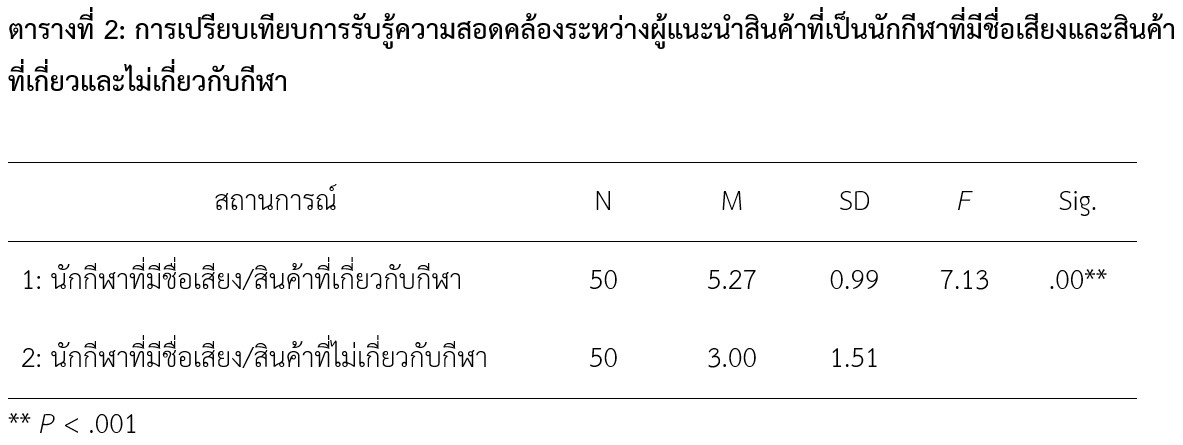
ผลการวิจัย: พบว่า โดยเฉลี่ยแล้วผู้เข้าร่วมการทดลองในเงื่อนไขที่ 1 (M = 5.27) รับรู้ความสอดคล้องมากกว่าผู้เข้าร่วมการทดลองในเงื่อนไขที่ 2 (M = 3) โดยค่าเฉลี่ยของการรับรู้ความสอดคล้องของ ทั้งสองกลุ่มแตกต่างกันอย่างมีนัยสำคัญทางสถิติ และการรับรู้ความสอดคล้องระหว่างผู้แนะนำสินค้าและประเภท สินค้าสามารถพยากรณ์ความตั้งใจซื้อได้อย่างมีนัยสำคัญทางสถิติที่ระดับ .01 และสามารถอธิบายความแปรปรวน ของความตั้งใจซื้อได้ร้อยละ 41.2 หรือกล่าวได้ว่าการรับรู้ความสอดคล้องมีอิทธิพลต่อความตั้งใจซื้อ
สรุปผลการวิจัย: ผู้เข้าร่วมการทดลองสามารถรับรู้ความสอดคล้องระหว่างผู้แนะนำสินค้าที่เป็นนักกีฬากับสินค้าที่มีความเกี่ยวข้องกับกีฬามากกว่าสินค้าที่ไม่มีความเกี่ยวข้องกับกีฬาและพบว่าความตั้งใจซื้อสินค้าของผู้เข้าร่วมการทดลองจะแปรผันตามการรับรู้ความสอดคล้องระหว่างผู้แนะนำสินค้ากับสินค้าในงานโฆษณา
Article Details

อนุญาตภายใต้เงื่อนไข Creative Commons Attribution-NonCommercial-NoDerivatives 4.0 International License.
เอกสารอ้างอิง
Boon, S. D., & Lomore, C. D. (2001). Admirer-celebrity relationships among young adults explaining perceptions of celebrity influence on identity. Human Communication Research, 27, 432-465.
Forbes. (2017). The world's highest-paid athletes. Retrieved October 19,2017 from https://www.forbes.com/athletes/list/#tab:overall
Hoyer, W. D., & Maclnnis, D. J. (2001). Consumer Behavior, (2nd ed.). Houghton Mifflin, Boston.
Julrattanamanee, C. (2015). The influence of celebrity athlete endorser on consumers purchase intention. Master of Business Administration Program in Business Administration, Faculty of Commerce and Accountancy, Chulalongkorn University, Bangkok.
Koernig, S. K., & Boyd, T. C. (2009). To catch a tiger or let Him go: The match-up effect and athlete endorsers for sport and non-sport brands. Sport Marketing Quarterly, 18(1), 25-37.
McCracken, G. (1989). Who is the celebrity endorser? cultural foundations of the endorsement process. Journal of Consumer Research, 16(3), 310-321.
Misra, S., & Beatty, S. E. (1990). Celebrity spokesperson and brand congruence: An assessment of recall and effect. Journal of Business Research, 21(2), 159-173.
Mongkolsiri, S. (2004). Celebrity Marketing. Higher Press, Bangkok.
Mowen, J. C., & Minor, M. (2001). Consumer Behavior: A Framework. Prentice-Hall, New Jersey.
Prasertsree, S. (2006). Celebrity and presenter. Master of Arts Program in advertise, Faculty of Journalism and Mass Communication, Thammasat University, Bangkok.
Till, B. D., & Busler, M. (2000). The match-up hypothesis: Physical attractiveness, expertise, and the role of fit on brand attitude, purchase intent and brand beliefs. Journal of Advertising, 14(3), 1-13.
Younghan, L., & Koo, J. (2015). Athlete endorsement, attitudes, and purchase intention: The interaction effect between athlete endorser-product congruence and endorser credibility. Journal of Sport Management, 29(5), 523-538.
