ประสบการณ์และมุมมองของผู้ดูแลต่อการจัดการแผลกดทับในผู้ป่วยกลุ่มเสี่ยงสูง: การศึกษาเชิงคุณภาพเพื่อพัฒนารูปแบบการพยาบาลต่อเนื่อง
คำสำคัญ:
แผลกดทับ, ผู้ดูแล, การพยาบาลต่อเนื่อง, การวิจัยเชิงคุณภาพบทคัดย่อ
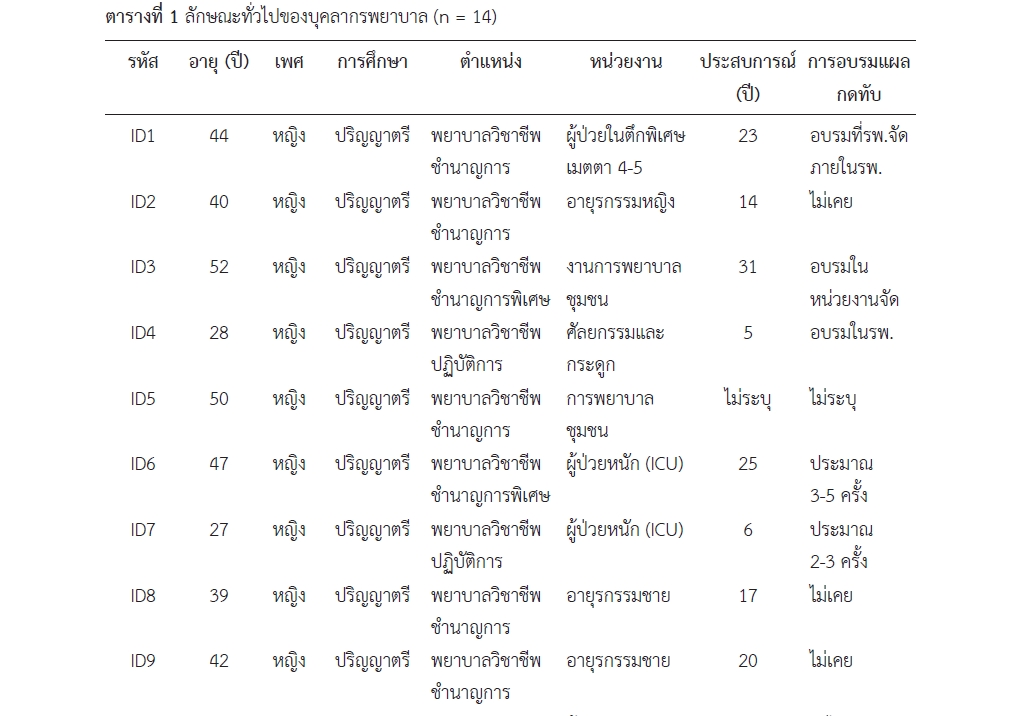
แผลกดทับยังคงเป็นตัวชี้วัดที่สำคัญของคุณภาพการพยาบาลและความปลอดภัยของผู้ป่วย แม้จะมีแนวปฏิบัติทางคลินิกและอุปกรณ์ลดแรงกด แต่ในสังคมผู้สูงอายุที่มีจำนวนผู้ป่วยพึ่งพิงเพิ่มสูงขึ้น ประกอบกับช่องว่างของการดูแลต่อเนื่องระหว่างโรงพยาบาลและชุมชน ล้วนเป็นปัจจัยที่ทำให้เกิดแผลกดทับซ้ำอยู่บ่อยครั้ง นอกจากนี้ ญาติผู้ดูแลมักต้องเผชิญภาวะทั้งทางด้านร่างกาย จิตใจ และเศรษฐกิจ โดยขาดการสนับสนุนที่เหมาะสม การวิจัยเชิงคุณภาพแบบพรรณนานี้จึงมีวัตถุประสงค์เพื่อศึกษาประสบการณ์และมุมมองของพยาบาลและญาติผู้ดูแลเกี่ยวกับการจัดการแผลกดทับ เพื่อพัฒนารูปแบบการพยาบาลต่อเนื่องที่สอดคล้องกับบริบทของโรงพยาบาลพนัสนิคม และประเมินผลตามตัวชี้วัดของโรงพยาบาล ผู้ให้ข้อมูลหลักจำนวน 22 คน ประกอบด้วยพยาบาลวิชาชีพ 14 คน และญาติผู้ดูแล 8 คน คัดเลือกกลุ่มตัวอย่างแบบเจาะจง ดำเนินการเก็บรวบรวมข้อมูลผ่านการสนทนากลุ่ม การสัมภาษณ์เชิงลึก และการบันทึกภาคสนาม ระยะเวลาเดือน กุมภาพันธ์ ถึง พฤษภาคม 2569 การวิเคราะห์เนื้อหาและวิเคราะห์แก่นสาระ
ผลการศึกษาพบ 4 Themes หลัก ได้แก่ 1) ความท้าทายเชิงระบบระหว่างมาตรฐานวิชาชีพกับข้อจำกัดหน้างาน 2) ภาระหลากมิติของผู้ดูแลทั้งกาย อารมณ์ และเศรษฐกิจ 3) ความรู้และการปฏิบัติที่คลาดเคลื่อน และ 4) ความต้องการระบบสนับสนุนและการพยาบาลต่อเนื่องที่ไร้รอยต่อ ผู้วิจัยได้สังเคราะห์สู่การสร้างพนัสโมเดลโดยเน้นการขับเคลื่อนผ่าน 5 องค์ประกอบหลัก: การเป็นหุ้นส่วนร่วมการดูแล ระบบการประเมินบแบบครบวงจร เครือข่ายการดูแลต่อเนื่อง การใช้ประโยชน์จากทรัพยากร การสนับสนุนแบบองค์รวมซึ่งเป็นรูปแบบที่เสนอจากผลการศึกษาและอาจนำไปประเมินความเหมาะสมในบริบทที่ใกล้เคียงต่อไป
เอกสารอ้างอิง
Boonmewiset, W., Sukbua, J., Boonmasri, P., & Nuntana, R. (2022). Development of nursing practice guidelines for pressure injury prevention in the Intensive Care Unit, Loei Hospital. Chaiyaphum Medical Journal, 42(2), 118–130.
Boonta, N. (2025). Development of nursing innovations to prevent pressure ulcers in critically ill infants. Phetchabun Medical Journal, 5(2), 35-48.
Chen, Y., Cai, T., Le, P., Zhang, L., Chen, Y., Wu, L., Chen, K., Yuan, C., & Lu, Y. (2025). Family caregivers' perceptions and challenges in the care of pressure injuries in daily life: A qualitative study. BMC geriatrics, 25(1), 490. https://doi.org/10.1186/s12877-025-06114-1.
Chiaprasert, S., Dumsangsawad, N., Yok-in, J., Junwin, B. (2020). Pressure sore prevention of person with cerebrovascular disease at home: The caregiver development in Thailand 4.0 era. The Journal of Faculty of Nursing Burapha University, 28(1), 108–115.
Han, C., Yang, F., & Liu, L. (2024). Effectiveness of continuous care interventions in elderly patients with high-risk pressure ulcers. Alternative Therapies in Health and Medicine, 30(3), 118-123.
Jafari, M., Nassehi, A., Rafiei, H., Taqavi, S., Karimi, Y., Ilaghinezhad Bardsiri, T., & Arboledas Bellón, J. (2021). Pressure injury prevention knowledge among family caregivers of patients needing home care. Home Healthcare Now, 39(4), 203–210.
Jakucs, C. (2025). Wound assessment: Understanding and using the TIMERS tool. Retrieved from https://blog.wcei.net/timers-wound-care-strategies-wound-bed-
Jiamthanopchai, R., & Saenwiangchan, S. (2018). Nursing practice guidelines for the prevention of pressure ulcers. Thai Journal of Nursing, 67(4), 53–61. https://he02.tci-thaijo.org/index.php/TJN/article/view/204018.
Juntakam, S., Chaiprom, B., Phosom, W., Taiwong, A., & Phuakphan, W. (2023). Develop an innovative Safety Wheel: which rotates to recognize for enhancing nursing implementation in preventing pressure sores in patients infected with the novel coronavirus disease 2019 Cohort ward, Maha sarakham hospital. Mahasarakham Hospital Journal, 20(2), 138-148.
Juntaramano, S., Nithi-Uthai, B., & Pipattanawong, W. (2025). Development of latex pressure-redistribution mattresses. Nursing Journal CMU, 52(4), 334–342.
Kittipovanon, S., & Prachakul, R. (2022). A model for palliative care through case management. Journal of Environmental Education, Medicine and Health, 7(4), 64–74.
Lei, H., Zhong, K., Chen, Z., Li, P., Chen, J., Li, H., Cheng, B., & Zhou, J. (2026). Global burden of pressure ulcer and contributing factors from 1990 to 2021: A systematic analysis with forecasts to 2035. Advances in Wound Care, 15(6), 370–380. https://doi.org/10.1089/wound.2025.0021.
Mamom, J., & Daovisan, H. (2022). Caregiver burden in bedridden elderly care: A comprehensive systematic review. International Journal of Nursing Sciences, 9(3), 390–400. https://doi.org/10.1016/j.ijnss.2022.06.002
Osaele, O. E. (2024). Pressure ulcer prevention among elderly bedridden patient. Novia University of Applied Sciences.
Sithichak, P. (2024). API services for classifying pressure ulcer risk levels in bedridden patients. Journal of Innovative Technology Research, 8(2), 35–48.
Somsukjeerawat, P. (2021). Effects of discharge planning and continuous care for sub-acute stroke patients [Master’s thesis, Chulalongkorn University].
Development of a 6-stage pressure injury simulation model innovation. Journal of the Association of Nursing and Health Innovation, 1(1), e4151.
Vos-Draper, T., Vinoski Thomas, E., Graybill, E., Morrow, M., Jordan, K. A., Manley, P. R., & Sonenblum, S. E. (2025). Stakeholder Perspectives on mHealth Technologies to Prevent Sitting-Acquired Pressure Injuries in Long-Term Care Facilities: Mixed Methods
Study. JMIR formative research, 9, e59590. https://doi.org/10.2196/59590.
ดาวน์โหลด
เผยแพร่แล้ว
รูปแบบการอ้างอิง
ฉบับ
ประเภทบทความ
สัญญาอนุญาต

อนุญาตภายใต้เงื่อนไข Creative Commons Attribution-NonCommercial-NoDerivatives 4.0 International License.