ปัจจัยทำนายความรู้สึกต่อความสามารถในการเป็นบิดามารดาหลังคลอดบุตรคนแรก
คำสำคัญ:
ความรู้สึกต่อความสามารถในการเป็นบิดามารดา, บิดามารดาครั้งแรก, ความสัมพันธ์คู่สมรส, การร่วมเลี้ยงดูบุตรของบิดามารดาบทคัดย่อ
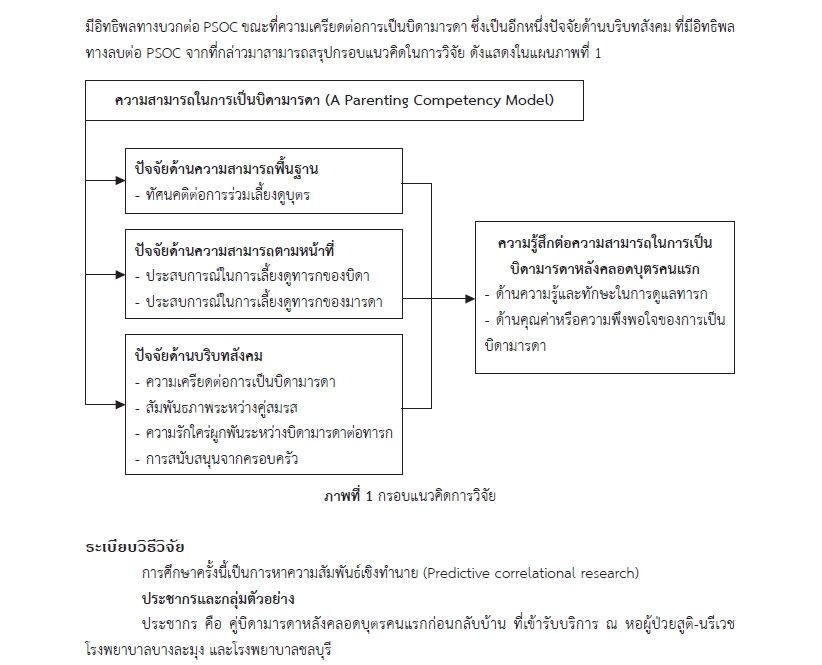
ความรู้สึกต่อความสามารถในการเป็นบิดามารดา (Parenting Sense of Competence: PSOC) เป็นตัวบ่งชี้สำคัญของความเชื่อมั่นของบิดามารดาในการดูแลบุตร การวิจัยครั้งนี้เป็นการศึกษาความสัมพันธ์เชิงทำนาย เพื่อศึกษาปัจจัยที่สามารถทำนายความรู้สึกต่อความสามารถในการเป็นบิดามารดาหลังคลอดบุตรคนแรก กลุ่มตัวอย่างคือบิดามารดาหลังคลอดบุตรคนแรก จำนวน 108 คู่ จากหอผู้ป่วยสูติ-นรีเวช โรงพยาบาลในจังหวัดชลบุรี เก็บรวบรวมข้อมูลโดยให้คู่บิดามารดาตอบแบบสอบถามร่วมกัน ได้แก่ ข้อมูลส่วนบุคคล ทัศนคติต่อการร่วมเลี้ยงดูบุตร ความเครียดต่อการเป็นบิดามารดา สัมพันธภาพระหว่างคู่สมรส ความรักใคร่ผูกพันระหว่างบิดามารดากับทารก การสนับสนุนจากครอบครัว และความรู้สึกต่อความสามารถในการเป็นบิดามารดา เครื่องมือมีค่าความเชื่อมั่นระหว่าง .80–.90 วิเคราะห์ข้อมูลด้วยสถิติพรรณนาและการวิเคราะห์ถดถอยพหุคูณแบบมาตรฐาน
ผลการวิจัยพบว่า กลุ่มตัวอย่างมีคะแนนเฉลี่ย PSOC เท่ากับ 90.26 (SD = 4.27) อยู่ในระดับสูง ตัวแปรทั้ง 7 ตัวสามารถร่วมกันทำนาย PSOC ได้ร้อยละ 21.6 (R² = .216, F7,100 = 3.942, p < .001) โดยสัมพันธภาพระหว่างคู่สมรส การสนับสนุนจากครอบครัว และความรักใคร่ผูกพันระหว่างบิดามารดาต่อทารกมีความสัมพันธ์ทางบวกกับ PSOC อย่างมีนัยสำคัญ อย่างไรก็ตาม มีเพียงตัวแปรสัมพันธภาพระหว่างคู่สมรสที่สามารถทำนาย PSOC ได้อย่างมีนัยสำคัญ (ꞵ = .306, t = 3.169, p < .01)
ผลการวิจัยชี้ให้เห็นว่า สัมพันธภาพระหว่างคู่สมรสที่ดีจะนำไปสู่ระดับความรู้สึกมีความสามารถในการเป็นบิดามารดา (PSOC) ที่สูงขึ้น เนื่องจากคู่สมรสมีการสนับสนุนทางอารมณ์ซึ่งกันและกัน มีการแบ่งบทบาทการดูแลบุตร และการปรับตัวต่อบทบาทบิดามารดา ส่งผลให้บิดามารดาเกิดความมั่นใจ ความพึงพอใจ และการรับรู้ถึงความสามารถของตนในการเลี้ยงดูบุตร ดังนั้นการส่งเสริมสัมพันธภาพระหว่างคู่สมรสมีความสำคัญต่อการเสริมสร้างความมั่นใจของบิดามารดาในการเลี้ยงดูบุตร
เอกสารอ้างอิง
Barabach, L., Ludington-Hoe, S. M., Dowling, D., & Lotas, M. (2017). Role of baby-friendly hospital care in maternal role competence. Nursing for Women’s Health, 21(2). 96-107.
Chaiteeka, K., Sriarporn, P., & Deeluea, J. (2021). Effect of social support on stress among first-time fathers. Nursing Journal, 48(4). 202-216. [In Thai]
Chung, F. F., Wan, G. H., Kuo, S. C., Lin, K. C. & Liu, H. E. (2018). Mother–infant interaction quality and sense of parenting competence at six months postpartum for first-time mothers in Taiwan: A multiple time series design. BMC Pregnancy and Childbirth, 18. 365. https://doi.org/10.1186/s12884-018-1979-7.
Dincer, D., & Tunc, E.B. (2023). Parental competence, parenting stress, family harmony, and perceived available support among mothers with children aged 3-6 years. Research on Education and Psychology (REP), 7(Special 2). 215-241. https://doi.org/10.54535/rep.1353500.
Huang, L., Wang, X. j., Liu, G. h., Li, X. t., Zhang, Y. h., Zhao, B. y., & Hu, R. f. (2023). Parenting sense of competence among chinese parents of premature infants: a cross sectional study. BMC Pregnancy and Childbirth, 23(399). 1-10. https://doi.org/10.1186/s12884-023-05703-5.
Johnson, B. D., Berdahl, L. D., Horne, M. M., Richter, E. A., & Walters, M.-g. A. (2014). A parenting competency model. Parenting, 14. 120-192.
Kamu-then, C. (2018). Selected factors related to sleep duration in preterm infant after discharge from hosital (Master’s thesis). Chulalongkorn University, Bangkok, Thailand.
Khampila, W., Supavititpatana, B., & Chaloumsuk, N. (2019). Self-esteem, marital relationship, and parenting stress of first-time adolescent mothers. Journal of Nursing and Health Care, 37(1). 98-107. [In Thai]
Molano, N., León, E., Jiménez-Morago, J. M., & Camacho, C. (2023). Quality ofInter-actions, children’s psychological adjustment and parental stress in -foster families: The mediating role of parental sense of competence. Journal of Child and Family Studies, 32(11). 3601-3611.https://doi.org/10.1007-/s10826-023-02578-0.
Nunchai, J., Sriarporn, P., & Chareonsanti, J. (2016). Factors related to depression among Thai fathers. Nursing Journal, 43(Supplement). 59-70. [In Thai]
Nunes, C., Ayala-Nunes, L., Ferreira, L. I., Pechorro, P., Freitas, D., Martins, C., & dos Santos, R. (2022). Parenting sense of competence: Psychometrics and invariance among a community and an at-risk samples of portuguese parents. Healthcare, 11. 1-13. https://doi.org/10.3390/healthcare1101001
Pornsawat. D. (2010). Spouse support, family support and selected personal factors Influencing maternal role attainment in adolescent mothers (Master’s thesis). Burapha University, Chonburi, Thailand.
Sriarporn, P., Prasitwatanasare, P., Ruksakul, N., & Chaiteeka, K. (2021). Stress in first-time fathers: Role of nurse-midwife. Nursing Journal, 48(2). 283-294. [In Thai]
Suebanun, S., Tachasuksri, T., & Chuahorm, U. (2024). Factors predicting postpartum depression among first – time mothers. Nursing Journal of the Ministry of Public Health, 34(3). 68-81. [In Thai]
Suwansujarid, T. (2013). Development of the father involvement model during pregnancy and neonatal period (Doctor dissertation). Mahidol University, Bangkok, Thailand.
Suwansujarid, T., Vatanasomboon, P., Gaylord, N., & Lapvongwatana, P. (2013). Validation of the parenting sense of competence scale in fathers: Thai version. The Southeast Asian Journal Tropical Medicine Public Health, 44(5), 916-926.
Tohme, P. & Abi Habib, R. (2022). Correlates of work productivity and maternal competence after having a baby: The roles of mother-infant bonding and maternal subjective experiences. BMC Women's Health, 22. https://doi.org-/10.1186/s12905-022-01958-w.
Yan, T. & Hou, Y. (2023). The effect of parenting sense of competence on emotional and behavioral adjustment of children with special education needs: A chain mediating model. ECNU Review of Education. 1-18. https://doi.org/10.1177/20965311231167196.
ดาวน์โหลด
เผยแพร่แล้ว
รูปแบบการอ้างอิง
ฉบับ
ประเภทบทความ
สัญญาอนุญาต

อนุญาตภายใต้เงื่อนไข Creative Commons Attribution-NonCommercial-NoDerivatives 4.0 International License.