ปัจจัยที่มีความสัมพันธ์กับการรับรู้สมรรถนะแห่งตน และพฤติกรรมการช่วยเหลือผู้ประสบอุบัติเหตุจากการท่องเที่ยวทางทะเล ของผู้ประกอบการแนวชายฝั่ง ในเขตอำเภอเมือง จังหวัดชลบุรี
คำสำคัญ:
การรับรู้สมรรถนะแห่งตน, พฤติกรรมการช่วยเหลือผู้ประสบอุบัติเหตุ, การท่องเที่ยวทางทะเล, แนวชายฝั่งบทคัดย่อ
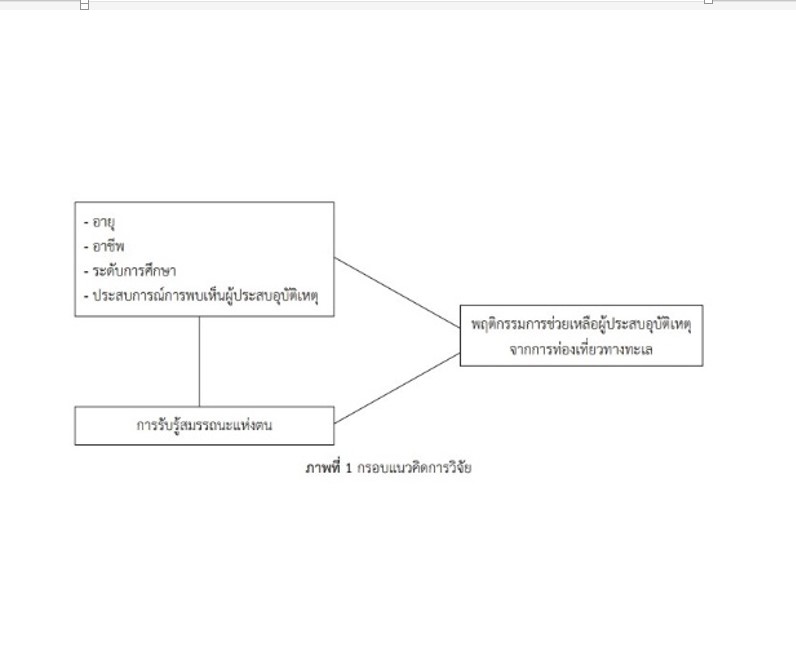
การวิจัยเชิงสำรวจนี้มีวัตถุประสงค์เพื่อศึกษาปัจจัยที่มีความสัมพันธ์กับการรับรู้สมรรถนะแห่งตน และพฤติกรรมการช่วยเหลือผู้ประสบอุบัติเหตุจากการท่องเที่ยวทางทะเล กลุ่มตัวอย่างได้แก่ ผู้ประกอบการตามแนวชายฝั่ง ในเขตอำเภอเมือง จังหวัดชลบุรี จำนวน 345 คน ซึ่งได้มาด้วยการสุ่มแบบหลายขั้นตอน เครื่องมือที่ใช้ในการเก็บรวบรวมข้อมูล ประกอบด้วย แบบสอบถามข้อมูลส่วนบุคคล การรับรู้สมรรถนะแห่งตนของผู้ประกอบการตามแนวชายฝั่ง ประสบการณ์การพบเห็นผู้ประสบอุบัติเหตุ และพฤติกรรมการช่วยเหลือผู้ประสบอุบัติเหตุจากการท่องเที่ยวทางทะเล ซึ่งมีค่าสัมประสิทธิ์แอลฟ่าของครอนบาคเท่ากับ .86 .78 และ .93 ตามลำดับ วิเคราะห์ข้อมูลด้วยสถิติพรรณนา สถิติสัมประสิทธ์สหสัมพันธ์ของเพียร์สัน และสถิติการวิเคราะห์ความแปรปรวนทางเดียว
ผลการวิจัยพบว่า กลุ่มตัวอย่างเป็นผู้มีประสบการณ์การพบเห็นผู้ประสบอุบัติเหตุจากการท่องเที่ยวทางทะเลจำนวน 262 คน คิดเป็นร้อยละ 75.94 มีจำนวนประสบการณ์การพบเห็นผู้ประสบอุบัติเหตุเฉลี่ย 3.29 (SD= 2.81) การรับรู้สมรรถนะแห่งตนของผู้ประกอบการตามแนวชายฝั่งอยู่ในระดับน้อย (M = 1.19, SD= 0.61) และเคยมีพฤติกรรมการช่วยเหลือผู้ประสบอุบัติเหตุ 243 คน คิดเป็นร้อยละ 70.43 โดยมีพฤติกรรมการช่วยเหลือผู้ประสบอุบัติเหตุอยู่ในระดับน้อย (M = 1.37, SD = 0.71) เมื่อวิเคราะห์ความสัมพันธ์ พบว่า อายุมีความสัมพันธ์ทางบวกระดับน้อยกับการรับรู้สมรรถนะแห่งตนอย่างมีนัยสำคัญทางสถิติ (r= .22, p< .001) และมีความสัมพันธ์ทางลบในระดับน้อยกับพฤติกรรมการช่วยเหลืออย่างมีนัยสำคัญทางสถิติ (r= -.16, p< .05) ส่วนประสบการณ์การพบเห็นผู้ประสบอุบัติเหตุมีความสัมพันธ์ทางบวกระดับปานกลางกับการรับรู้สมรรถนะแห่งตน และพฤติกรรมการช่วยเหลืออย่างมีนัยสำคัญทางสถิติ (r=.47, p<.001; r= 41, p<.001 ตามลำดับ) สำหรับการรับรู้สมรรถนะแห่งตนมีความสัมพันธ์ทางบวกระดับปานกลางกับพฤติกรรมการช่วยเหลืออย่างมีนัยสำคัญทางสถิติ (r=.60, p<.001) เมื่อเปรียบเทียบความแตกต่างของค่าเฉลี่ย พบว่า ระดับการศึกษาที่แตกต่างกันมีค่าเฉลี่ยการรับรู้สมรรถนะแห่งตน และพฤติกรรมการช่วยเหลือแตกต่างกันอย่างมีนัยสำคัญทางสถิติ (F= 25.77, p<.001; F= 8.39, p< .001ตามลำดับ) กลุ่มผู้ประกอบการที่แตกต่างกันมีค่าเฉลี่ยการรับรู้สมรรถนะแห่งตนแตกต่างกันอย่างมีนัยสำคัญทางสถิติ (F= 4.41, p < .05) ผลการวิจัยครั้งนี้มีข้อเสนอแนะว่า พยาบาลสามารถนำผลการวิจัยไปใช้เป็นข้อมูลในการพัฒนาโปรแกรมการฝึกอบรมทักษะในการช่วยเหลือเบื้องต้น โดยเน้นการส่งเสริมการรับรู้สมรรถนะแห่งตน
เอกสารอ้างอิง
Bandura, A. (1997). Self-efficacy: The exercise of control. New York: W. H. Freeman.
Burapha University Hospital. (2020). Tourism marine accidental data in Burapha University hospital. Chon Buri: Medical Record Audit Burapha University Hospital. (in Thai)
Department of Marine and Coastal Resources. (2017). Maritime zone. Retrieved from https://km.dmcr.go.th/c_54/d_88 (in Thai)
Dewey, J. (1938). Experience and education. New York: Macmillan.
Inteekred, J., Chuawanlee, W., & Choochom, O. (2010). The relations of psychological charecteristics social situation and work efficiency of rescue volunteers from Ruamkatanyu Foundation in Bangkok. Journal of Behavioral Science for Development, 2(1), 55-64. (in Thai)
Jantarapimol, Y. (2007). Health status and healthp preventive behaviors among rubber plantation workers. Master’s Thesis, Occupational Health Nursing, Faculty of Nursing, Chiang Mai University. (in Thai)
Lanmeshow, S., & Lwanga, S. K. (1990). Adequacy of sample size in health studies. New York: John Wiley & Sons.
National Institute of Emergency Medicine. (2019). Maritime and aquatic life support guidelines manual. Bangkok: Ultimat Printing. (in Thai)
Punlamai, C. (2007). Accident-risk behaviors and related factors among seafood canning workers. Master’s Thesis, Occupational Health Nursing, Faculty of Nursing, Chiang Mai University. (in Thai)
Saen Suk Town Municipality. (2016). Entrepreneur group data along the coastal in Mueang district, Chon Buri province. Chon Buri: Saen Suk Town Municipality. (in Thai)
Sennunt, K., Tosingha, O., & Sindhu, S. (2008). Emergency resuscitation in trauma patients: A literature analysis. Thai Journal of Nursing Council, 23(3), 26-39. (in Thai)
Simsiriwat, W., Junprasert, S., & Krungkraipetch, N. (2017). Effects of self-efficacy promotion on knowledge, perceived self-efficacy and promoting thalassemia control behavior among Bangkok health volunteers. Journal of Faculty of Nursing Burapha University, 25(2), 94-104. (in Thai)
Singmethakul, K. (2007). The working effectiveness of Poh Teck Tung Foundation's volunteers rescue team after being trained for the first-aid basic skill before hospital. Master’s Thesis, Social Sciences for Development, Dhonburi Rajabhat University. (in Thai)
Sirited, P., & Thammaseeha, N. (2019). Self-efficacy theory and self-healthcare behavior of the elderly. Journal of The Royal Thai Army Nurses, 20(2), 58-65. (in Thai)
Sumanit, S., Pookboonmee, R., Santati, S., & Phumonsakul, S. (2011). Effects of self-efficacy promotion on perceived self-efficacy of caregivers participating in care provided to critically ill children. Ramathibodi Nursing Journal, 17(1), 63-74.
Suppanaray, N., Phoyen, K., & Wongsawang, N. (2017). Factors effecting pre-hospital emergency operations among emergency medical responders of Ratchaburi Province. Medical Journal, 36(3), 118-128. (in Thai)
Tourism Authority of Thailand. (2019). Chonburi travel. Bangkok: Tourism Authority of Thailand. (in Thai)
Wannathanom, C. (2009). Tourism industry. Bangkok: Threelada. (in Thai)
Wichianprapha, T., Homsin P., & Srisuriyawet, R. (2012). Factors affecting health behaviors of health volunteers, Chanthaburi province. The Public Health Journal of Burapha University, 7(2), 53-68. (in Thai)
Yamane, T. (1973). Statistics: An introductory analysis. (3rded.). New York: Harper and Row Publications.
ดาวน์โหลด
เผยแพร่แล้ว
รูปแบบการอ้างอิง
ฉบับ
ประเภทบทความ
สัญญาอนุญาต

อนุญาตภายใต้เงื่อนไข Creative Commons Attribution-NonCommercial-NoDerivatives 4.0 International License.