Psychological Flexibility, Purpose of Life, and Coping with Problem among University Students in Eastern Thailand: A Qualitative Study
Keywords:
Psychological Flexibility, Purpose of Life, University students, coping with problem, thematic qualitative analysisAbstract
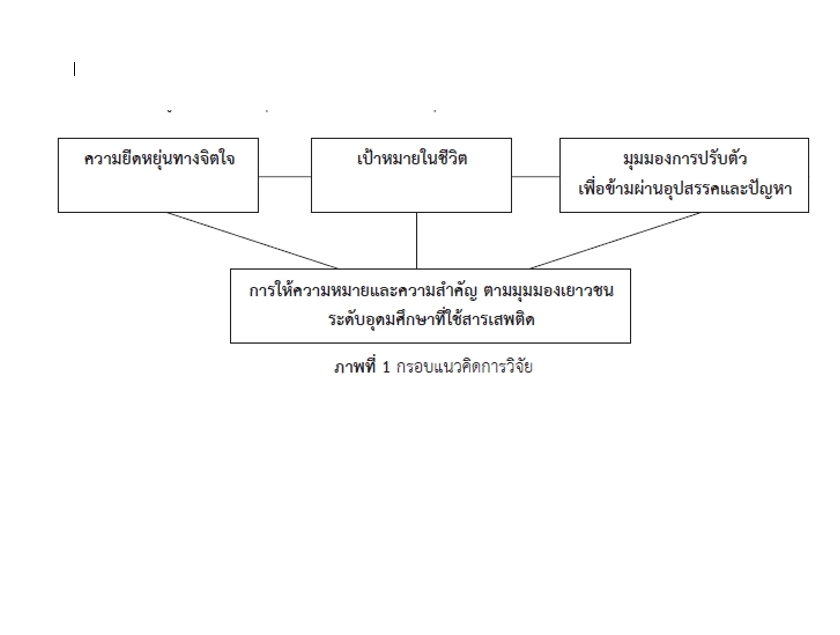
This descriptive qualitative study explored university students' perceptions of psychological flexibility, life purpose, and coping mechanisms, particularly among students who use substances. Eleven participants, aged 20-23, from higher education institutions in Eastern Thailand, were selected via purposive sampling. Data were gathered through in-depth interviews, each lasting 45-60 minutes, conducted between February and March 2024. The interview guide, developed by the researcher, was validated by experts for content accuracy. Data were analyzed using thematic content analysis, coding, and identifying key themes.
The findings revealed that students defined psychological flexibility as the ability to release negative thoughts and adapt to challenges, which they viewed as essential for success in higher education. Their sense of life purpose revolved around fostering creativity, building meaningful lives, strengthening family bonds, and contributing to collective well-being. Personal growth, resilience, skill development, and goal-setting were highlighted as integral to overcoming adversity. In terms of coping strategies, students identified three main approaches: using substances to manage stress, enduring suffering to promote personal growth, and practicing detachment from distressing thoughts.
These insights can inform the creation of substance use prevention programs for university students, emphasizing strengthening psychological flexibility, life purpose, and problem-solving skills. Nurses and educators may incorporate these findings into interventions to promote effective stress management and reduce substance abuse in academic environments.
References
Arslan, G. (2023). Dysfunctional parenting and emotional problems and substance misuse: Enhancing psychological flexibility in college students. Journal of Ethnicity in Substance Abuse, 1-17. https://doi.org/10.1080/15332640.2023.2237930
Aslan, S., Çinar, E., Ertürk, N. E., & Baysal, P. (2023). Investigation of the relationship between rational drug use and healthy lifestyle behaviours of university students. Global Health Promotion, 30(3), 23-30. doi:10.1177/17579759221134054
Ball, I., Banerjee, M., Holliman, A., & Tyndall, I. (2024). Investigating success in the transition to university: A systematic review of personal risk and protective factors Influencing academic achievement. Educational Psychology Review, 36(2), 52. doi:10.1007/s10648-024-09891-0.
Balthip, K., Pasri, P., Suwanphahu, B., McSherry, W., & Kritpracha, C. (2022). Effect of a purpose in life program on the wellness of Southern Thai adolescents. Journal of Health Research, 36(2), 265-274. doi:10.1108/JHR-04-2020-0102
Bunthae, S. (2022). Survey on attitudes and behaviors toward drug use: A 2022 case study of individuals aged 18-65 across 20 provinces nationwide. Retrieved from https://cads.in.th/cads/media/upload/1694587964-Report_Substance%20Abuse%202022.pdf
Burke, L., Dawson, K., Flack, W. F., O’Higgins, S., McIvor, C., & MacNeela, P. (2023). Alcohol, drug use and experiences of sexual violence victimisation among first-year college students in Ireland. Journal of Sexual Aggression, 1-18. doi:10.1080/13552600.2023.2216221
Dallas, J. C., Jullamate, P., Vatanasin, D., Moungkum, S., Nadarajan, S., & Krungkraipetch, N. (2023). Resilience and influencing factors among youths undergoing substance abuse treatment in Thailand: A cross-sectional study. SAGE Open Nursing, 9, 23779608231157986. doi:10.1177/23779608231157986.
Detchaiyot, P., Vatanasin, D., & Dallas, J. C. (2021). Factors predicting intention toquit substance abuseamong youth receiving substance abuse treatment. BCNNON Health Science Research Journal, 15(2), 37–49. [in Thai]
Gasa, H., Mkhize, S., Shumba, K., Cinini, S. F., & Gopal, N. (2022). Risk factors of substance abuse among university students: An exploratory study. International Journal of Criminology and Sociology, 11, 15-27. doi:10.6000/1929-4409.2022.11.03.
Hayes, S. C., Strosahl, K. D., & Wilson, K. G. (2012). Acceptance and commitment therapy: The process and practice of mindful change (2nd ed.). New York: Guilford Press.
Liamputtong, P. (2019). Qualitative research methods (5th ed.). Docklands, Vic: Oxford University Press.
Luthar, S. S., & Cicchetti, D. (2000). The construct of resilience: Implications for interventions and social policies. Dev Psychopathol, 12(4), 857-885. doi:10.1017/s0954579400004156.
Machell, K. A., Disabato, D. J., & Kashdan, T. B. (2016). Buffering the negative impact of poverty on youth: The power of purpose in life. Social Indicators Research, 126(2), 845-861. doi:10.1007/s11205-015-0917-6.
Nudla, P., Balthip, K., & Pasri, P. (2022). Perception of purpose in life among the fourth-year nursing students. Journal of Research in Nursing-Midwifery and Health Sciences, 42(1), 1-10.
Pinthong, C. (2021). The impact of tourism development on residents’ community life in Chanthaburi province, Thailand. Research and Development Journal Loei Rajabhat University, 16(58), 34-45. [in Thai]
Pleerux, N. (2020). Distribution of alcohol outlets around educational institutes in Chon Buri province. Journal of Science and Technology Mahasarakham University, 39(1), 90-102. [in Thai]
Pradeep Kumar, P. C., Antony, S., Ammapattian, T., Kishor, M., & Sadashiv, M. (2024). Substance use prevalence and associated factors among Indian college students: A narrative review. Archives of Mental Health, 25(1), 77-84.
Ryff, C. D., & Singer, B. (1998). The role of purpose in life and personal growth in positive human health. In The human quest for meaning: A handbook of psychological research and clinical applications (pp. 213-235). Mahwah, NJ, US: Lawrence Erlbaum Associates
Snijder, M., Stapinski, L., Lees, B., Ward, J., Conrod, P., Mushquash, C., . . . Newton, N. (2020). Preventing substance use among indigenous adolescents in the USA, Canada, Australia and New Zealand: A systematic review of the literature. Prevention Science, 21(1), 65-85. doi:10.1007/s11121-019-01038-w.
Srichan, C., Yingsoong, A., & Pisitsungkagarn, K. (2023). The effects of acceptance and commitment group therapy on social anxiety, fears of negative evaluation, and psychological flexibility: an initial study in Thai female undergraduates. International Journal for the Advancement of Counselling, 45(4), 687-707. doi:10.1007/s10447-023-09524-1.
Srisatidnarakul, B. (2010). The methodology in nursing research (5th ed.). Bangkok: U & I tnter media.
Tariq, S. A., Afzal, M., Khan, R. M., Tariq, M., & Maqsood, A. (2023). A cross sectional study on the risk factors of illicit drug use among the university students. Pakistan Journal of Medical and Health Sciences, 17(5), 504-506. doi:https://doi.org/10.53350/pjmhs2023175504.
The National Economic and Social Development Council. (2021). Thailand's regional development plan 2023-2027. Bangkok: The National Economic and Social Development Council.
The Office of the Narcotics Control Board [ONCB]. (2019). Drug prevention and treatment action plan 2019. Bangkok: The Office of the Narcotics Control Board.
Tindle, R., Hemi, A., & Moustafa, A. A. (2022). Social support, psychological flexibility and coping mediate the association between COVID-19 related stress exposure and psychological distress. Sci Rep, 12(1), 8688. doi:10.1038/s41598-022-12262-w. [eng]
Twiselton, K., Stanton, S. C. E., Gillanders, D., & Bottomley, E. (2020). Exploring the links between psychological flexibility, individual well-being, and relationship quality. Personal Relationships, 27(4), 880-906. doi:https://doi.org/10.1111/pere.12344.
Downloads
Published
How to Cite
Issue
Section
License

This work is licensed under a Creative Commons Attribution-NonCommercial-NoDerivatives 4.0 International License.