The Learning Happiness and Satisfaction Towards Teaching and Learning Activities using Gamification Techniques in the Course of Psychiatric and Mental Health Nursing among Nursing Students in a Private University
Keywords:
Learning activity, gamification, happiness, satisfaction, nursing studentsAbstract
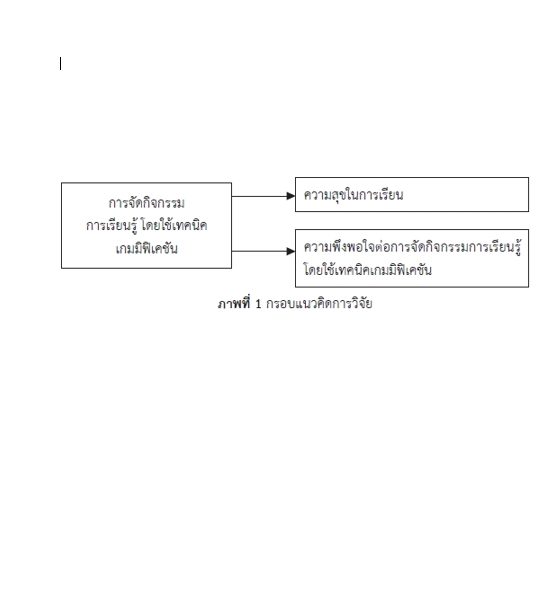
This quasi-experimental study aimed to evaluate the impact of gamification techniques on learning happiness and satisfaction among nursing students in a Psychiatric and Mental Health Nursing course at a private university. The sample consisted of 104 third-year nursing students enrolled during the academic year 2023. These students participated in group-based online gamification activities integrated into their learning sessions over an 11-week period. Knowledge assessments were conducted post-activity for 30 minutes per session. The research instruments included a learning happiness assessment form and a satisfaction questionnaire on the gamified teaching and learning activities. Data were analyzed using descriptive statistics and paired t-tests.
The results revealed that the post-test learning happiness score (M = 4.64, SD = 0.46) was significantly higher than the pre-test score (M = 4.12, SD = 0.57), with a t-value of -7.857 (p < .001). Additionally, the average satisfaction score for the gamification-based teaching method was high (M = 4.62, SD = 0.48). These findings suggest that incorporating gamification into teaching strategies can enhance student engagement, learning happiness, and overall satisfaction. Further refinement of the gamification approach, including more interactive, enjoyable, and challenging game-based activities, is recommended for future applications in this subject.
References
Ardhan, S., & Fakcharoenphol, W. (2022). The effect of gamification with scientific thinking online test bank for ninth grade students. Journal of Education and Human Development Sciences, 6(2), 61-83.
Baah, C., Govender, I., & Rontala Subramaniam, P. (2023). Exploring the role of gamification in motivating students to learn. Cogent Education, 10(1), 1-18 https://doi.org/10.1080/2331186X.2023.2210045
Buranasinvattanakul, K. (2019). The development of instruction media in board game to enhance the capability in the development of Thai Textbook and the happiness in learning for undergraduate students. Doctoral dissertation, Education, Srinakharinwirot University. [In Thai]
Bundasak, T., Chaowiang, K., & Jangasem, N. (2017). Happily learning among nursing students. Journal of MCU Peace Studies, 5(1), 357-369. [in Thai]
Chaisiri, D. (2019). The enhancement of learning motivation by using blended learning with gamification for matthayomsueksa 4 students of Phudungnaree School. Doctoral dissertation, Education, Rajabhat Maha Sarakham University. [in Thai]
Chonsawat, C., Kraiwong, P., & Kaewchantr, M. (2024). The effects of learning activities using gamification on achievement motivation and opinion toward teamwork among nursing students in a private university. Thai Journal of Nursing, 73(2), 22–31. [in Thai]
Hair, J. F., Black, W. C., Babin, B. J., & Anderson, R. E. (2014). Multivariate data analysis (7thed.) New Jersey: Pearson Prentice Hall.
Kapp, K. (2012). The gamification of learning and Instruction: Game-based methods and Strategies for training and education. United Kingdom: John Wiley & Sons.
Nokmueang, Y., & Nuansri, M. (2019). Factors affecting on students’ learning happiness, faculty of education, Valaya Alongkorn Rajabhat university under the Royal. Patronage. Journal of Graduate Studies Valaya Alongkorn Rajabhat University, 13(3), 101-112.
Phoyen, K. (2016). Learning management for happiness of learning. Journal of Education Silpakorn University, 13(2). 121-131. [in Thai]
Pordee, P. (2021). Happy learning model (FART). Journal of Human Society, 11(1), 78-90. [in Thai]
Ratanaolarn, T., Sitthiworachart, J., & He, M. (2024). Exploration on the Impact of gamification evaluation on positive emotional engagement attitude and academic performance of computer majors in online learning. Educational Administration: Theory and Practice, 30(5), 7757-7766. Doi: 10.53555/kuey.v30i5.4237 [in Thai]
Simoes, J., Redondo, R. D., & Vilas, A. F. (2013). A social gamification framework for a K-6 learning platform. Computers in Human Behavior, 29(2), 345-353.
Taspinar, B., Schmidt, W., & Schuhbauer, H. (2016). Gamification in education: a board game approach to knowledge acquisition. Procedia Computer Science, 99, 101 – 116. DOI: 10.1016/j.procs.2016.09.104
Downloads
Published
How to Cite
Issue
Section
License

This work is licensed under a Creative Commons Attribution-NonCommercial-NoDerivatives 4.0 International License.