Creating Novelty Through Activities to Manage Boredom Among Older Adults in Day Care Centers: Experience Sharing
Keywords:
Creating novelty through activities, Older Adults boredom, Day Care Older Adults care centersAbstract
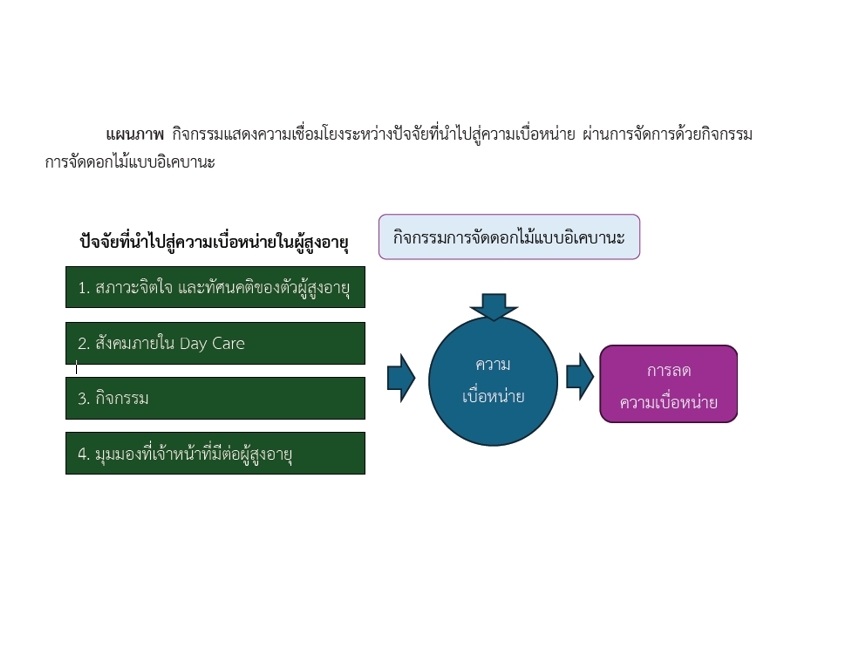
Boredom among older adults, although primarily an emotional state, can have significant negative impacts, potentially leading to depression, emotional instability, irritability, loss of appetite and a decreased motivation to live. This academic article aims to present concepts related to boredom among older adults in Day Care centers, as well as the importance of engaging activities for this population. The discussion is grounded in Self-Determination Theory, Cognitive Stimulation (CS) and the concept of Active Aging. It also incorporates the author’s experiential insights derived from observing boredom among older adults in Day Care settings, analyzing potential causes of this issue, and proposing guidelines for organizing creative activities to address problems.
References
American Psychological Association. (n.d.). Boredom. In APA dictionary of psychology. Retrieved from https://dictionary.apa.org/boredom
An, J., Payne, L., & Janke, M. (2023). Exploring the phenomenon of boredom in the context of leisure among older adults. Innovation in Aging, 7(Suppl 1), 845. doi:10.1093/geroni/igad104.2724
Bantwal, P. (2016). Existence of boredom among the elderly: The need to further explore the concept. Journal of Geriatric Care and Research, 3(2), 49–50.
Bureau of Registration Administration, Department of Provincial Administration. (n.d.). Population registration statistics [Data set]. Retrieved from https://stat.bora.dopa.go.th/stat/statnew/statMONTH/statmonth/#/displayData
Department of Older Persons. (2017). Knowledge package for self-care and capacity development of older persons: Social learning. Bangkok, Thailand: Ministry of Social Development and Human Security Press.
Dissara, P., Nunklam, D., & Chimhad, P. (2025). The study of the development needs of elderly care activities at the Health Rehabilitation and Elderly Potential Development Center. Journal of Social Science Development, 8(6), 80–92.
Goldberg, Y., Eastwood, J., LaGuardia, J., & Danckert, J. (2011). Boredom: An emotional experience distinct from apathy, anhedonia, or depression. Journal of Social and Clinical Psychology, 30(6), 647–666. https://doi.org/10.1521/jscp.2011.30.6.647
Gómez-Soria, I., Iguacel, I., Aguilar-Latorre, A., Peralta-Marrupe, P., Latorre, E., Zaldívar, J. N. C., & Calatayud, E. (2023). Cognitive stimulation and cognitive results in older adults: A systematic review and meta-analysis. Archives of Gerontology and Geriatrics, 104, 104807. https://doi.org/10.1016/j.archger.2022.104807
He, Q. (2018, June 23). China’s senior citizens flock back to school. China Daily. Retrieved from https://www.chinadaily.com.cn/a/201806/23/WS5b2d4787a3103349141de584.html
Institute for Population and Social Research, Mahidol University. (2026). Mahidol population gazette: Population of Thailand, 2026 (Vol. 35, January 2026). Retrieved from https://ipsr.mahidol.ac.th/population-gazette/
Ros Velasco, J. (2021). The experience of boredom in older adults: A systematic review. Health, Aging & End of Life, 6, 11–44. https://doi.org/10.5281/zenodo.8428388
Mather, M. (2020). How do cognitively stimulating activities affect cognition and the brain throughout life? Psychological Science in the Public Interest, 21(1), 1–5. https://doi.org/10.1177/1529100620941808
McHugh Power, J., Hannigan, C., Hyland, P., Brennan, S., Kee, F., & Lawlor, B. A. (2018). Depressive symptoms predict increased social and emotional loneliness in older adults. Aging & Mental Health, 24(1), 110–118. https://doi.org/10.1080/13607863.2018.1517728
Merrifield, C., & Danckert, J. (2014). Characterizing the psychophysiological signature of boredom. Experimental Brain Research, 232(2), 481–491. https://doi.org/10.1007/s00221-013-3755-2
Ministry of Social Development and Human Security. (2024, January 9). MSDHS–ThaiHealth expand elderly school program to 2,456 sites, strengthening media literacy among older persons. Retrieved from https://www.thaihealth.or.th/
Niyomdecha, A., & Noklang, S. (2023). Guideline to create participation of elderly in the community. The Journal of Research and Academics, 6(6), 115–130.
Office of Provincial Commercial Affairs Suratthani. (n.d.). The Trade Policy and Strategy Office (TPSO) analyzed the silver economy and found that the elderly care business is experiencing high growth and presents significant profit opportunities. Retrieved from https://suratthani.moc.go.th/th/content/category/detail/id/112/iid/136333
Office of the Royal Society. (2011). Royal Institute dictionary B.E. 2554 [Online]. Retrieved from https://dictionary.orst.go.th
Palombi, T., Chirico, A., Cazzolli, B., Zacchilli, M., Alessandri, G., Filosa, L., ... Lucidi, F. (2025). Motivation, psychological needs and physical activity in older adults: A qualitative review. Age and Ageing, 54(7), afaf180. https://doi.org/10.1093/ageing/afaf180
Panthi, M. (2022). Loneliness and boredom in residential care: Voices of older adults. Aotearoa New Zealand Social Work, 34(1), 88–99. https://doi.org/10.11157/anzswj-vol34iss1id846
Ros Velasco, J. (2021). The experience of boredom in older adults: A systematic review. Health, Aging & End of Life, 6, 11–44. https://doi.org/10.5281/zenodo.8428388
Ryan, R. M., & Deci, E. L. (2020). Intrinsic and extrinsic motivation from a self-determination theory perspective: Definitions, theory, practices, and future directions. Contemporary Educational Psychology. Advance online publication. https://doi.org/10.1016/j.cedpsych.2020.101860
Ryan, R. M. (Ed.). (2023). The Oxford handbook of self-determination theory. Oxford, England: Oxford University Press.
Salthouse, T. A. (2006). Mental exercise and mental aging: Evaluating the validity of the “use it or lose it” hypothesis.
Spector, A., Thorgrimsen, L., Woods, B., Royan, L., Davies, S., Butterworth, M., & Orrell, M. (2003). Efficacy of an evidence-based cognitive stimulation therapy program for people with dementia: Randomized controlled trial. The British Journal of Psychiatry, 183(3), 248–254.
ThaiHealth. (2024, January 9). Ministry of Social Development and Human Security and ThaiHealth expand 2,456 schools for older adults to strengthen immunity with “Media literacy for the elderly”. Retrieved from https://www.thaihealth.or.th/
Udomittipong, D., Channakorn, P., Narongsak, T., & Chimnakboon, N. (2021). Cognitive stimulation for elderly with mild cognitive impairment: Review article. Journal of Somdet Chaopraya Institute of Psychiatry, 15(1), 62–83.
United Nations. (2025, October 1). 2025 Theme: Older Persons driving local and global action: Our aspirations, our well-being and our rights. Retrieved from https://www.un.org/en/observances/older-persons-day
World Health Organization. (2002). Active ageing: A policy framework. Geneva, Switzerland: Author. Retrieved from https://extranet.who.int/agefriendlyworld/wp-content/uploads/2014/06/WHO-Active-Ageing-Framework.pdf
Downloads
Published
How to Cite
Issue
Section
License

This work is licensed under a Creative Commons Attribution-NonCommercial-NoDerivatives 4.0 International License.