ผลของโปรแกรมส่งเสริมการรับรู้ความสามารถในการดูแลตนเองต่อพฤติกรรมการควบคุมโรคหอบหืดของเด็กวัยเรียน
คำสำคัญ:
โปรแกรมส่งเสริมการรับรู้ความสามารถในการดูแลตนเอง, พฤติกรรมการควบคุมโรคหอบหืด, เด็กวัยเรียน, โรคหอบหืดบทคัดย่อ
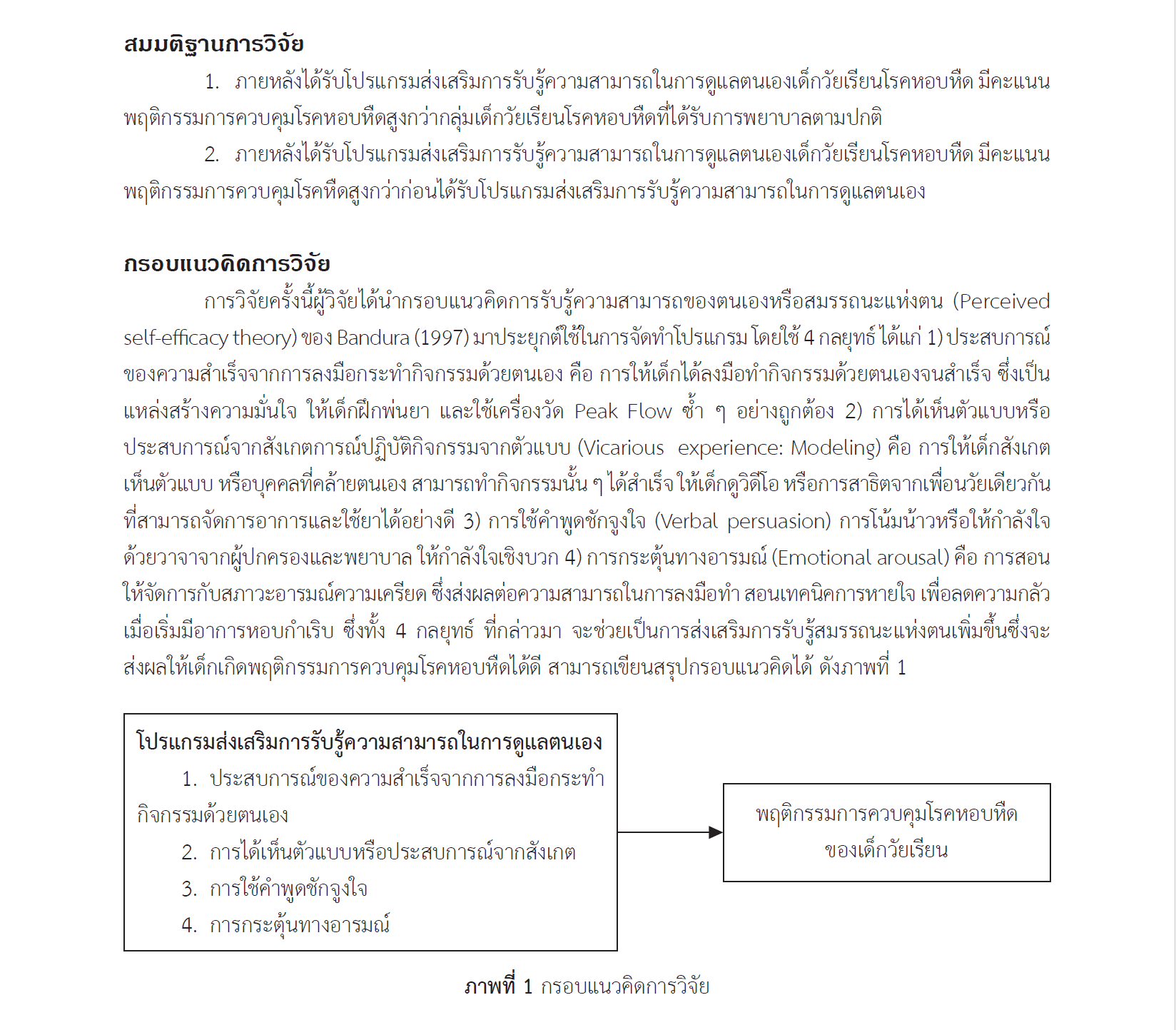
โรคหอบหืดเป็นปัญหาสุขภาพที่ส่งผลกระทบต่อทุกช่วงวัยโดยเฉพาะเด็กวัยเรียน เด็กวัยเรียนจึงควรได้รับการส่งเสริมการรับรู้ความสามารถในการดูแลตนเอง เพื่อให้มีพฤติกรรมการควบคุมโรคที่ดี วัตถุประสงค์ของวิจัยนี้ เพื่อศึกษาผลของโปรแกรมส่งเสริมการรับรู้ความสามารถในการดูแลตนเองต่อพฤติกรรมการควบคุมโรคหอบหืดของเด็กวัยเรียน กลุ่มตัวอย่างเป็นเด็กวัยเรียนโรคหอบหืด และผู้ดูแลหลัก เข้ารับการรักษาที่คลินิกโรคหอบหืด โรงพยาบาล 2 แห่ง ในจังหวัดระยอง คัดเลือกตามคุณสมบัติที่กำหนด สุ่มอย่างง่ายเข้ากลุ่มทดลองและกลุ่มควบคุมกลุ่มละ 21 ราย ด้วยการจับฉลาก กลุ่มทดลองได้รับโปรแกรมส่งเสริมการรับรู้ความสามารถในการดูแลตนเอง ตามแนวคิดการรับรู้ความสามารถของแบนดูรา กลุ่มควบคุมได้รับการพยาบาลตามปกติ เครื่องมือวิจัยที่ใช้ในการเก็บรวบรวมข้อมูลมี 2 ส่วน คือโปรแกรมส่งเสริมการรับรู้ความสามารถในการดูแลตนเองต่อพฤติกรรมการควบคุมโรคหอบหืดของเด็กวัยเรียน และแบบสอบถามพฤติกรรมการควบคุมโรคของเด็กวัยเรียนโรคหอบหืด มีค่าความเชื่อมั่นเท่ากับ .88 วิเคราะห์ข้อมูลโดยใช้สถิติพรรณนา และสถิติที
ผลการวิจัยพบว่า ภายหลังการทดลองเด็กวัยเรียนกลุ่มทดลองมีคะแนนเฉลี่ยพฤติกรรมการควบคุมโรคหอบหืดสูงกว่ากลุ่มควบคุม (Z = 5.24, p = .001) และสูงกว่าก่อนได้รับโปรแกรมอย่างมีนัยสำคัญทางสถิติ (Z = 4.01, p=.001) จากผลการวิจัยมีข้อเสนอแนะว่า พยาบาลสามารถนำโปรแกรมนี้ไปใช้ส่งเสริมให้เด็กวัยเรียนมีพฤติกรรมการควบคุมโรคหอบหืดได้ด้วยตนเอง เพื่อลดการกลับมาเป็นซ้ำของโรคได้
เอกสารอ้างอิง
Bandura, A. (1997). Self-efficacy: The exercise of control. New York: W.H. Freeman and Company.
Baramee, C. (2008). Statistics for health research and data analysis with SPSS. Chonburi: Srisilpa Printing.
Cohen, J. (1988). Statistical power analysis for the behavioral sciences (2nd ed.). Hillsdale, NJ: Lawrence Erlbaum Associates.
Global Initiative for Asthma [GINA]. (2021). Global strategy for asthma management and prevention 2021. Retrieved from https://ginasthma.org/gina-reports/
Lamnoi, U. (2008). Effects of a self-efficacy enhancement program on self-management behaviors of school-age children with asthma [Unpublished master’s thesis]. Chulalongkorn University.
Ministry of Public Health. (2018). Thai public health dictionary B.E. 2561: 100th anniversary edition of Thai public health. Bangkok: Cooperative League of Thailand Printing House. [In Thai]
Onthong, K., Teerarungsikul, N., & Sananreangsak, S. (2021). The effect of program enhancing self-efficacy in self-care on allergy prevention behaviors among school age children with allergic rhinitis. Burapha Nursing Journal, 27(3), 43–53. [In Thai]
Piaget, J. (2001). Piaget’s theory. In Mussen, P. H. (Ed.), Handbook of child psychology (4th ed.). New York: Wiley.
Phontan, K., & Ratchanakul, P. (2019). The effect of a teacher self-efficacy enhancement program on health care behavior for school-aged children with asthma. Journal of Nursing and Health Care, 37(2), 160–170. [In Thai]
Saetae, T., & Sananreangsak, S. (2019). The effect of a self-regulation program on health behaviors and lung function among school-aged children with asthma. Royal Thai Police Nursing Journal, 11(1), 139–149. [In Thai]
Tangchiwattanakul, C. (2018). Factors affecting symptom control in pediatric asthma patients at Phangnga Hospital. Journal of Medical Academic, 32(4), 1269–1282. [In Thai]
The Asthma Foundation of Thailand. (2021). New medications for asthma treatment. Retrieved from https://www.asthma.or.th/ [In Thai]
Thai Pediatric Society. (2021). Guideline for diagnosis and treatment of asthma in children in Thailand: Assessment of asthma control in children. Retrieved from http://www.thaipediatrics.org/Media/media-20210702015523.pdf [In Thai]
World Health Organization[WHO]. (2021). Asthma. https://www.who.int/news-room/fact-sheets/detail/asthma
ดาวน์โหลด
เผยแพร่แล้ว
รูปแบบการอ้างอิง
ฉบับ
ประเภทบทความ
สัญญาอนุญาต

อนุญาตภายใต้เงื่อนไข Creative Commons Attribution-NonCommercial-NoDerivatives 4.0 International License.