
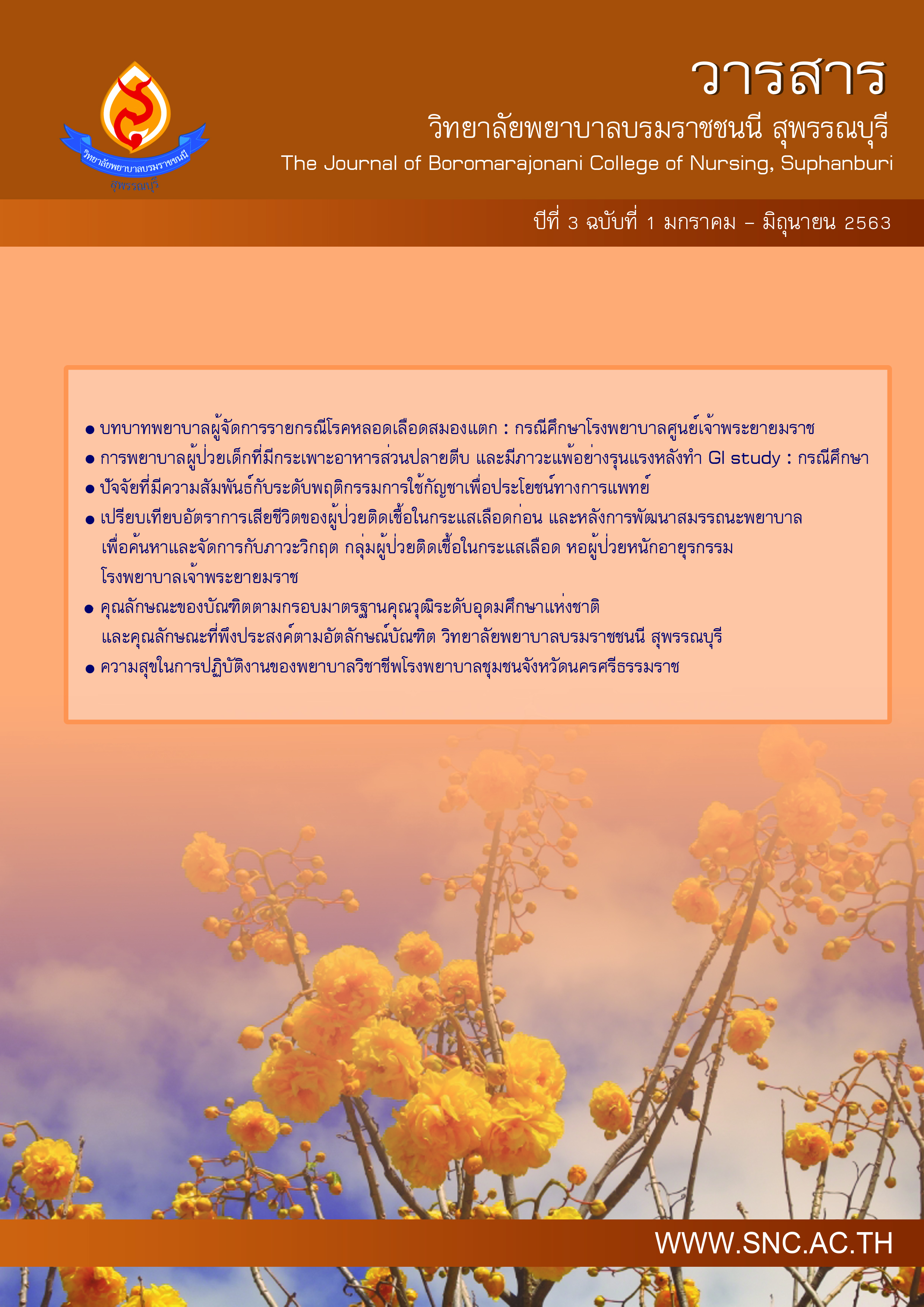
ปัจจัยที่มีความสัมพันธ์กับระดับพฤติกรรมการใช้กัญชาเพื่อประโยชน์ทางการแพทย์
คำสำคัญ:
พฤติกรรมการใช้กัญชาทางการแพทย์บทคัดย่อ
กระทรวงสาธารณสุขมีนโยบายการใช้กัญชาเพื่อประโยชน์ทางการแพทย์ การศึกษาครั้งนี้เพื่อนำข้อมูลด้านพฤติกรรมของประชาชนมาปรับใช้ให้เกิดประโยชน์สูงสุด ส่งผลให้มีคุณภาพชีวิตที่ดีเพิ่มขึ้น การวิจัยนี้มีวัตถุประสงค์เพื่อศึกษาปัจจัย ได้แก่ ข้อมูลส่วนบุคคล ลักษณะการใช้กัญชาและการรับรู้ข้อดีข้อเสียของกัญชาทางการแพทย์ ที่มีความสัมพันธ์กับระดับพฤติกรรมของประชาชนในการใช้กัญชาทางการแพทย์ และเพื่อวิเคราะห์การทำนายอิทธิพลของปัจจัยด้านข้อมูลส่วนบุคคล และการรับรู้ข้อดีข้อเสียของกัญชาต่อพฤติกรรมของประชาชนในการใช้กัญชาทางการแพทย์
การวิจัยเชิงพรรณนาภาคตัดขวาง (Cross-sectional descriptive research) ศึกษากลุ่มตัวอย่างประชาชนในจังหวัดสุพรรณบุรี จำนวน 350 คน ระหว่างเดือนพฤศจิกายน 2562 – มีนาคม 2563 เครื่องมือที่ใช้เป็นแบบสอบถามที่สร้างขึ้นเองและตรวจสอบคุณภาพโดยผู้เชี่ยวชาญ ได้แก่ ข้อมูลส่วนบุคคล ลักษณะการใช้กัญชา การรับรู้ข้อดีข้อเสียของกัญชาทางการแพทย์และระดับพฤติกรรมการใช้กัญชาเพื่อประโยชน์ทางการแพทย์ ใช้สถิติเชิงพรรณนา ได้แก่ ความถี่ และร้อยละ สถิติเชิงอนุมานโดยใช้ Chi-Square Tests และวิเคราะห์ถดถอยเชิงพหุแบบขั้นตอน (Stepwise Multiple Regression)
ผลการวิจัยพบว่า ปัจจัยด้านข้อมูลส่วนบุคคล ลักษณะการใช้กัญชา การรับรู้ข้อดีข้อเสียของกัญชาทางการแพทย์ที่มีความสัมพันธ์กับระดับพฤติกรรมการใช้กัญชาเพื่อประโยชน์ทางการแพทย์ อย่างมีนัยสำคัญทางสถิติที่ระดับ 0.05 เรียง 3 ลำดับแรก ดังนี้ ข้อมูลส่วนบุคคล ได้แก่ เพศ อายุ การศึกษา รายได้เฉลี่ย อาชีพ และโรคประจำตัว ลักษณะการใช้กัญชา ได้แก่ วัตถุประสงค์การใช้กัญชารักษาโรค ใช้ลดอาการปวดข้อ ปวดหลัง ปวดกระดูก รักษาโรคมะเร็ง, เหตุผลที่ไม่ใช้กัญชา ได้แก่ ไม่เชื่อในประสิทธิผลของกัญชา กลัวได้รับอันตรายจากกัญชา มีความยุ่งยากในการใช้ เข้าถึงบริการยากถ้าต้องรับจากโรงพยาบาล, รูปแบบลักษณะการใช้กัญชา ได้แก่ ใช้คู่กับการออกกำลังกาย ใช้คู่กับการพักผ่อนหรือนันทนาการ ใช้คู่กับยาแผนปัจจุบัน, แหล่งที่มาของกัญชา ได้แก่ วัด ปลูกเอง และหมอพื้นบ้าน, เหตุผลที่เลือกใช้ยากัญชา ได้แก่ เชื่อในประสิทธิผลของยาและความปลอดภัย หมอพื้นบ้านแนะนำ และระยะเวลาที่ใช้กัญชา, อาการผิดปกติหลังใช้กัญชารักษาโรค ได้แก่ ผื่นขึ้นตามผิวหนัง มึน เวียนศีรษะ ใจสั่น ใจเต้นเร็วกว่าปกติ และเสียความสมดุล การวิเคราะห์ถดถอยเชิงพหุแบบขั้นตอน (Stepwise Multiple Regression) พบว่า มีปัจจัยการรับรู้ที่สามารถพยากรณ์อิทธิพลต่อระดับพฤติกรรมของประชาชนในการใช้กัญชาทางการแพทย์ได้อย่างมีนัยสำคัญทางสถิติที่ระดับน้อยกว่า 0.05 ซึ่งเป็นตามสมมุติฐาน มีจำนวน 10 ปัจจัย (ทั้งหมด 17 ปัจจัย) 3 ลำดับแรก คือ การรับรู้เรื่องสารสกัดกัญชาที่ได้มาจากส่วนของต้นกัญชามากที่สุด (adj.R2= 0.138) รองลงมาคือ การรับรู้ขนาดของยาควรพิจารณาตามผลการรักษาที่ได้รับเป็นหลัก (X2, beta = 0.327, adj.R2= 0.105) และยากัญชาใช้ได้กับผู้ป่วยโรคสมองเสื่อม และอารมณ์ (X3, beta = 0.319, adj.R2= 0.099) ตามลำดับ สรุป ข้อมูลส่วนบุคคล ลักษณะการใช้ และการรับรู้ข้อดีข้อเสียของกัญชาทางการแพทย์มีความสัมพันธ์กับพฤติกรรมของประชาชนในการใช้กัญชาทางการแพทย์ อย่างมีนัยสำคัญทางสถิติ
เอกสารอ้างอิง
https://km4ors.wordpress.com.
นิยดา เกียรติยิ่งอังศุลี. (2562). เวทีจุฬาฯ เสวนา ครั้งที่ 19 เรื่อง “กัญชา เพื่อเยียวยาสุขภาพ?”. ศูนย์วิชาการเฝ้าระวังและพัฒนาระบบยา (กพย.). กรุงเทพฯ: สืบค้นจาก:
https://www.chula.ac.th
ประพนธ์ ตั้งศรีเกียรติกุล. (2562). การนำกัญชามาใช้เพื่อประโยชน์ทางการแพทย์. การประชุมสัมมนา เรื่อง “การใช้สารสกัดจากกัญชาทางการแพทย์สำหรับผู้บริหารกระทรวง
สาธารณสุข” ณ โรงแรมอมารี ดอนเมือง แอร์พอร์ต กรุงเทพฯ.
ผู้จัดการออนไลน์. (2562). “หมอน้ำมันกัญชา” ยันแจกฟรีล้านแคปซูล ปลุกกระแสแก้กฎหมายให้ชาวบ้านเข้าถึง-สกัดนายทุน. สืบค้นจาก: https://mgronline.com
พระราชบัญญัติ ยาเสพติดให้โทษ (ฉบับที่ 7) พ.ศ. 2562. เล่ม 136 ตอนที่ 19 ก ราชกิจจานุเบกษา วันที่ 18 กุมภาพันธ์ 2562.
พีรพจน์ ปิ่นทองดี. (2561). กัญชา กฎหมายยาเสพติดอันเป็นอุปสรรคต่อการพัฒนากัญชาการแพทย์. วารสารสันติศึกษาปริทรรศน์ มจร, 6(3), 1182-1198.
เพ็ญจันทร์ แสนประสาน , สิรินดา ศรีจงใจ, ศิริภัททรา จุฑามณี, สุจินตนา พันกล้า. (2560). กฎหมายจริยธรรมทางการพยาบาล. พิมพ์ครั้งที่ 2. กรุงเทพฯ: สุขุมวิทการพิมพ์.
มณฑกา ธีรชัยสกุล, วรรณศิริ นิลเนตร, อานนท์ วรยิ่งยง. (2559).การสำรวจการให้บริการด้านการแพทย์แผนไทยการแพทย์ทางเลือกในโรงพยาบาลสังกัดกระทรวงสาธารณสุข ปี
พ.ศ.2557. วารสารวิจัยระบบสาธารณสุข, 10(2), 117-127.
ระพีพงศ์ สุพรรณไชยมาตย์ และ โชษิตา ภาวสุทธิไพศิฐ. (2561). ประโยชน์และโทษที่อาจเกิดขึ้นจากการใช้กัญชาในทางการแพทย์และการเปิดเสรีการใช้กัญชา.วารสารวิจัย
ระบบสาธารณสุข, 12(1), 71-91.
วีรยา ภาอุปชิต และ นุศราพร เกษสมบูรณ์. (2560). การใช้กัญชาทางการแพทย์. วารสารเภสัชศาสตร์อีสาน, 13, 226-240.
สำนักงานสาธารณสุขจังหวัดสุพรรณบุรี. (2562). สรุปผลการดำเนินงานตรวจราชการ รอบที่ 2 ปีงบประมาณ 2562.
สุขุม กาญจนพิมาย. (2562). กระทรวงสาธารณสุข เตรียมเปิดคลินิกกัญชาทางการแพทย์ในโรงพยาบาล 12 แห่ง สร้างโอกาสการรักษา ประชาชนเข้าถึงการรักษาด้วยยากัญชา
อย่างปลอดภัย. นนทบุรี. สืบค้นจาก: https://pr.moph.go.th.
องค์การเภสัชกรรมร่วมกับภาคีเครือข่าย. (2561). การวิจัยและพัฒนาสารสกัดกัญชาและกัญชงทางการแพทย์เพื่อการพัฒนาประเทศ. รายงานสรุปผลการประชุมวิชาการ ณ
โรงแรมรามาการ์เด้นส์, 1-5.
อรรถสิทธิ์ ศรีสุบัติ, อาภาศรี ลุสวัสดิ์, เมธา อภิวัฒนากุล, สมชาย ธนะสิทธิชัย, ปฐมพร ศริ ประภาศิริ, เฉลิมพล ไชยรัตน์ และคณะ. (2562). รูปแบบคลินิกให้คำปรึกษาการใช้สาร
สกัดกัญชาทางการแพทย์. นนทบุรี: องค์การสงเคราะห์ทหารผ่านศึก.
Abuhasiraa, R., Schleidera, L.B.L., Mechoulamc, R., Novack, V. (2018). Epidemiological characteristics, safety and efficacy of medical cannabis in the
elderly. EJINME, 49, 44–50.Retrieved from https://www.ncbi.nlm.nih.gov/pubmed/29398248.
Bachhuber, M., Arnsten, J.H., Wurm, G. (2019). Use of Cannabis to Relieve Pain and Promote Sleep by Customers at an Adult Use Dispensary. Journal
of Psychoactive Drugs, 1-6. Retrieved from https://www.ncbi.nlm.nih.gov/pubmed/31264536
Lake, S., Walsh, Z., Kerr, T., Cooper, Z.D., Buxton, J., Wood, E. (2019). Frequency of cannabis and illicit opioid use among people who use drugs and
report chronic pain: A longitudinal analysis. PLOS Med, 16(11): 2967-73.
Lintzeris, N., Driels, J., Elias, N., Arnold, J.C., McGregor, L.S., Allsop, D.J. (2018, August). Medicinal cannabis in Australia: the Cannabis as Medicine
Survey. Med J Aust, 211-215. Retrieved from https://www.mja.com.au/journal/2018/209/5/medicinal-cannabis-australia.
Parka, J.Y., Wua, L.T. (2017). Prevalence, reasons, perceived effects, and correlates of medical marijuana use. Drug and Alcohol Dependence, 177: 1-13.
Sexton, M., Cuttler, C., Finnell, J.S., Mischley, L.K. (2016). Cross-Sectional Survey of Medical Cannabis Users: Patterns of Use and Perceived Efficacy.
Cannabis and Cannabinoid Research, 1(1), 131-138. Retrieved from https://www.ncbi.nlm.nih.gov/pubmed.
Suryadevara, U., Bruijnzeel, D.M., Nuthi, M., Jagnarine, D.A., Tandon, R, Bruijnzeel, A.W. (2017). Pros and Cons of Medical Cannabis use by People with
Chronic Brain Disorders. Current Neuropharmacology, 15, 800-814. Retrieved from https://www.ncbi.nlm. nih.gov/pubmed.
Volkow, N.D., Swanson, J.M., Evins, A.E., DeLisi, L.E., Meier, M.H., Gonzalez, R. (2016). Effects of Cannabis Use on Human Behavior, Including
Cognition, Motivation, and Psychosis. JAMA Psychiatry, 1-6.
Woodbridge, M. (2562). ธรรศ ธารีสุชีวกุล (ผู้แปล). ข้อมูลเบื้องต้นเกี่ยวกับกัญชาทางการแพทย์. Bedrocan International ฉบับภาษาไทย. สืบค้นจาก:
https://mdresearch. kku.ac.th.
WHO. (2014). “Cannabis and cannabis resin information Document, Agenda item 8.2”. Expert Committee on Drug Dependence, Thirty-sixth Meeting
Geneva. 16-20. Retrievedfrom http://www.who.int/medicines.
ดาวน์โหลด
เผยแพร่แล้ว
ฉบับ
ประเภทบทความ
สัญญาอนุญาต
ลิขสิทธิ์ (c) 2020 วิทยาลัยพยาบาลบรมราชชนนี สุพรรณบุรี

อนุญาตภายใต้เงื่อนไข Creative Commons Attribution-NonCommercial-NoDerivatives 4.0 International License.
บทความที่ได้รับการตีพิมพ์เป็นลิขสิทธิ์ของวารสารวิทยาลัยพยาบาลบรมราชชนนี สุพรรณบุรี
ข้อความที่ปรากฏในบทความแต่ละเรื่องในวารสารวิชาการเล่มนี้เป็นความคิดเห็นส่วนตัวของผู้เขียนแต่ละท่านไม่เกี่ยวข้องกับวิทยาลัยพยาบาลบรมราชชนนี สุพรรณบุรี และคณาจารย์ท่านอื่นๆในวิทยาลัยฯ แต่อย่างใด ความรับผิดชอบองค์ประกอบทั้งหมดของบทความแต่ละเรื่องเป็นของผู้เขียนแต่ละท่าน หากมีความผิดพลาดใดๆ ผู้เขียนแต่ละท่านจะรับผิดชอบบทความของตนเองแต่ผู้เดียว


