
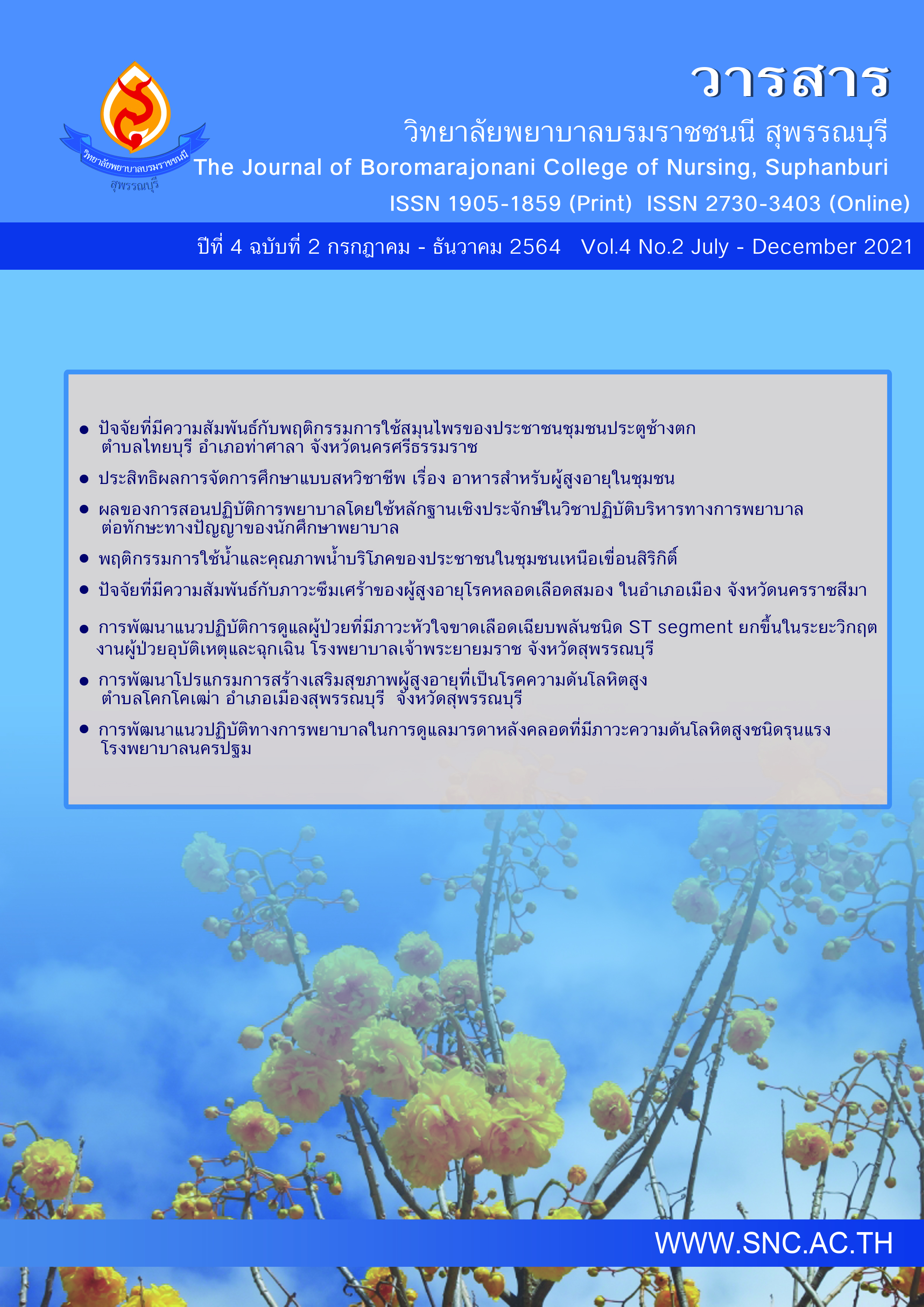
Development of Nursing Practice Guidelines for Nursing Care on Postpartum Mothers with Severe Preeclampsia, Nakhonpathom Hospital
Abstract
The objectives of this developmental research were to: 1) develop of Nursing Practice Guidelines (NPGs) for Nursing Care on Postpartum Mothers with Severe Preeclampsia 2) study the feasibility for implementation of the NPGs 3) study the implementation of registered nurses related to the NPGs 4) study the outcomes after using the NPGs. The population were 14 registered nurses and the sample of 52 postpartum mothers with severe preeclampsia. The framework was applied from the Australian National Health and Medical Research Council (NHMRC, 1998). The development was divided into 2 phases: 1) the problem determination, and 2) the development of NPGs. Data were collected using: the opinion questionnaire, observational form, and record form. Data were analyzed by using the descriptive statistics
The results were as follows: 1. The NPGs for nursing care on postpartum mothers with severe preeclampsia consisted of four components including: A) Before moving into the ward B) postpartum care within 24 hours C) postpartum care after 24 hours, and D) discharge and follow up
2. The feasibility for implimentation of the NPGs was at high level ( = 4.11, S.D = 0.28) 3. The percentages registered nurses’s implementation related to the NPGs were 85.00-100.00 4. There were no adverse consequences after using the NPGs. The findings of this study demonstrated that the NPGs for nursing care on postpartum mothers with severe preeclampsia are feasible and appropriate for implementation.
References
นนทบุรี: กองยุทธศาสตร์และแผนงาน.
จิตณัฏฐา สุทธิจำนง, ศศิกานต์ กาละ และสุรีย์พร กฤษเจริญ. (2559). ความต้องการการพยาบาลของ
หญิงตั้งครรภ์ความดันโลหิตสูงขณะรับการรักษาในโรงพยาบาล เพื่อก้าวข้ามภาวะวิกฤต. วารสาร
พยาบาลสงขลานครินทร์, 56, 132-145.
จันทนา ธรรมธัญญารักษ์. (2563). การพัฒนาแนวปฏิบัติการพยาบาลทางคลินิกในการให้ยาระงับ
ความรู้สึกทั่วไปในหญิงตั้งครรภ์ที่มีภาวะความดันโลหิตสูงที่มารับการผ่าตัดคลอดที่โรงพยาบาล
นครนายก. วารสารการปฏิบัติการพยาบาลและการผดุงครรภ์ไทย, 7(1), 41-56.
ระบบฐานข้อมูลเวชระเบียน โรงพยาบาลนครปฐม. สืบค้นเมื่อ 12 มิถุนายน 2564, จากวิกิพีเดีย https://www.nkpthospital.go.th.
ราชวิทยาลัยสูตินรีแพทย์แห่งประเทศไทย. (2558). แนวทางการปฏิบัติของราชวิทยาลัยสูตินรีแพทย์
แห่งประเทศไทย เรื่อง การดูแลภาวะครรภ์เป็นพิษ(Clinical practice guideline management of preeclampsia and eclampsia). สืบค้นเมื่อ 12 มิถุนายน 2564, จากวิกิพีเดีย http://www. Med. cmu.ac.th.
รัตนา ด่านปรีดา. (2561). กรณีศึกษาผู้คลอดเฉพาะรายเรื่อง การพยาบาลหญิงตั้งครรภ์แฝดที่มีภาวะความดันโลหิตสูงขณะตั้งครรภ์ชนิดรุนแรงและผ่าตัดคลอด. วารสารวิทยาลัยพยาบาลพระจอมเกล้า จังหวัดเพชรบุรี, 1(1), 70-89.
วัชรี จิตรนาวี, เบญจศิริ สกุลเทพ, ดวงใจ วุฒิชาน, และบุญญรัตน์ ซุงสุวรรณ. (2560). ผลของการวางแผนก่อนจำหน่ายมารดาหลังคลอดที่มีภาวะครรภ์เป็นพิษ. วารสารวิชาการแพทย์เขต 11, 31(1), 165-170.
ศรีเกียรติ อนันต์สวัสดิ์ (บรรณาธิการ). (2555). การพยาบาลสูติศาสตร์ เล่ม 3 (พิมพ์ครั้งที่ 12). นนทบุรี: โครงการสวัสดิการวิชาการ สถาบันบรมราชชนก กระทรวงสาธารณสุข.
สิรยา กิติโยดม และ เพ็ญวิมลศรีทอง. (2561). ความคลาดเคลื่อนในการรักษาภาวะครรภ์เป็นพิษรุนแรงในโรงพยาบาลมหาราชนครราชสีมา. เวชสารโรงพยาบาลมหาราชนครราชสีมา, 43(2), 153-161.
สีนวล รัตนวิจิตร (2560). การพยาบาลฉุกเฉินในสตรีตั้งครรภ์ที่มีการชักจากภาวะครรภ์เป็นพิษ. งานประชุมวิชาการระดับชาติ ครั้งที่ 9 มหาวิทยาลัยราชภัฏนครปฐม.
สุภานัน ชัยราช. (2555). บทบาทพยาบาลกับการพยาบาลมารดาที่มีภาวะชัก ภาวะครรภ์เป็นพิษที่รุนแรงขณะตั้งครรภ์ที่ไม่ครบกำหนด ใน เอกชัย โควาวิสารัช, ปัทมา พรหมสนธิ,
บุญศรี จันทร์รัชชกูล (บรรณาธิการ) วิกฤติทางสูติศาตร์ที่รุนแรง: Sevrer Obstetric Crisis. กรุงเทพมหานคร: ทรี-ดี สแกน.
สุพัตรา ศิริโชติยะกุล และธีระ ทองสง. (2555). ความดันโลหิตสูงในขณะตั้งครรภ์ ใน ธีระ ทองสง (บรรณาธิการ). สูติศาสตร์(พิมพ์ครั้งที่ 5). กรุงเทพมหานคร. ลักษมีรุ่ง.
เปมิกา ใจสมุทร และ สิรยา กิติโยดม (2560) ผลของดัชนีมวลกายสตรีตั้งครรภ์ต่อระดับแมกนีเซียมในเลือดของสตรีภาวะครรภ์เป็นพิษชนิดรุนแรงหลังได้รับการรักษาด้วยแมกนีเซียมซัลเฟตโรงพยาบาลมหาราชนครราชสีมา. Thai Journal of Obstetrics and Gynaecology, 25(3), 159-166.
พิริยา ทิวทอง. (2552). ผลของโปรแกรมการรับรู้สมรรถนะแห่งตนต่อการปฏิบัติตนที่สอดคล้องกับแผนการรักษาพยาบาลและความรุนแรงของโรคในหญิงตั้งครรภ์ที่มีภาวะความดันโลหิตสูงเนื่องมาจากการตั้งครรภ์. (วิทยานิพนธ์ปริญญาพยาบาลศาสตรมหาบัณฑิต, มหาวิทยาลัยมหิดล).
พรศิริ เสนธิริ, สุดใจ ศรีสงค์, รัศมีแข พรหมประกาย, เพียงเพ็ญ สร้อยสุวรรณ, และ ขวัญฤดี โกพลรัตน์. (2560). การพัฒนารูปแบบการดูแลหญิงตั้งครรภ์ที่มีภาวะความดันโลหิตสูงระหว่างตั้งครรภ์. วารสารการแพทย์โรงพยาบาลศรีสะเกษ สุรินทร์ บุรีรัมย์, 32(2), 117-129.
พัชราภรณ์ เจียรนัยธนะกิจ. (2563). การพยาบาลมารดาหลังคลอดที่มีภาวะความดันโลหิตสูงชนิดรุนแรง: กรณีศึกษา. วารสารมหาวิทยาลัยวงษ์ชวลิตกุล, 33(2), 12-23.
อรทัย ใจกว้าง. (2554). การพัฒนาแนวปฏิบัติเพื่อลดความไม่สุขสบายในหญิงตั้งครรภ์ที่มีภาวะความดันโลหิตสูงขณะตั้งครรภ์ชนิดรุนแรง โรงพยาบาลอุดรธานี. (วิทยานิพนธ์ปริญญาพยาบาลศาสตร มหาบัณฑิต, มหาวิทยาลัยขอนแก่น).
Cunningham, FG., Leveno, KJ., Bloom, SL., Spong, CY., Dashe, JS., Hoffman, BL., Casey, BM., & Sheffield, JS. (2014). Williams obstetrics (24th ed.). New York: McGraw-Hill.
Department of Reproductive Health and Research. (2012). Managing Complications in Pregnancy and Childbirth: A guide for midwives and doctors. WHO Library Cataloguing-in-Publication Data.
Ferreira MBG, Silveira CF, Silva SR, Souza DJ, Ruiz MT.(2016). Nursing care for women with pre-eclampsia and/or eclampsia: integrative review. Rev Esc Enferm USP, 50(2), 320-330.
Joanna Briggs Institute for Evidence Based Nursing & Midwifery. (2008). Reviewers’ manual. Retrieved from http://www.joannabriggs.edu.au.
HDP CPG Working Group. Association of Ontario Midwives. (2012). Hypertensive Disorders of Pregnancy. Retrieved from http://www.aom.on.ca/
Health_Care _Professionals/ Clinical_Practice_Guidelines/.2012(Clinical Practice Guideline. McKinney, E., James, R., Murray, R, & Ashwill, J. (2009). Maternal-child nursing (3rd ed.). St Louis, MO: Saunders Elsevier.
National Institute for Health and Clinical Excellence. Hypertension in pregnancy: the management of hypertensive disorder during pregnancy. NICE clinicalguideline. Retrieved from http://www.guideline.gov/content.aspx?id=24122.
Pillitteri, A. (2013). Maternal & child health nursing: Care of the childbearing & childrearing family (7th ed.). Philadelphia: Lippincott Williams & Wilkins.
Raney, JH, Morgan, MC, Christmas, A, Sterling, M, Spindler, H, Ghosh, R, Gore, A, et al. (2019). Simulation-enhanced nurse mentoring to improve preeclampsia and eclampsia care: an education intervention study in Bihar, India. BMC Pregnancy and Childbirth, 19(3), 41.
Ross, M. G. (2016). Eclampsia: Overview, Etiologic and Risk Factors for preeclampsia/ Eclampsia, Multiorgan System Effects. Medscape Reference Drugs, Diseases & Procedures. Medscape Reference drugs, Diseases & Procedures. Retrieved from http://emedicine.medscape.com.
Sheikh, S, Qureshi, RN, Khowaja, AR, Salam, R, Vidler, M, Sawchuck, D, Dadelszen, P, et al. (2016). Health care provider knowledge and routine management of pre-eclampsia in Pakistan. Reproductive Health, 13(2), 104.
Silva SCN, Alencar BR, Viduedo AFS, Ribeiro LM, Ponce de Leon CGRM, Schardosim JM. (2021). Management of severe preeclampsia in the puerperium: development and scenario validation for clinical simulation. Rev Bras Enferm, 74(6).
WHO. (2011). WHO recommendations for prevention and treatment of pre-eclampsia and eclampsia. WHO Library Cataloguing-in-Publication Data. Retrieved from www. who.int/reproductivehealth/publications.
Downloads
Published
Issue
Section
License
Copyright (c) 2021 Boromarajonani College of Nursing, Suphanburi

This work is licensed under a Creative Commons Attribution-NonCommercial-NoDerivatives 4.0 International License.
บทความที่ได้รับการตีพิมพ์เป็นลิขสิทธิ์ของวารสารวิทยาลัยพยาบาลบรมราชชนนี สุพรรณบุรี
ข้อความที่ปรากฏในบทความแต่ละเรื่องในวารสารวิชาการเล่มนี้เป็นความคิดเห็นส่วนตัวของผู้เขียนแต่ละท่านไม่เกี่ยวข้องกับวิทยาลัยพยาบาลบรมราชชนนี สุพรรณบุรี และคณาจารย์ท่านอื่นๆในวิทยาลัยฯ แต่อย่างใด ความรับผิดชอบองค์ประกอบทั้งหมดของบทความแต่ละเรื่องเป็นของผู้เขียนแต่ละท่าน หากมีความผิดพลาดใดๆ ผู้เขียนแต่ละท่านจะรับผิดชอบบทความของตนเองแต่ผู้เดียว


