
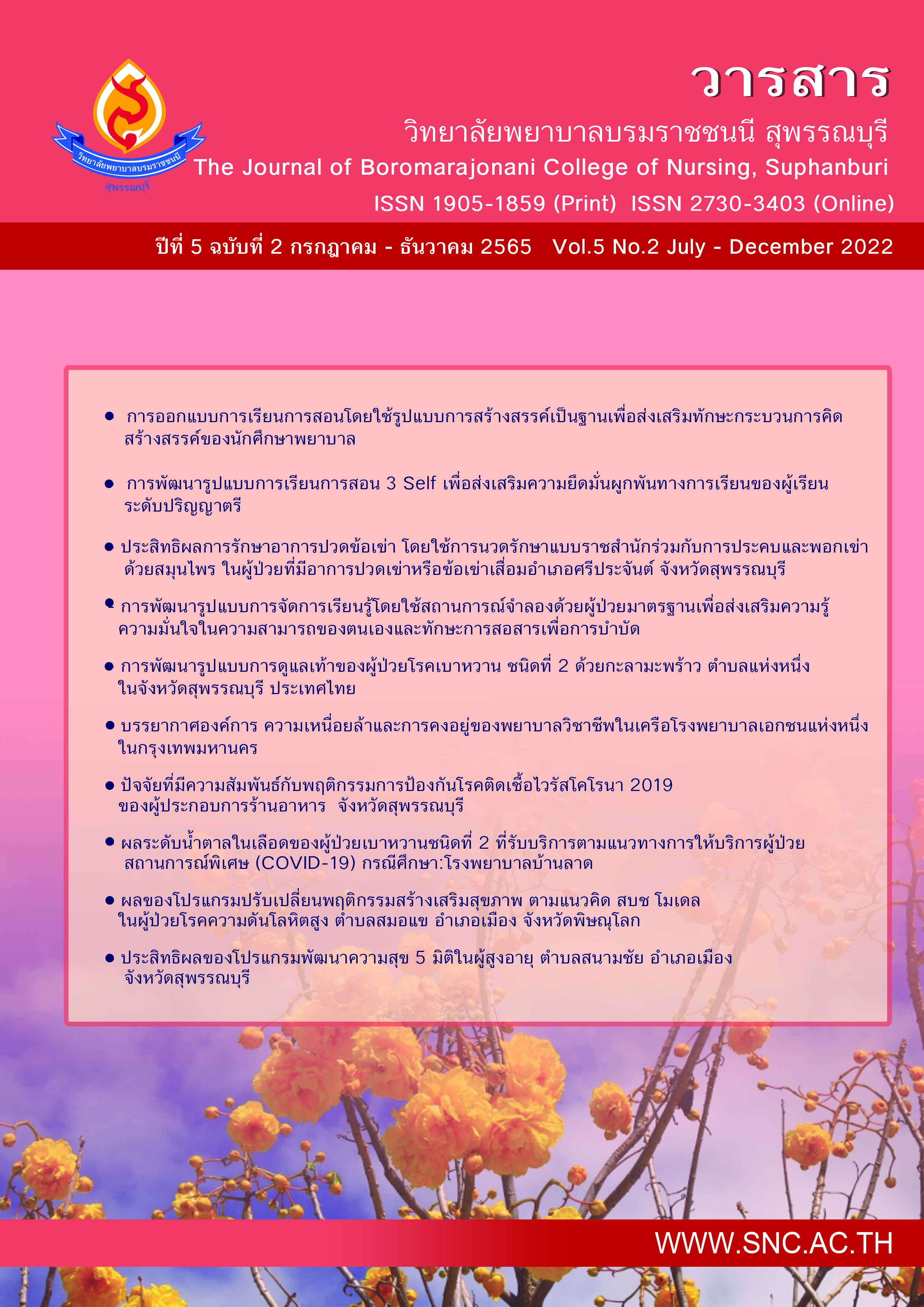
Glycemic Control Level among Patients with Type 2 Diabetes Receiving Service according to the Service Guideline during the COVID-19 Pandemic Situation: A Case Study of Banlat Hospital
Keywords:
type 2 diabetes haemoglobin A1C service guideline for COVID-19 pandemic situationAbstract
This mixed-methods research aimed to 1) compare the glycemic control among patients with type 2 diabetes receiving service according to the service guidelines during the COVID-19 pandemic situation, 2) study the considering problems, needs, and 3) develop a policy recommendation for developing a new way of health services of type 2 diabetes patients. The sample group for the quantitative method was forty-five type 2 diabetes patients. While the sample group for the qualitative method was twenty-five type 2 diabetes patients and eight diabetic health care providers. The research instruments included health status surveys, a set of questions for a group discussion, and open-ended questions for an in-depth interview. The data were analysed using descriptive statistics: frequency, mean, percentage, and standard deviation, paired t-test and content analysis.
The results show that:
- By comparing the differences in HbA1C before and after receiving the service with paired t-test statistics, HbA1C level after receiving the service were significantly lower than before at the .05 level (t=3.52, p=0.001)
- Problems and needs for health service system development for patients with diabetes found is that some patients received the drug delayed and the database system transmits patient information out of date. The staff has a proposal to develop a database system and telemedicine system, provide a consultation system through Line application, including the patient’s self-management plan to control blood sugar levels. The diabetes patients were satisfied with the home-delivery medicines system; however, they would like to be informed of their blood sugar levels to manage themselves properly. Furthermore, the elderly wanted to have a home visit or a consulting system at the health centre near their homes.
Policy recommendations to the new way development of health service system for patients with type 2 diabetes were the development of database system and the cooperative network of health teams based on the policy of three health care providers of the Ministry of Public Health. This policy would help to provide care and support of the necessary equipment for patients at home including self- monitoring of blood glucose meter and glucose strips for each district.
References
กระทรวงสาธารณสุข. (2563). แนวทางปฏิบัติด้านสาธารณสุขเพื่อการจัดการภาวะระบาดของโรคโควิด-19 ในข้อกำหนดออกตามความในมาตรา 9 แห่งพระราชกำหนดการบริหารราชการในสถานการณ์ฉุกเฉิน พ.ศ. 2548 (ฉบับที่ 1). (เอกสารอัดสำเนา).
กองโรคไม่ติดต่อ กรมควบคุมโรค กระทรวงสาธารณสุข. (2563). คู่มือแนวทางการดำเนินงานNCD Clinic Plusปี 2563. กรุงเทพมหานคร:อักษรกราฟฟิคแอนด์ดีไซน์.
กองโรคไม่ติดต่อ กรมควบคุมโรค กระทรวงสาธารณสุข. (2564ก). กรมควบคุมโรค รณรงค์วันเบาหวานโรค ปี 2564 ตระหนักถึงการดูแลรักษาโรคเบาหวาน ให้ได้รับการรักษาอย่างทั่วถึง.สืบค้นเมื่อ 11 สิงหาคม 2565, จาก https://ddc.moph.go.th
กองโรคไม่ติดต่อ กรมควบคุมโรค กระทรวงสาธารณสุข. (2564ข).คู่มือแนวทางการดำเนินงาน NCD Clinic Plus& Online. กรุงเทพมหานคร: อักษรกราฟฟิคแอนด์ดีไซน์.
ธวัชชัย สัตยสมบูรณ์ และยุวนุช สัตยสมบูรณ์. (2563). รูปแบบการดูแลผู้ป่วยโรคเรื้อรังและการสนับสนุนการจัดการตนเองในผู้ป่วยความดันโลหิตสูง และผู้ป่วยเบาหวานชนิดที่ 2 การทบทวนวรรณกรรมอย่างเป็นระบบHypertension and type 2 Diabetes Mellitus Patients: A Systematic Review on the Chronic Care Model (CCM) and Self-Management Support (SMS).วารสารเครือข่ายวิทยาลัยพยาบาลและการสาธารณสุขภาคใต้. 7(2), 232-243.
นวพร ดำแสงสวัสดิ์, พนัสยา วรรณวิไล, อภิสิทธิ์ เชื้อคำเพ็ง, มาลี คำคง. (2563). เปรียบเทียบการจัด บริการแบบบูรณาการ และยึดประชาชนเป็นศูนย์กลางแก่ผู้ ป่วยเบาหวาน และความดันโลหิตสูง ตามการรับรู้ของผู้ให้บริการอำเภอหาดใหญ่ และอำเภอนาทวี จังหวัดสงขลา. วารสารวิชาการ สาธารณสุขชุมชน, 7(03), 17-17.
ณัฐภัสสร เดิมขุนทด, รัชนีวรรณ ขวัญเจริญ, ชาญวัฒน์ ชวนตันติกมล, พิชญ์ พหลภาคย์ และสว่างจิต สุรอมรกูล. (2564). ผลของการติดตามสุขภาพทางไกลต่อการควบคุมระดับน้ำตาลในเลือดและความสม่ำเสมอในการรับประทานยาในผู้ป่วยเบาหวานชนิดที่ 2 ที่ควบคุมไม่ดี.วชิรเวชสารและวารสารเวชศาสตร์เขตเมือง,65(ฉบับเพิ่มเติม), 1-16.
โรงพยาบาลบ้านลาด. (2564). รายงานสถิติข้อมูลผู้ป่วยโรงพยาบาลบ้านลาด. (เอกสารอัดสำเนา)
สมาคมโรคเบาหวานแห่งประเทศไทย ในพระราชูปถัมภ์สมเด็จพระเทพรัตนสุดาฯ สยามบรมราชกุมารี. (2560). แนวทางเวชปฏิบัติสำหรับโรคเบาหวาน 2560 : Clinical Practice Guideline for Diabetes 2017. (พิมพ์ครั้งที่ 3). ปทุมธานี: ร่มเย็น มีเดีย จำกัด.
อภิรุจี สมัย สกุลพัฒนา. (2565). ผลการควบคุมระดับน้ำตาลของผู้ป่วยเบาหวานชนิ ที่ 2 จากการได้รับ ความรู้ผ่านแอปพลิเคชันไลน์ ณ โรงพยาบาลท่าวุ้ง จังหวัดลพบุรี. วารสารระบบบริการปฐมภูมิและเวชศาสตร์ครอบครัว, 5(2), 93-101.
อรรถเกียรติ กาญจนพิบูลวงศ์. (2563). รายงานสถานการณ์โรค NCDs เบาหวาน ความดันโลหิตสูง และปัจจัยเสี่ยงที่เกี่ยวข้อง พ.ศ.2562. กรุงเทพฯ:อักษรกราฟฟิคแอนด์ดีไซน์.
American Diabetes Association Professional Practice Committee. (2022). 1. Improving Care and Promoting Health in Populations: Standards of Medical Care in Diabetes—2022. Diabetes Care, 45(Supplement_1), S8-S16.
Borries, T. M., Dunbar, A., Bhukhen, A., Rismany, J., Kilham, J., Feinn, R., & Meehan Sr, T. P. (2019). The impact of telemedicine on patient self-management processes and clinical outcomes for patients with Types I or II Diabetes Mellitus in the United States: A scoping review. Diabetes & Metabolic Syndrome: Clinical Research & Reviews, 13(2), 1353-1357.
Creswell, J. W., & Clark, V. L. P. (2017). Designing and conducting mixed methods research. Sage publications.
Faul, F., Erdfelder, E., Lang, A. G., & Buchner, A. (2007). G* Power 3: A flexible statistical power analysis program for the social, behavioral, and biomedical sciences. Behavior research methods, 39(2), 175-191.
Felix, H. C., Andersen, J. A., Willis, D. E., Malhis, J. R., Selig, J. P., & McElfish, P. A. (2021). Control of type 2 diabetes mellitus during the COVID-19 pandemic. Primary care diabetes, 15(5), 786-792.
Downloads
Published
Issue
Section
License
Copyright (c) 2022 Boromarajonani College of Nursing, Suphanburi

This work is licensed under a Creative Commons Attribution-NonCommercial-NoDerivatives 4.0 International License.
บทความที่ได้รับการตีพิมพ์เป็นลิขสิทธิ์ของวารสารวิทยาลัยพยาบาลบรมราชชนนี สุพรรณบุรี
ข้อความที่ปรากฏในบทความแต่ละเรื่องในวารสารวิชาการเล่มนี้เป็นความคิดเห็นส่วนตัวของผู้เขียนแต่ละท่านไม่เกี่ยวข้องกับวิทยาลัยพยาบาลบรมราชชนนี สุพรรณบุรี และคณาจารย์ท่านอื่นๆในวิทยาลัยฯ แต่อย่างใด ความรับผิดชอบองค์ประกอบทั้งหมดของบทความแต่ละเรื่องเป็นของผู้เขียนแต่ละท่าน หากมีความผิดพลาดใดๆ ผู้เขียนแต่ละท่านจะรับผิดชอบบทความของตนเองแต่ผู้เดียว


