
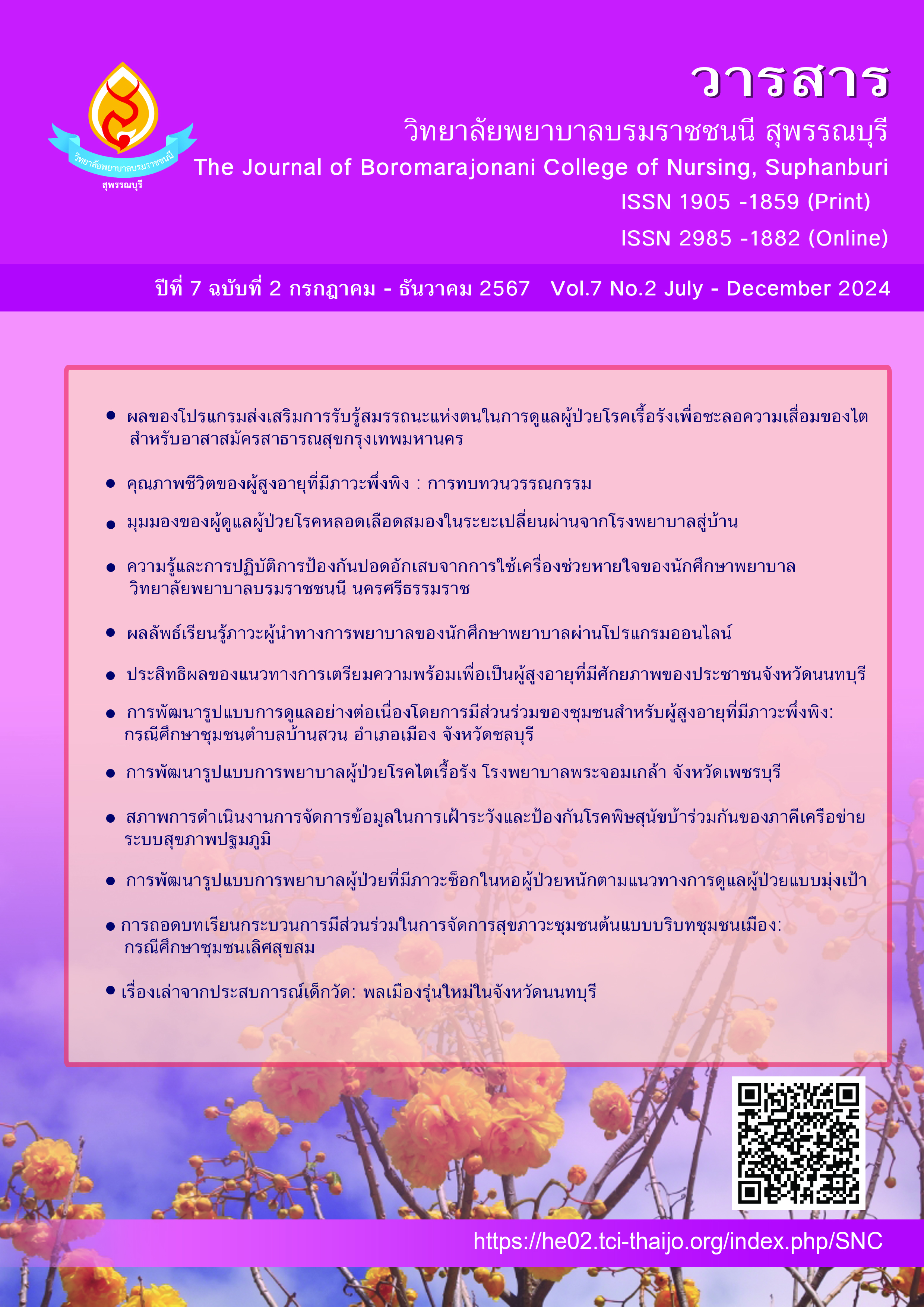
เรื่องเล่าจากประสบการณ์เด็กวัด: พลเมืองรุ่นใหม่ในจังหวัดนนทบุรี
คำสำคัญ:
เด็กวัด, พลเมืองรุ่นใหม่, การวิจัยแบบเล่าเรื่องบทคัดย่อ
การพัฒนาเยาวชนให้เติบโตเป็นพลเมืองที่มีคุณภาพในยุคปัจจุบันจำเป็นต้องอาศัยการเสริมสร้างศักยภาพผ่านทุนชีวิต ภายใต้บริบทแวดล้อมที่เกื้อหนุน โดยครอบครัวถือเป็นหน่วยพื้นฐานที่สำคัญในการบ่มเพาะบุคลิกภาพและค่านิยม แต่ด้วยสภาวะทางสังคมและเศรษฐกิจที่เปลี่ยนแปลงไป ทำให้ผู้ปกครองมีเวลาในการดูแลบุตรลดลง ดังนั้นสถานศึกษา ศาสนสถาน และชุมชนต้องเข้ามามีส่วนร่วมในการพัฒนาศักยภาพของเด็กและเยาวชนอย่างเป็นองค์รวม การศึกษาครั้งนี้เป็นวิจัยเชิงคุณภาพแบบเล่าเรื่อง (Narrative research) มีวัตถุประสงค์เพื่อศึกษาประสบการณ์ของเด็กวัดในการเป็นพลเมืองรุ่นใหม่ในจังหวัดนนทบุรี ผู้ให้ข้อมูลคือเด็กวัดที่มีอายุระหว่าง 15-24 ปี จำนวน 10 คน ที่มีประสบการณ์การเป็นเด็กวัดอย่างน้อย 1 ปี เก็บข้อมูลโดยการการสัมภาษณ์เชิงลึกกึ่งโครงสร้าง วิเคราะห์ข้อมูลแบบแก่นสาระ ผลการวิจัยพบประเด็นที่สำคัญในการพัฒนาเด็กวัดให้เป็นพลเมืองรุ่นใหม่ 4 ประเด็น ประกอบด้วย 1) เส้นทางเติบโตของเด็กวัด: จากแรงบันดาลใจสู่การสร้างคุณค่าและทักษะชีวิต 2) เส้นทางการเรียนรู้: จากลูกมือสู่ผู้นำ 3) พลังเด็กวัดสู่การพัฒนา: จากภูมิปัญญาสู่การพัฒนาชุมชน และ 4) การหล่อหลอมทักษะชีวิต: จากเด็กวัดสู่พลเมืองรุ่นใหม่ ผลการวิจัยนี้สามารถนำไปประยุกต์ใช้เป็นแนวทางในการพัฒนาเด็กและเยาวชนให้เป็นพลเมืองรุ่นใหม่ในบริบทที่ใกล้เคียงต่อไป
เอกสารอ้างอิง
จิตรกร ละออศรี ธัชชนันท์ อิศรเดช และ จำนงค์ อดิวัฒนสิทธิ์. (2565). การสร้างจิตสำนึกทาง การเมืองในระบอบประชาธิปไตยของเยาวชนในเทศบาลเมืองอโยธยา จังหวัดพระนครศรีอยุธยา. วารสาร มจร สังคมศาสตร์ปริทรรศน์, 11(5), 100-115.
ไชยเดช พิชญ์ไกร. (2566). การพัฒนารูปแบบการแสดงสื่อสาระกับการเสริมสร้างทักษะพลังแห่งการฟื้นตัวของวัยรุ่น. [วิทยานิพนธ์ปริญญามหาบัณฑิต, จุฬาลงกรณ์มหาวิทยาลัย].
ฐิติชญาน์ ปิยภัทรธนัสไชย. (2567). พลังสุขภาพจิตในกศึกษาพยาบาลที่มีผลต่อการจัดการความเครียด. วารสาร โรง พยาบาล มหาสารคาม, 21(2), 27-36.
ปิยฉัตร คนชม และ วรินทร บุญยิ่ง. (2566). แบบสมรรถนะทางสังคมของนักเรียนโรงเรียนขยายโอกาส. [วิทยานิพนธ์ปริญญาดุษฎีบัณฑิต, มหาวิทยาลัยนเรศวร].
ภัทรพล หมดมลทิน. (2559). การพัฒนาเยาวชนตามแนวพุทธ. วารสารพุทธจิตวิทยา, 1(1), 13-22.
พิชชานันท์ โชติวรรธอนันต์. (2566). การพัฒนาชุดกิจกรรมการเรียนรู้ตามแนวคิดชุมชนเป็นฐานเพื่อสร้างเสริมพฤติกรรมสุขภาพด้วยภูมิปัญญาไทย.ดุษฎีนิพนธ์ปริญญาดุษฎีบัณฑิต, มหาวิทยาลัยบูรพา.
วัชรินทร์ ชาญศิลป์. (2561). ความเป็นพลเมืองของเยาวชนไทย. วารสารรัฐศาสตร์ปริทรรศน์ มหาวิทยาลัยเกษตรศาสตร์, 5(1), 187.
วิจารณ์ พานิช. (2558). วิถีสร้างการเรียนรู้เพื่อศิษย์ในศตวรรษที่ 21. วารสารนวัตกรรมการเรียนรู้, 1(2), 3-14.
ศิลป์ชัย สีมาวงศ์อนันต์ กมลาศ ภูวชนาธิพงศ์ และ สุวัฒสัน รักขันโท. (2563). แนวทางการพัฒนาสมรรถนะด้านจริยธรรมของบุคลากรสายวิศวกรรม. Journal of MCU Humanities Review, 6(1), 369-383.
Boone, T., Reilly, J.A., & Sashkin, M. (1977). SOCIAL LEARNING THEORY Albert Bandura Englewood Cliffs, N.J.: Prentice-Hall, 1977. 247 pp., paperbound. Group & Organization Studies, 2(3), 384-385.
Braun, V., & Clarke, V. (2006). Using thematic analysis in psychology. Qualitative Research in Psychology, 3(2), 77–101.
Bronfenbrenner, U. (1995). Developmental ecology through space and time: A future perspective. In P. Moen, G. H. Elder & K. Luscher (Eds.), Examining lives in context: Perspectives on the ecology of human development (pp. 619-647). Washington, DC: American Psychological Association. Catherine, Berrington., Emma, Macdonald. (2024). Human Resource Management. doi:
1093/hebz/9780192893512.003.0007
Hersey, P. & Blanchard, K. H. (1969). Life cycle theory of leadership. Training and Development Journal, 2, 6-34.
Kolb, D. A. (1984). Experiential Learning: Experience as the Source of Learning and Development. Prentice Hall. http://academic.regis.edu/ed205/Kolb.pdf
Lincon, Y.S., & Guba, E.G. (1985). Naturalistic inquiry. Beverly Hills, CA: Sage.
Maslow, A. H. (1943). Preface to motivation theory. Psychosomatic medicine, 5(1), 85-92.
ดาวน์โหลด
เผยแพร่แล้ว
ฉบับ
ประเภทบทความ
สัญญาอนุญาต
ลิขสิทธิ์ (c) 2024 วิทยาลัยพยาบาลบรมราชชนนี สุพรรณบุรี

อนุญาตภายใต้เงื่อนไข Creative Commons Attribution-NonCommercial-NoDerivatives 4.0 International License.
บทความที่ได้รับการตีพิมพ์เป็นลิขสิทธิ์ของวารสารวิทยาลัยพยาบาลบรมราชชนนี สุพรรณบุรี
ข้อความที่ปรากฏในบทความแต่ละเรื่องในวารสารวิชาการเล่มนี้เป็นความคิดเห็นส่วนตัวของผู้เขียนแต่ละท่านไม่เกี่ยวข้องกับวิทยาลัยพยาบาลบรมราชชนนี สุพรรณบุรี และคณาจารย์ท่านอื่นๆในวิทยาลัยฯ แต่อย่างใด ความรับผิดชอบองค์ประกอบทั้งหมดของบทความแต่ละเรื่องเป็นของผู้เขียนแต่ละท่าน หากมีความผิดพลาดใดๆ ผู้เขียนแต่ละท่านจะรับผิดชอบบทความของตนเองแต่ผู้เดียว


