
Prevalence and Clinical Characteristics in Patients with Complicated Infantile Hemangioma: A Single Center Study
Keywords:
Infantile hemangioma, prevalence, clinical characteristics, complications, treatmentsAbstract
Background: Infantile hemangiomas (IHs) are the most prevalent benign vascular tumors in children. While most IHs are uncomplicated, a minority may develop complications, including ulceration, disfigurement, and visual disturbance which can lead to significant morbidities.
Objectives: To analyze the prevalence of complicated IHs, identify the clinical characteristics, management, and treatment responses in patients with complicated IHs
Methods: Retrospective, descriptive study was conducted at the Pediatric Dermatology Clinic of Queen Sirikit National Institute of Child Health, encompassing pediatric patients under 1 year old diagnosed with IH from January 2019 to December 2023.
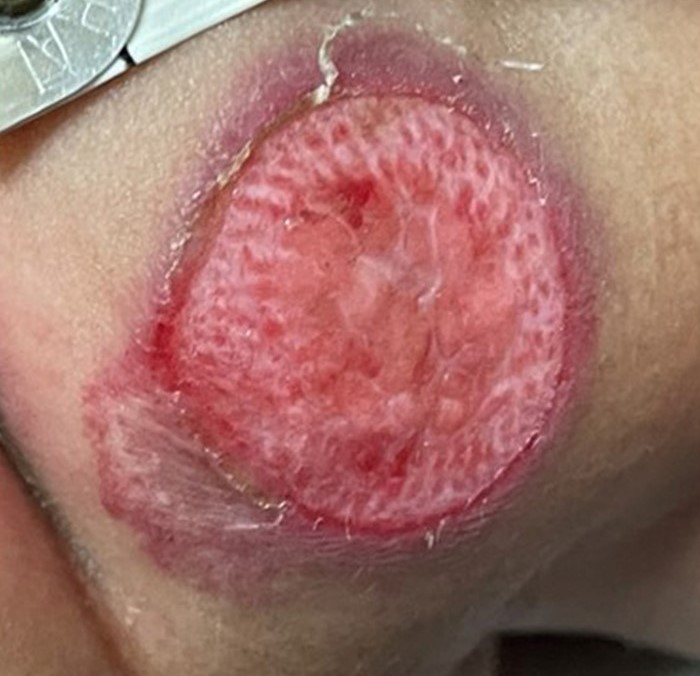
Results: Among 300 IH patients, the complicated IHs were found in 54 cases (18.0%). The mean age was 4.2±2.59 months. The complications included ulceration (n=39; 72.2%), disfigurement (n=9; 16.7%), visual disturbance (n=1; 1.9%), hepatic hemangioma (n=5; 9.3%), subglottic hemangioma (n=1; 1.9%), and PELVIS syndrome (n=1; 1.9%). Ulceration was the most common complication, mostly located in the diaper area (n=11; 28.2%; P <0.001) and lips (n=10; 25.6%; P 0.004), with larger IHs (≥ 5 cm) were more prone to ulcerate than smaller IHs (P <0.001). Most of the patients underwent multiple treatment modalities including oral propranolol (n=54; 100%; mean duration 10.8 months), topical timolol (n=5; 9.3%), antibiotics (n=22; 40.7%), and pulsed dye laser used for ulcerated IHs (n=28; 51.9%). All complicated IH patients regressed after treatments.
Conclusion: Ulceration represented the most frequent complication, predominantly observed in the diaper region, lip, and in lesions exceeding 5 cm in size. Understanding the timing of onset, clinical characteristics, and treatments can serve as valuable guidance for early intervention to prevent complications.
References
Drolet BA, Esterly NB, Frieden IJ. Hemangiomas in children. N Engl J Med 1999;341:173-81.
Jacobs AH, Walton RG. The incidence of birthmarks in the neonate. Pediatrics 1976;58:218-22.
Léauté-Labrèze C, Harper JI, Hoeger PH. Infantile haemangioma. Lancet 2017;390:85-94.
Tollefson MM, Frieden IJ. Early growth of infantile hemangiomas: What parents’ photographs tell us. Pediatrics 2012;130:e314-20.
Krowchuk DP, Frieden IJ, Mancini AJ, et al. Subcommittee on the management of infantile hemangiomas. Clinical practice guideline for the management of infantile hemangiomas. Pediatrics 2019;143:e20183475.
Paller SA, Mancini JA. Infantile hemangiomas, vascular malformations, and other vascular disorders of infancy and childhood. In: Paller and Mancini–Hurwitz Clinical Pediatric Dermatology. 6th ed. U.S.A.: Elsevier; 2022;330.
Gomes R, Salazar L, Fraga C, et al. Management of infantile hemangiomas-experience of a tertiary hospital. Eur J Pediatr 2023;182:1611-18.
Haggstrom AN, Drolet BA, Baselga E, et al. Prospective study of infantile hemangiomas: clinical characteristics predicting complications and treatment. Pediatrics 2006;118:882-7.
Chamlin SL, Haggstrom AN, Drolet BA, et al. Multicenter prospective study of ulcerated hemangiomas. J Pediatr 2007;151:684-689.e1.
Hermans DJ, Boezeman JB, Van de Kerkhof PC, et al. Differences between ulcerated and nonulcerated hemangiomas, a retrospective study of 465 cases. Eur J Dermatol 2009;19:152-6.
Fernández Faith E, Shah SD, Braun M, et al. Incidence and clinical factors associated with ulceration in infantile hemangiomas. J Am Acad Dermatol 2023;88:414-20.
Chamli A, Aggarwal P, Jamil RT, et al. Hemangioma. [Updated 2023 Jun 12]. In: StatPearls [Internet]. Treasure Island (FL): StatPearls Publishing; 2024 Jan-.Available from: https://www.ncbi.nlm.nih.gov/books/NBK538232/
Ceisler EJ, Santos L, Blei F. Periocular hemangiomas: what every physician should know. Pediatric Dermatology 2004;21:1-9.
Ji Y, Chen S, Xiang B, et al. Clinical features and management of multifocal hepatic hemangiomas in children: a retrospective study. Sci Rep 2016;6:31744.
Fernández Faith E, Shah S, Witman PM, et al. Clinical features, prognostic factors, and treatment interventions for ulceration in patients with infantile hemangioma. JAMA Dermatol 2021;157:566–72.
Danarti R, Ariwibowo L, Radiono S, Budiyanto A. Topical timolol maleate 0.5% for infantile hemangioma: Its effectiveness compared to ultrapotent topical corticosteroids-A single-center experience of 278 cases. Dermatology 2016;232:566-71.
Li Y, Hu Y, Li H, Deng L. Successful treatment of ulcerated hemangiomas with a dual-wavelength 595- and 1064-nm laser system. J Dermatolog Treat 2016;27:562–7.
Downloads
Published
How to Cite
Issue
Section
License
Copyright (c) 2025 Thai Journal of Dermatology

This work is licensed under a Creative Commons Attribution-NonCommercial-NoDerivatives 4.0 International License.
เนื้อหาและข้อมูลในบทความที่ลงตีพิมพ์ในวารสารโรคผิวหนัง ถือเป็นข้อคิดเห็นและความรับผิดชอบของผู้เขียนบทความโดยตรงซึ่งกองบรรณาธิการวารสาร ไม่จำเป็นต้องเห็นด้วย หรือร่วมรับผิดชอบใดๆ
บทความ ข้อมูล เนื้อหา รูปภาพ ฯลฯ ที่ได้รับการตีพิมพ์ในวารสารโรคผิวหนัง ถือเป็นลิขสิทธิ์ของวารสารฯ หากบุคคลหรือหน่วยงานใดต้องการนำทั้งหมดหรือส่วนหนึ่งส่วนใดไปเผยแพร่ต่อหรือเพื่อกระทำการใดๆ จะต้องได้รับอนุญาตเป็นลายลักอักษรจากบรรณาธิการวารสารโรคผิวหนังก่อนเท่านั้น

