
Disseminated Cryptococcosis with Cutaneous Involvement due to Cryptococcus gattii: A Case Report
Keywords:
Disseminated cryptococcosis, Cellulitis, Cryptococcus gattiiAbstract
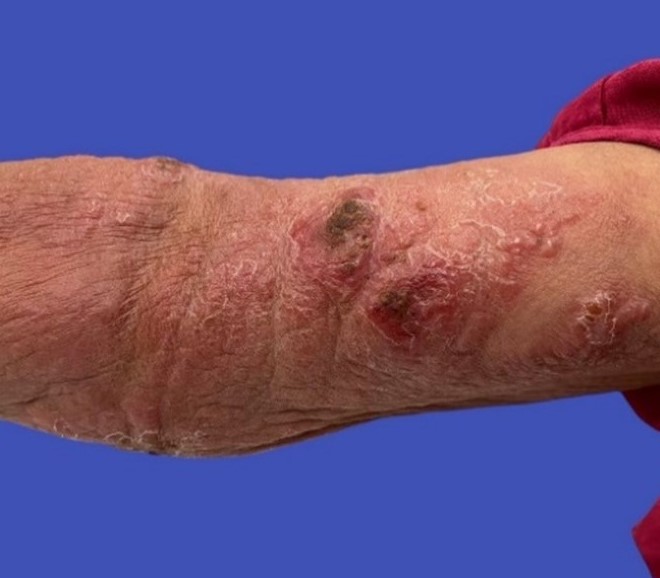
Disseminated cryptococcosis is a severe, life-threatening fungal infection caused by Cryptococcus species, with Cryptococcus gattii being a primary etiological agent in immunocompetent individuals. Rare but increasingly documented, cutaneous involvement in disseminated cryptococcosis can manifest as papules, nodules, ulcers, cellulitis-like or verrucous lesions. Here, we present a case of disseminated cryptococcosis with notable cutaneous involvement in an otherwise immunocompetent patient. The diagnosis was confirmed through fungal culture and histopathological examination, revealing typical C. gattii morphology. This case highlights the potential for C. gattii to cause systemic infection, including unusual cutaneous manifestations, in individuals without overt immunosuppression. This case also emphasizes considering cryptococcosis in the differential diagnosis of skin lesions, particularly in endemic regions or in patients with a history of environmental exposure. Early recognition and antifungal therapy are critical to improving outcomes, as cryptococcosis can rapidly progress to fatal multiorgan failure if left untreated.
References
Dennis LK, Anthony SF, Casadevall A. Harrison’s infectious disease first edition. New york: McGraw-Hill; 2010.
Baddley JW, Chen SCA, Huisingh C, Benedict K, DeBess EE, Galanis E, et al. An International Cohort Study Comparing Epidemiology and Outcomes of Patients With Cryptococcus neoformans or Cryptococcus gattii Infections. Clinical Infectious Diseases 2021;73:1133–41.
Maziarz EK, Perfect JR. Cryptococcosis. Infect Dis Clin North Am 2016;30:179–206.
Noguchi H, Matsumoto T, Kimura U, Hiruma M, Kusuhara M, Ihn H. Cutaneous Cryptococcosis. Med Mycol J 2019;60:101-7.
Christianson JC, Engber W, Andes D. Primary cutaneous cryptococcosis in immunocompetent and immunocompromised hosts. Med Mycol 2003;41:177-88.
Xue X, Deng H, Zhao L, et al. Cryptococcosis caused by cryptococcus gattii: 2 case reports and literature review. Medicine (Baltimore) 2020;99: e23213.
Saidykhan L, Onyishi CU, May RC. The Cryptococcus gattii species complex: Unique pathogenic yeasts with understudied virulence mechanisms. PLoS Negl Trop Dis 2022;16: e0010916.
Chan M, Lye D, Win MK, Chow A, Barkham T. Clinical and microbiological characteristics of cryptococcosis in Singapore: predominance of Cryptococcus neoformans compared with Cryptococcus gattii. Int J Infect Dis 2014;26:110-5.
Boni EE, Lauren CH, Roderick JH. Bolognia Dermatology fifth edition. Edinburg: Elsevier 2024.
Chen SCA, Meyer W, Sorrell TC. Cryptococcus gattii Infections. Clin Microbiol Rev 2014;27:980-1024.
David EE. Lever’s histopathology of the skin eleventh edition. Wolters Kluwer Health; 2014.
Chang CC, Harrison TS, Bicanic TA, et al. Global guideline for the diagnosis and management of cryptococcosis: an initiative of the ECMM and ISHAM in cooperation with the ASM. Lancet Infect Dis 2024;24:e495-512.
Perfect JR, Dismukes WE, Dromer F, et al. Clinical Practice Guidelines for the Management of Cryptococcal Disease: 2010 Update by the Infectious Diseases Society of America. Clin Infect Dis 2010;50:291-322.
Bellissimo-Rodrigues F, Baciotti M, Zanatto MP, Silva JO, Martins MDA, Martinez R. Cutaneous cryptococcosis due to Cryptococcus gattii in a patient on chronic corticotherapy. Rev Soc Bras Med Trop 2010;43:211–2.
Downloads
Published
How to Cite
Issue
Section
License
Copyright (c) 2025 Thai Journal of Dermatology

This work is licensed under a Creative Commons Attribution-NonCommercial-NoDerivatives 4.0 International License.
เนื้อหาและข้อมูลในบทความที่ลงตีพิมพ์ในวารสารโรคผิวหนัง ถือเป็นข้อคิดเห็นและความรับผิดชอบของผู้เขียนบทความโดยตรงซึ่งกองบรรณาธิการวารสาร ไม่จำเป็นต้องเห็นด้วย หรือร่วมรับผิดชอบใดๆ
บทความ ข้อมูล เนื้อหา รูปภาพ ฯลฯ ที่ได้รับการตีพิมพ์ในวารสารโรคผิวหนัง ถือเป็นลิขสิทธิ์ของวารสารฯ หากบุคคลหรือหน่วยงานใดต้องการนำทั้งหมดหรือส่วนหนึ่งส่วนใดไปเผยแพร่ต่อหรือเพื่อกระทำการใดๆ จะต้องได้รับอนุญาตเป็นลายลักอักษรจากบรรณาธิการวารสารโรคผิวหนังก่อนเท่านั้น

