
Nursing practice guidelines for the prevention of pressure ulcers
Article Sidebar
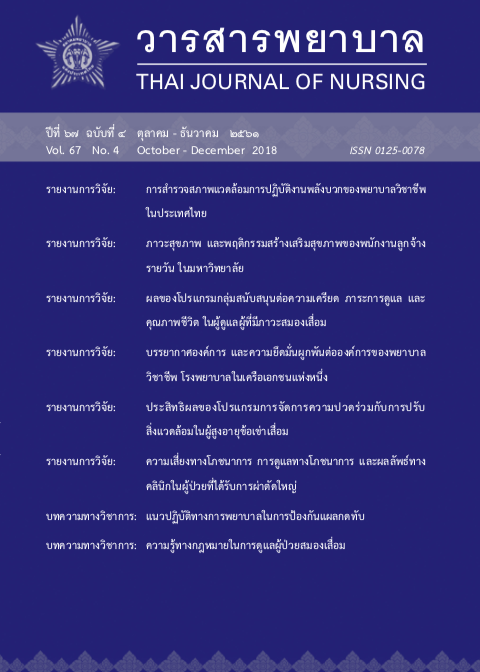
Published:
Jul 19, 2019
Main Article Content
Abstract
Nursing practice guideline on pressure ulcer prevention consisted of the mechanism and impact of pressure ulcers, use of risk assessment scales and pressure ulcer prevention.
Article Details
How to Cite
เจียมธโนปจัย ร., & แสนเวียงจันทร์ ส. (2019). Nursing practice guidelines for the prevention of pressure ulcers. Thai Journal of Nursing, 67(4), 53–61. retrieved from https://he02.tci-thaijo.org/index.php/TJN/article/view/204018
Section
Academic Article
References
โรงพยาบาลศิริราช ฝ่ายการพยาบาล. (2017). แบบประเมินบราเดน. ค้นเมื่อวันที่ 10 มิถุนายน
2517, จาก https://www.si.mahidol.ac.th/Th/division/nursing/NDivision/N_
QD/admin/ news_files/51_72_2.pdf
Ahtiala, M., Soppi, E., & Tallgren, M. (2018). Specific risk factors for pressure ulcer
development in adult critical care patients - a retrospective cohort study.
European Wound Management Association [EWME] Journal, 19(1), 35-42.
Avsar, P., & Karadag, A. (2018). Efficacy and cost-effectiveness analysis of
evidence-based nursing interventions to maintain tissue integrity to prevent
pressure ulcers and incontinence-associated dermatitis. Worldviews on
Evidence-Based Nursing, 15(1), 54-61.
Barakat-Johnson, M., Barnett, C., Wand, T., & White, K. (2017). Medical device-
related pressure injuries: An exploratory descriptive study in an acute tertiary
hospital in Australia. Journal of Tissue Viability, 6(4), 246-253.
Bergstrom, N., Horns, D., Rapp, M. P., Stern, A., Barrett, R., & Watkiss, M.
(2013). Turning for ulcer reduction: A multisite randomized clinical trial in nursing
homes. Journal of The American Geriatrics Society, 61, 1705-1713.
Black, J., Alves, P., Brindle, C. T., Dealey, C., Santamaria, N., Call, E., & Clark,
M. (2013). Use of wound dressings to enhance prevention of pressure ulcers
caused by medical devices. International Wound Journal, 12(3), 322-327.
Coleman, S., Nixon, J., Keen, J., Wilson, L., McGinnis, E., Dealey, C., et al.
(2014a). A new pressure ulcer conceptual framework. Journal of Advanced
Nursing, 70(10), 2222-2234.
Coleman, S., Nelson, E. A., Keen, J., Wilson, L., McGinnis, E., Dealey, C., et al.
(2014b). Developing a pressure ulcer risk factor minimum data set and risk
assessment framework. Journal of Advanced Nursing, 70(10), 2339–2352.
Cremasco1, M. F., Wenzel1, F., Sardinha1, F. M., Zanei, S. S. V., & Whitaker, I. Y.
(2009). Pressure ulcer: Patient risk, patient acuity, and nursing workload.
Acta Paul Enferm Journal, 22, 897- 902.
Edsberg, E. L., Black, J. M., Goldberg, M., McNichol, L., Moore, L., & Sieggreen,
M. (2016). Revised national pressure ulcer advisory panel pressure injury staging
system. Journal of Wound, Ostomy, & Continence Nursing, 43(6), 585-597.
Etafal, W., Argaw, Z., Gemechu, E., & Melese, B. (2018). Nurses’ attitude and
perceived barriers to pressure ulcer prevention. BMC Nursing, 17(14), 1-8.
Gray, M., & Giuliano, K. K. (2018). Incontinence-associated dermatitis,
characteristics and relationship to pressure injury: A multisite epidemiologic
analysis. Journal of Wound, Ostomy & Continence Nursing, 45(1), 63-67.
Lavallée, J. F., Gray, T. A., Dumville, J., & Cullum, N. (2018). Barriers and
facilitators to preventing pressure ulcers in nursing home residents: A qualitative
analysis informed by the theoretical domains framework. International Journal of
Nursing Studies, 82, 79-89.
Lachenbruch, C., Ribble, D., Emmons, K., & VanGilder, C. (2016). Pressure ulcer
risk in the incontinent patient: Analysis of incontinence and hospital-acquired
pressure ulcers from the international pressure ulcer prevalence survey. Journal
of Wound, Ostomy & Continence Nursing, 43(3), 235-241.
Latimer, S., Chaboyer, W., & Gillespie, B. M. (2015). The repositioning of
hospitalized patients with reduced mobility: A prospective study. Nursing Open
Journal, 2(2), 85-93.
Lustig, M., Levy, A., Kopplin, K., Blechman, Z. O., & Gefen, A. (2017). Beware of
the toilet: The risk for a deep tissue injury during toilet sitting. Journal of Tissue
Viability, 27(1), 23-31.
Paulden, M., Bergstrom, N., Horns, D., Rapp, M. P., Barrett, R., Watkiss, M., et al.
(2014). Turning for ulcer reduction (TURN) study: An economic analysis.
Ontario Health Technology Assessment Series, 14(12), 1-24.
Simonetti, V., Comparcini, D., Flacco, M. E., Giovanni, P. E., & Cicolini, G. (2015).
Nursing students' knowledge and attitude on pressure ulcer prevention
evidence-based guidelines: A multicenter cross- sectional study. Nursing
Education Today, 35(4), 573-579.
Shi, C., Dumville, J. C., & Cullum, N. (2018). Support surfaces for pressure ulcer
prevention: A network meta-analysis. PLOS ONE, 13(2), 1-29.
Stephens, M., Bartley, C., Betteridge, R., & Samuriwo, R. (2018). Developing the
tissue viability seating guidelines. Journal of Tissue Viability, 27(1), 74-79.
Stephens, M., & Bartley, C. A. (2018). Understanding the association between
pressure ulcers and sitting in adults what does it mean for me and my carers?
seating guidelines for people, carers and health & social care professionals.
Journal of Tissue Viability, 27(1), 59-73.
Usher, K., Woods, C., Brown, J., Power, T., Lea, J., Hutchinson, M., et al. (2018).
Australian nursing students’ knowledge and attitudes towards pressure injury
prevention: A cross-sectional study. International Journal of Nursing Studies,
81, 14-20.
Whitty, J, A., McImmes, E., Bucknall, T., Webster, J., Gillespie, B. M., Banks, M.,
et al. (2017). The cost-effectiveness of a patient -centred pressure ulcer
prevention carebundle: Findings from the INTACT cluster randomised trial.
International Journal of Nursing Studies, 75, 35-42.
Worsley, P. R., Rebolledo, D., Webb, S., Caggiari, S., & Bader, L. D. (2018).
Monitoring the biomechanical and physiological effects of postural changes
during leisure chair sitting. Journal of Tissue Viability, 27(1), 16-22.
2517, จาก https://www.si.mahidol.ac.th/Th/division/nursing/NDivision/N_
QD/admin/ news_files/51_72_2.pdf
Ahtiala, M., Soppi, E., & Tallgren, M. (2018). Specific risk factors for pressure ulcer
development in adult critical care patients - a retrospective cohort study.
European Wound Management Association [EWME] Journal, 19(1), 35-42.
Avsar, P., & Karadag, A. (2018). Efficacy and cost-effectiveness analysis of
evidence-based nursing interventions to maintain tissue integrity to prevent
pressure ulcers and incontinence-associated dermatitis. Worldviews on
Evidence-Based Nursing, 15(1), 54-61.
Barakat-Johnson, M., Barnett, C., Wand, T., & White, K. (2017). Medical device-
related pressure injuries: An exploratory descriptive study in an acute tertiary
hospital in Australia. Journal of Tissue Viability, 6(4), 246-253.
Bergstrom, N., Horns, D., Rapp, M. P., Stern, A., Barrett, R., & Watkiss, M.
(2013). Turning for ulcer reduction: A multisite randomized clinical trial in nursing
homes. Journal of The American Geriatrics Society, 61, 1705-1713.
Black, J., Alves, P., Brindle, C. T., Dealey, C., Santamaria, N., Call, E., & Clark,
M. (2013). Use of wound dressings to enhance prevention of pressure ulcers
caused by medical devices. International Wound Journal, 12(3), 322-327.
Coleman, S., Nixon, J., Keen, J., Wilson, L., McGinnis, E., Dealey, C., et al.
(2014a). A new pressure ulcer conceptual framework. Journal of Advanced
Nursing, 70(10), 2222-2234.
Coleman, S., Nelson, E. A., Keen, J., Wilson, L., McGinnis, E., Dealey, C., et al.
(2014b). Developing a pressure ulcer risk factor minimum data set and risk
assessment framework. Journal of Advanced Nursing, 70(10), 2339–2352.
Cremasco1, M. F., Wenzel1, F., Sardinha1, F. M., Zanei, S. S. V., & Whitaker, I. Y.
(2009). Pressure ulcer: Patient risk, patient acuity, and nursing workload.
Acta Paul Enferm Journal, 22, 897- 902.
Edsberg, E. L., Black, J. M., Goldberg, M., McNichol, L., Moore, L., & Sieggreen,
M. (2016). Revised national pressure ulcer advisory panel pressure injury staging
system. Journal of Wound, Ostomy, & Continence Nursing, 43(6), 585-597.
Etafal, W., Argaw, Z., Gemechu, E., & Melese, B. (2018). Nurses’ attitude and
perceived barriers to pressure ulcer prevention. BMC Nursing, 17(14), 1-8.
Gray, M., & Giuliano, K. K. (2018). Incontinence-associated dermatitis,
characteristics and relationship to pressure injury: A multisite epidemiologic
analysis. Journal of Wound, Ostomy & Continence Nursing, 45(1), 63-67.
Lavallée, J. F., Gray, T. A., Dumville, J., & Cullum, N. (2018). Barriers and
facilitators to preventing pressure ulcers in nursing home residents: A qualitative
analysis informed by the theoretical domains framework. International Journal of
Nursing Studies, 82, 79-89.
Lachenbruch, C., Ribble, D., Emmons, K., & VanGilder, C. (2016). Pressure ulcer
risk in the incontinent patient: Analysis of incontinence and hospital-acquired
pressure ulcers from the international pressure ulcer prevalence survey. Journal
of Wound, Ostomy & Continence Nursing, 43(3), 235-241.
Latimer, S., Chaboyer, W., & Gillespie, B. M. (2015). The repositioning of
hospitalized patients with reduced mobility: A prospective study. Nursing Open
Journal, 2(2), 85-93.
Lustig, M., Levy, A., Kopplin, K., Blechman, Z. O., & Gefen, A. (2017). Beware of
the toilet: The risk for a deep tissue injury during toilet sitting. Journal of Tissue
Viability, 27(1), 23-31.
Paulden, M., Bergstrom, N., Horns, D., Rapp, M. P., Barrett, R., Watkiss, M., et al.
(2014). Turning for ulcer reduction (TURN) study: An economic analysis.
Ontario Health Technology Assessment Series, 14(12), 1-24.
Simonetti, V., Comparcini, D., Flacco, M. E., Giovanni, P. E., & Cicolini, G. (2015).
Nursing students' knowledge and attitude on pressure ulcer prevention
evidence-based guidelines: A multicenter cross- sectional study. Nursing
Education Today, 35(4), 573-579.
Shi, C., Dumville, J. C., & Cullum, N. (2018). Support surfaces for pressure ulcer
prevention: A network meta-analysis. PLOS ONE, 13(2), 1-29.
Stephens, M., Bartley, C., Betteridge, R., & Samuriwo, R. (2018). Developing the
tissue viability seating guidelines. Journal of Tissue Viability, 27(1), 74-79.
Stephens, M., & Bartley, C. A. (2018). Understanding the association between
pressure ulcers and sitting in adults what does it mean for me and my carers?
seating guidelines for people, carers and health & social care professionals.
Journal of Tissue Viability, 27(1), 59-73.
Usher, K., Woods, C., Brown, J., Power, T., Lea, J., Hutchinson, M., et al. (2018).
Australian nursing students’ knowledge and attitudes towards pressure injury
prevention: A cross-sectional study. International Journal of Nursing Studies,
81, 14-20.
Whitty, J, A., McImmes, E., Bucknall, T., Webster, J., Gillespie, B. M., Banks, M.,
et al. (2017). The cost-effectiveness of a patient -centred pressure ulcer
prevention carebundle: Findings from the INTACT cluster randomised trial.
International Journal of Nursing Studies, 75, 35-42.
Worsley, P. R., Rebolledo, D., Webb, S., Caggiari, S., & Bader, L. D. (2018).
Monitoring the biomechanical and physiological effects of postural changes
during leisure chair sitting. Journal of Tissue Viability, 27(1), 16-22.
