
การเปรียบเทียบผลการผ่าตัดสร้างเส้นเอ็นไขว้หน้าผ่านการส่องกล้องด้วยวิธีดูแลภายใน 1 วัน โดยวิธีเก็บรักษา ALC ส่วนที่เหลือไว้กับวิธีดูแลแบบเดิมโดยวิธีตัด ACL ส่วนที่เหลือออกในโรงพยาบาลชลบุรี
Article Sidebar
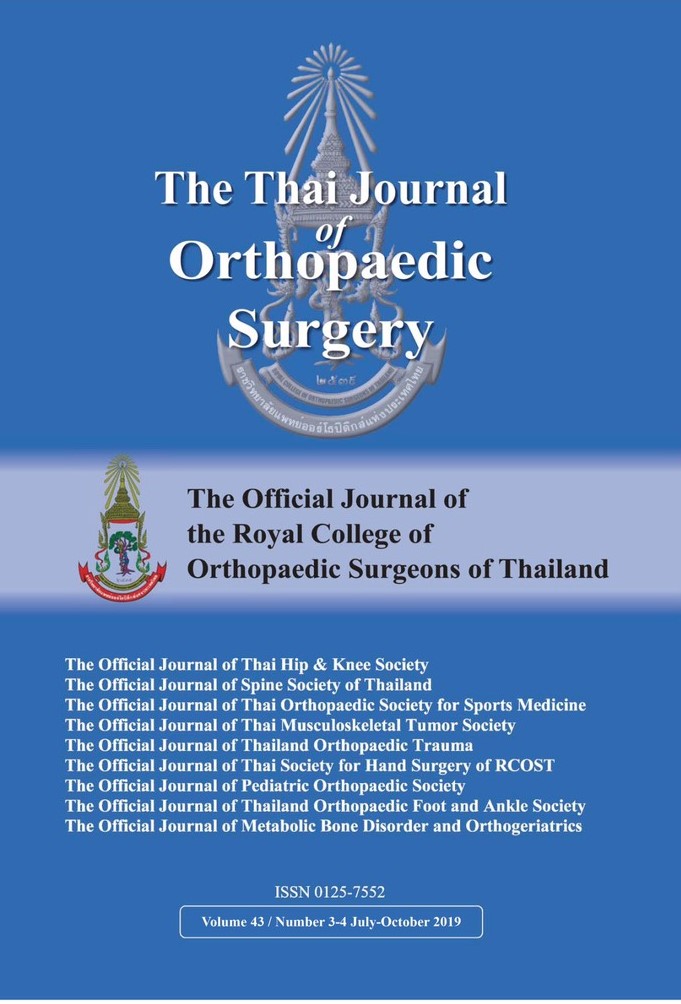
Main Article Content
บทคัดย่อ
การวิจัยครั้งนี้เป็นการวิจัยเชิงทดลอง (True experiment research) มีวัตถุประสงค์เพื่อเปรียบเทียบ
ผลการผ่าตัดสร้างเส้นเอ็นไขว้หน้าผ่านการส่องกล้องโดยวิธีการดูแลภายใน 1 วัน (One day surgery care) โดยเทคนิคการรักษา ACL ส่วนที่เหลือเดิมไว้ (remnant preserving ACL reconstruction) กับวิธีดูแลแบบเดิม (conventional care) โดยเทคนิคการเอา ACL ส่วนที่เหลือเดิมออก (standard ACL reconstruction) ในด้านต่าง ๆ ได้แก่ คะแนนความเจ็บปวดหลังผ่าตัด ค่าใช้จ่ายในการผ่าตัด ปริมาณเลือดที่ระบายออกใน 24 ชั่วโมงแรก ระยะเวลาในการผ่าตัดการติดเชื้อของแผลผ่าตัด และจำนวนวันนอนในโรงพยาบาล
กลุ่มตัวอย่างได้แก่ผู้ป่วยที่เข้ารับการรักษาเอ็นไขว้หน้าข้อเข่าฉีกขาดที่มารับการรักษาที่แผนกออร์โธปิดิกส์ โรงพยาบาลชลบุรีตั้งแต่วันที่ 1 กันยายน 2560 ถึงวันที่ 30 มิถุนายน 2561 โดยการเลือก
กลุ่มตัวอย่างแบบเจาะจง จำนวน 62 คน แบ่งเป็นกลุ่มทดลอง 30 คน กลุ่มควบคุม 32 คน
วิเคราะห์ข้อมูลโดยใช้สถิติพรรณนา ได้แก่ ร้อยละ ค่าเฉลี่ย และส่วนเบี่ยงเบนมาตรฐาน และสถิติอนุมาน ได้แก่ Independent t test และ Fisher Exacttest ผลการวิจัยพบว่า ผลการผ่าตัดมีความแตก
ต่างกันอย่างมีนัยสำคัญทางสถิติในด้านความเจ็บปวดหลังผ่าตัด(p=0.025) ค่าใช้จ่ายในการผ่าตัด(p=0.00) ปริมาณเลือดที่ระบายออกใน 24 ชั่วโมงแรก (p=0.00) และ จำนวนวันนอนในโรงพยาบาล(p=0.00) ส่วนระยะเวลาในการผ่าตัดและการติดเชื้อของแผลผ่าตัดไม่แตกต่างกัน ดังนั้นการผ่าตัดสร้างเส้นเอ็นไขว้
หน้าผ่านการส่องกล้องโดยวิธีการดูแลภายใน 1 วันโดยเทคนิคการรักษา ACL ส่วนที่เหลือเดิมไว้ ให้ผลที่ดีกว่าวิธีดูแลแบบเดิม (conventional care) โดยเทคนิคการเอา ACL ส่วนที่เหลือเดิมออก และ
สามารถพัฒนาต่อเป็นการผ่าตัดแบบผู้ป่วยนอกได้
Article Details
เอกสารอ้างอิง
2. Sanders TL, MaraditKremers H, Bryan AJ, Larson DR, Dahm DL, Levy BA, et al. Incidence of anterior cruciate ligament tears and reconstruction. Am J Sports Med. 2016; 44(6): 1502-7.
3. American Academy of Orthopaedic Surgeons. July 2007, Anterior cruciate ligament injury : Surgical Consideration, http://orthoinfo.aaos. org/topic.cfm?topic=A00297#A00297_R4_anchor (July11, 2008).
4. Busam ML. Riff A, Back BR Jr. Single – bundle ACL reconstruction tecnique : Bone patellar tendon bone autograft. In : Fu FH, Cohen SB, editors. Current concept in ACL reconstruction. New Jersey : SLACK in corporate; 2008. p. 185-99.
5. Ferrari D, Lopes TJ, França PF, Azevedo FM, Pappas E. Outpatient versus inpatient anterior cruciate ligament reconstruction: A systematic review with meta-analysis. The Knee. 2017;24(2):197-206.
6. Muneta T, Koga H. Anterior cruciate ligament remnant and its value for preservation. Asia Pac J Sports Med Arthrosc Rehabil Technol. 2016; 7: 1-9.
7. Muneta T, Koga H, Nakamura T, Horie M, Watanabe T, Yagishita K, et al. A new behind-remnant approach for remnant-preserving double-bundle anterior cruciate ligament reconstruction compared with a standard approach. Knee Surg Sports Traumatol Arthrosc. 2015; 23(12): 3743-9.
8. Sutter EG, Anderson JA, Garrett WE Jr. Direct visualization of existing footprint and outside-in drilling of the femoral tunnel in anterior cruciate ligament reconstruction in the knee. Arthrosc Tech. 2015; 4(2): e107-13.
9. Medical Records Section Chon Buri Hospital, Chonburi; 2017.
10. Tipmongkol W, Bhiwattanakul N. Cost analysis of nursing service activities and time services for ACL reconstruction patients in the male Orthopedic surgical ward of Songklanagarind Hospital, Health Management. 2015; 2(2): 20-32.
11. Karaaslan F, Karaoğlu S, Yurdakul E. Reducing intra-articular hemarthrosis after arthroscopic anterior cruciate ligament reconstruction by the administration of Intravenous tranexamic acid: A prospective randomized controlledtrail. Am J Sports Med. 2015; 43(11): 2720-6.
12. Lunebourg A, Ollivier M, Delahaye D, Argenson JA, Parratte S. Better satisfaction of patients operated on anterior cruciate ligament reconstruction in outpatient setting. A prospective comparative monocentric study of 60 cases. Arch Orthop Trauma Surg. 2016; 136(12): 1709-15.
