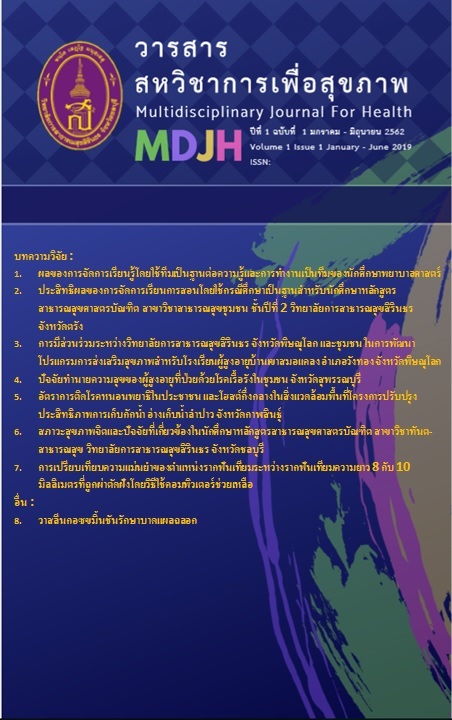
ผลการเรียนรู้โดยใช้ทีมเป็นฐานต่อความรู้และการทำงานเป็นทีมของนักศึกษาพยาบาลศาสตร์
คำสำคัญ:
นักศึกษาพยาบาล การเรียนรู้โดยใช้ทีมเป็นฐาน การรับรู้การทำงานเป็นทีมบทคัดย่อ
บทนำ: Team-Based learning (TBL) เป็นการเรียนรู้เชิงรุก ที่กระตุ้นให้เกิดการเรียนรู้ด้วยตนเอง การคิดและการแก้ปัญหาอย่างสมเหตุผล เกิดความร่วมมือ ทำงานเป็นทีม ส่งเสริมทักษะการเรียนรู้แห่งศตวรรษที่ 21
วัตถุประสงค์: เพื่อศึกษาผลของการเรียนรู้โดยใช้ทีมเป็นฐาน ที่มีต่อความรู้และการทำงานเป็นทีมของนักศึกษาพยาบาล
วิธีการศึกษา: การวิจัยแบบแผนการทดลองขั้นต้น กลุ่มตัวอย่างนักศึกษาพยาบาลศาสตร์ชั้นปีที่ 2 ที่ได้จากการเลือกแบบเจาะจง จำนวน 77 ราย ที่เรียนวิชาการพยาบาลครอบครัวและชุมชน 1 โดยใช้การเรียนรู้แบบทีมเป็นฐาน เครื่องมือวิจัยคือรูปแบบการสอนแบบTBL แบบทดสอบความรู้รายบุคคลและรายกลุ่ม แบบสอบถามการทำงานเป็นทีม คำถามปลายเปิด วิเคราะห์ข้อมูลใช้สถิติเชิงพรรณนา การทดสอบทีแบบหนึ่งกลุ่ม
ผลการวิจัย: หลังการเรียน พบว่า คะแนนความรู้รายกลุ่มสูงกว่าคะแนนรายบุคคลอย่างมีนัยสำคัญทางสถิติ (t=18.27, p<0.001) ค่าเฉลี่ยการรับรู้การทำงานเป็นทีมอยู่ในระดับเห็นด้วย (=3.28, SD=0.07) ค่าเฉลี่ยสูงที่สุดคือด้านการพัฒนาวิชาชีพ(=3.36, SD=0.12) กลุ่มตัวอย่างมีความคิดเห็นว่า TBL ทำให้มีการเรียนรู้ด้วยตนเอง สมาชิกทีมได้ระดมสมองอภิปรายหาเหตุผลเพื่อหาคำตอบร่วมกัน มีการแลกเปลี่ยนข้อมูล เกิดมุมมองที่หลากหลาย รู้สึกเรียนสนุก ไม่น่าเบื่อ อยากเรียนรู้มากขึ้น การเรียนเป็นทีมช่วยให้มีความเข้าใจและจดจำเนื้อหาวิชาได้มากขึ้น
สรุปผล: การเรียนรู้โดยใช้ทีมเป็นฐานส่งเสริมความรู้และการทำงานเป็นทีม ซึ่งสามารถนำไปใช้ในการพัฒนาการเรียนรู้ในแต่ละชั้นปีโดยมีการประยุกต์ให้มีการวิเคราะห์สถานการณ์นำความรู้ไปใช้ในสถานการณ์ที่มีความซับซ้อนมากขึ้นเพื่อส่งเสริมให้เกิดทักษะตามสมรรถนะผู้เรียนในแต่ละชั้นปี
เอกสารอ้างอิง
2. World Bank. The learning Pyramid (Internet) Washington, DC: World Bank (cited 2019 April 1) Available from:// siteresources/Handout_The Learning Pyramid .PDF
3. Michaelsen,L.K. “Gettingstarted with team learning”. In L.K.Michaelsen, A.B.Knight, L.D.Fink.(Eds).Team Based learning, A transformative use of small group in college teaching.Sterling,VA:Stylus Pub. 2013; 27-50
4. Cheng,C.Y., Liou,S.R., Hsu,T.H., Pan,M.Y., et.al.Preparing nursing students to be competent for future professional practice: Applying the team based learning teaching strategy.Journal of Professional Nursing, 2014; 30(4):347-356
5. Patrick J.Gallegos, Michael Peeters. A measure of teamwork perceptions for team-based learning. Currents in Pharmacy Teaching and Learning, 2011; 30-35
6. Yaisoon S., Rattanaviboon P., Chankao C., Effects of Team-Based Learning on Knowledge and perceived Learning Outcomes in Antenatal Care of Nursing Students, Thai Red Cross Nursing Journal, 2016; 9(2): 73-87 (in thai)
7. Pansawat M., Inchaithep S., et.al.The effectiveness of Team-Based Learning on Learning Achievement, Critical Thinking, Team Work Skill and Self-Directed Learning Readiness of Student Nurses, Journal of nursing, Public Health, and Education, 2015; 16(2): 92-102 (in thai)
8. Santanavanich C., Pumpuang W., Thavorn T., The evaluation of Team-Based Learning process in Nursing Students:Learning outcomes in accordance with Thai Qualification Framework, Feasibility,and Readiness Assurance of Students. J NURS SCI, 2015; 33(suppl 1): 37-47 (in thai)
9. Huang , Jing-Wen Li,Young-Hui.Slack Resources in Team Learning and Project Performance. Journal of Business Research, 2012; 65(3): 381-8