ผลของโปรแกรมการส่งเสริมโภชนาการต่อภาวะโภชนาการของผู้ป่วยแผลไหม้ โรงพยาบาลแห่งหนึ่งในภาคตะวันออกเฉียงเหนือ
คำสำคัญ:
โปรแกรมการส่งเสริมโภชนาการ, ภาวะโภชนาการ, ผู้ป่วยที่มีแผลไหม้บทคัดย่อ
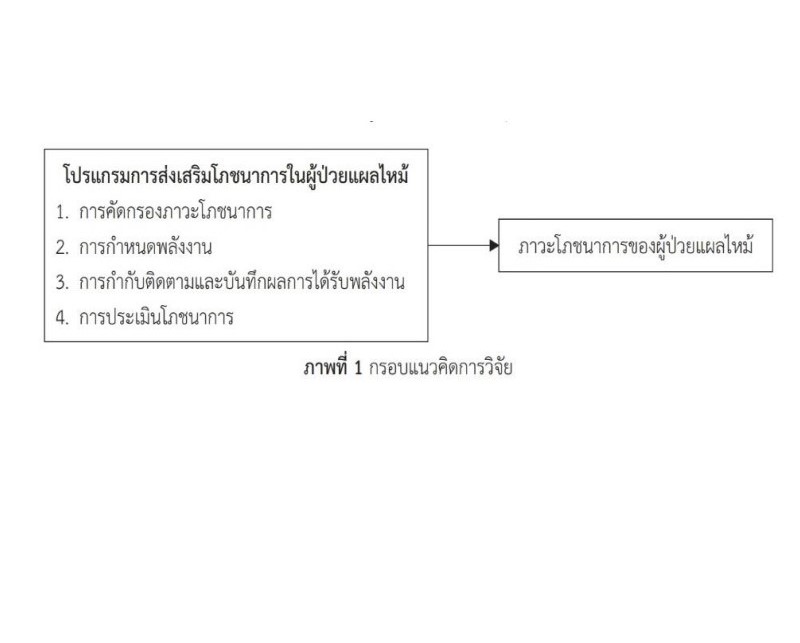
การวิจัยกึ่งทดลองนี้มีวัตถุประสงค์เพื่อเปรียบเทียบภาวะโภชนาการของผู้ป่วยที่มีแผลไหม้ก่อนและหลังได้รับโปรแกรมการส่งเสริมโภชนาการ กลุ่มตัวอย่างคือผู้ป่วยแผลไหม้ที่เข้ารับการรักษาในหน่วยไฟไหม้น้ำร้อนลวก จำนวน 23 คน ได้รับโปรแกรมการส่งเสริมโภชนาการประกอบด้วย 4 ขั้นตอนได้แก่ การคัดกรองภาวะโภชนาการ การกำหนดพลังงาน การกำกับติดตามและบันทึกผลการได้รับพลังงาน และการประเมินภาวะโภชนาการ โดยกลุ่มตัวอย่างจะได้รับโปรแกรมนี้ตั้งแต่แรกรับจนกระทั้งจำหน่าย เครื่องมือวิจัยประกอบด้วยแบบบันทึกข้อมูลทั่วไปและข้อมูลสุขภาพ และแบบประเมินภาวะโภชนาการ สถิติที่ใช้ในการวิเคราะห์ข้อมูลประกอบด้วยสถิติพรรณาและสถิติการทดสอบค่าที
ผลการวิจัย พบว่า หลังได้รับโปรแกรมการส่งเสริมโภชนาการผู้ป่วยแผลไหม้มีความเสี่ยงต่อการเกิดภาวะทุพโภชนาการลดลงอย่างมีนัยสำคัญทางสถิติ (p <.05) ดังนั้นพยาบาลและทีมสุขภาพควรให้ความสำคัญในการประเมินภาวะโภชนาการและความต้องการพลังงานของผู้ป่วยแผลไหม้ เพื่อการส่งเสริมภาวะโภชนาการแก่ผู้ป่วยที่มีแผลไหม้ที่ถูกต้องเหมาะสม ส่งเสริมการหายของแผล ลดภาวะแทรกซ้อนและลดอัตราการเสียชีวิตที่อาจเกิดขึ้นกับผู้ป่วย
เอกสารอ้างอิง
Aiyakaew, S., & Muktabhant, B. (2012). Nutritional status of patients In surgical intensive care unit by using Udonthani hospital nutrition triage. Srinagarind Medical Journal, 27(4), 354-360.
Bunchuailua, W., Kapol, N., & Janweeranon, K. (2020). Malnutrition and its impacts in hospitalized patients: A systematic review. Thai Journal of Pharmacy Practice, 12(2), 287-304.
Burn Unit. (2020). Performance report of burn unit Udonthani hospital 2020. Udonthani: Udonthani hospital.
Kang, M. C., Kim, J. H., Ryu, S. W., Moon, J. Y., Park, J. H., Park, J. K., ... & Hong, S. K. (2018). Prevalence of malnutrition in hospitalized patients: A multicenter cross-sectional study. Journal of Korean Medical Science, 33(2). 1-10.
Ketmeak, A. (2014). Nutrition support in burns. Thai Journal of Burn Injury, 7(2), 61-71.
Komindr, S., Tangsermwong, T., & Janepanish, P. (2013). Simplified malnutrition tool for Thai patients. Asia Pacific Journal of Clinical Nutrition, 22(4), 516-521.
Kulnitichai, W. (2019). Nursing care for continuous monitoring of the malnutrition in critical patients. Thai Journal of Cardio-Thoracic Nursing, 30(1), 2-16.
Prelack, K., Dylewski, M., & Sheridan, R. L. (2007). Practical guidelinesfor nutritional management of burn injury and recovery. Burn, 33, 14-24.
Putwatana, P., Reodecha, P., Sirapo-ngam, Y., Lertsithichai, P., & Sumboonnanonda, K. (2005). Nutrition screening tools and the prediction of postoperative infectious and wound complications: Comparison of methods in presence of risk adjustment. Nutrition, 21(6), 691-697.
Shields, B. A., Carpenter, J. N., Bustillos, B. D., Jordan, A. N., Cunningham, K. B., Vega, S. J., Aden, J. K., Rowan, M. P., Rizzo, J. A., Dewey, W. S., Gurney, J. M., Ainsworth, C. R., & Cancio, L. C. (2019). The interplay of nutrition, physical activity, severity of illness, and mortality in critically ill burn patients: Is there a connection. J Burn Care Res. 40(6), 936-42.
World Health Organization [WHO]. (2018). World health statistics 2018: Monitoring health for the SDGs, sustainable development goals 2018. Retrieved from https://www.who.int/docs/default-source/gho-documents/world-health-statistic-reports/6-June-18108-world-health-statistics-2018.pdf.
ดาวน์โหลด
เผยแพร่แล้ว
รูปแบบการอ้างอิง
ฉบับ
ประเภทบทความ
สัญญาอนุญาต

อนุญาตภายใต้เงื่อนไข Creative Commons Attribution-NonCommercial-NoDerivatives 4.0 International License.