ผลของกิจกรรมส่งเสริมสมรรถนะอาสาสมัครสาธารณสุขต่อความรู้และการรับรู้สมรรถนะตนเองในการช่วยเลิกบุหรี่
คำสำคัญ:
กิจกรรมส่งเสริมสมรรถนะ, อาสาสมัครสาธารณสุข, บุหรี่บทคัดย่อ
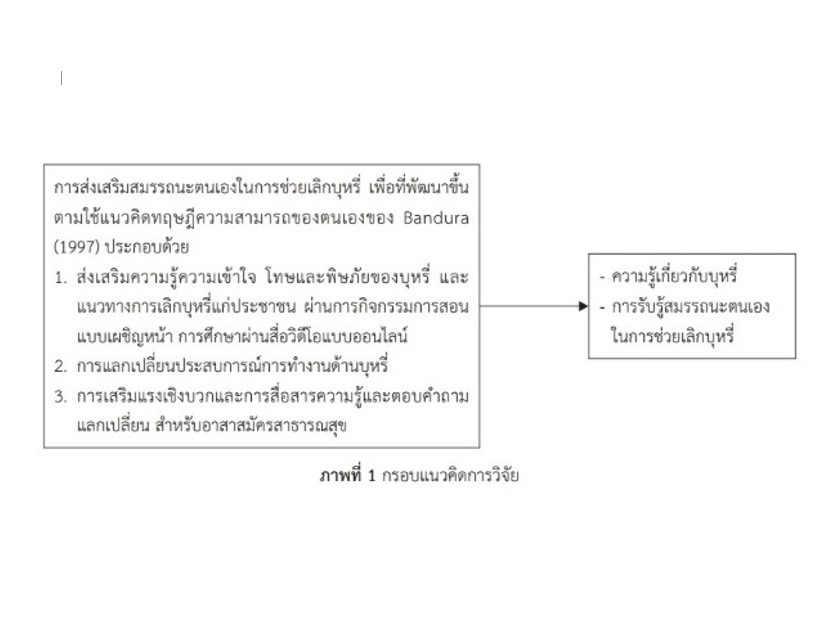
การวิจัยกึ่งทดลอง แบบกลุ่มเดียววัดก่อนและหลังการทดลอง นี้มีวัตถุประสงค์เพื่อศึกษาผลของกิจกรรมส่งเสริมสมรรถนะอาสาสมัครสาธารณสุขต่อความรู้และการรับรู้สมรรถนะตนเองในการช่วยเลิกบุหรี่ กลุ่มตัวอย่าง คือ อาสาสมัครสาธารณสุขตำบลท่าสว่าง อำเภอเมือง จังหวัดสุรินทร์ จำนวน 50 คน ซึ่งได้มาด้วยการสุ่มอย่างง่าย จากผู้ที่มีคุณสมบัติตามเกณฑ์ที่กำหนดและยินดีให้ความร่วมมือในการวิจัย เครื่องมือวิจัย ได้แก่ 1) กิจกรรมส่งเสริมสมรรถนะอาสาสมัครสาธรณสุขในการช่วยเลิกบุหรี่ ที่พัฒนาขึ้นตามแนวคิดความสามารถของตนเองของ Bandura (1977) ประกอบด้วย 1) ส่งเสริมความรู้เกี่ยวกับบุหรี่ แบบเผชิญหน้าและการศึกษาผ่านสื่อวิดีโอแบบออนไลน์ 2) การแลกเปลี่ยนประสบการณ์การทำงานด้านบุหรี่กับอาสาสมัครสาธารณสุขต้นแบบและบุคลากรสุขภาพ 3) การเสริมแรงเชิงบวกและการสื่อสารความรู้และตอบคำถามแลกเปลี่ยน 2) แบบวัดความรู้เกี่ยวกับบุหรี่ 3) แบบประเมินการรับรู้สมรรถนะตนเองในการช่วยเลิกบุหรี่ หาค่าความเชื่อมั่นของแบบวัดความรู้ ได้ค่า KR-20 =.82 และหาค่า Cronbach’s alpha coefficient ของแบบประเมินการรับรู้สมรรถนะตนเองในการช่วยเลิกบุหรี่ ได้ค่า .80 วิเคราะห์ด้วยสถิติพรรณนา และสถิติการทดสอบที
ผลการวิจัย พบว่า ภายหลังเข้าร่วมกิจกรรมการส่งเสริมสมรรถนะตนเองในการช่วยเลิกบุหรี่ กลุ่มตัวอย่างมีคะแนนเฉลี่ยการรับรู้สมรรถนะตนเองในการช่วยเลิกบุหรี่ และมีคะแนนเฉลี่ยความรู้สูงกว่าก่อนเข้าร่วมกิจกรรมอย่างมีนัยสำคัญทางสถิติที่ระดับ p < .001ผลการศึกษานี้ให้ข้อเสนอแนะว่า ควรนำกิจกรรมการส่งเสริมสมรรถนะตนเองในการช่วยเลิกบุหรี่ ไปประยุกต์ใช้ สำหรับอาสาสมัครสาธารณสุขเพื่อสร้างความเชื่อมั่นในศักยภาพของตนเองในการนำไปใช้กับกลุ่มครอบครัวหรือชุมชนในพื้นที่รับผิดชอบของตนเอง
เอกสารอ้างอิง
Akplakorn, W. (2021). Almost 3 out of 10 0f Thai people with smoky having 5 chronic illness. Retrived from https://www.thaihealth.or.th/Content/55905-เกือบ%203%20ใน%2010%20ของสิงห์อมควันไทย%20ป่วยด้วยโรคเรื้อรัง%205%20โรค%20%20.html (in Thai)
Bandura, A. (1977). Self-efficacy: Toward a unifying theory of behavioral change. Psychological Review, 84(2), 191–215. Retrieve from https://doi.org/10.1037/0033-295X.84.2.191
Chomekhunthod, S., Homsin, P., & Srisuriyawet, R. (2014). Effects of self- efficacy enhancement and family participation on smoking refusal self- efficacy and intention to not smoking of male primary school students. The Public Health Journal of Burapha University, 9(1), 91-103. (in Thai)
Health People Data Information System. (2021). The report form data base health volunteer. Retrieved from https://www.thaiphc.net/new2020/content/1. (in Thai)
Komonwipast, N., & Pakdevong, N. (2018). Comparison of knowledge, health belief, and perceived self-efficacy between female students who performed and did not perform breast self-examination. Songklanagarind Journal of Nursing, 38(4), 68-78.
(in Thai)
Khongphat, A., & Tantirattanawong, K. (2015). The effect of self-efficacy reinforce program for smoking prevention of junior high school education at Koh sri bo ya education centre, Nua Klong district, Krabi province. Community Health Development Quarterly Khon Kaen University, 3(3), 410-426. (in Thai)
Manujum, A., (2018). Promoting health volunteer to help people quit smoke. Retrieved from http://www.ashthailand.or.th/smartnews/post/detail/207/เพิ่มความรู้-เสริมทักษะ-อสม.ช่วยเลิกบุหรี่. (in Thai)
Panarat, W., Moopayak, K., & Priyatruk, P. (2014). The effect of a self-efficacy promoting program on breast self-examination behavior among adolescent girls. Journal of Nursing Science, 32(3), 52-63. (in Thai)
Rungruanghirunya, T. (2021). Behavioral smoking increase 14 times. Bangkok: Thai health center. (in Thai)
Statistical Office. (2021). The behavioral health of Thai people 2020. Bangkok: Statistical Office (in Thai)
Suthirit S., Pinchaleaw, D., & Keskomon, T. (2018). The effectiveness of self-regulation program with line application among overweight health volunteers, Tharongchang district Surat Thani province. Journal of the Police Nurse, 10(2), 330-339. (in Thai)
Thomas, G., Sehgal, A. R., Kashyap, S. R., Srinivas, T. R., Kirwan, J. P., & Navaneethan, S. D. (2011). Metabolic syndrome and kidney disease: A systematic review and meta-analysis. Clinical Journal of the American Society of Nephrology, 6(10), 2364–2373. doi:10.2215/cjn.02180311
Tobacco Control Research and Knowledge Management Center, (TRC.). (2020). Supporting nurse to care chronic illness patients quit smoking. Retrieve from https://www.trc.or.th/th/ข่าวสาร/ข่าวเผยแพร่/ข่าวสารบุหรี่/518-หนุนพยาบาลช่วยดูแลผู้ป่วยโรคเรื้อรังเลิกบุหรี่.html (in Thai)
Tabtimthong, W., Junprasert, S., & Homsin, P. (2012). Effects of promoting self-efficacy on perceived self-efficacy, outcome expectation and smoking avoidance behaviors of early male adolescents. The Journal of Faculty of Nursing Burapha University, 20(1), 33-43. (in Thai)
Vateesatokkit, K. (2016). The substance treatment manual for nurses. Nontaburi: Monpriya graphic. (in Thai)
ดาวน์โหลด
เผยแพร่แล้ว
รูปแบบการอ้างอิง
ฉบับ
ประเภทบทความ
สัญญาอนุญาต

อนุญาตภายใต้เงื่อนไข Creative Commons Attribution-NonCommercial-NoDerivatives 4.0 International License.