ประสิทธิผลของโปรแกรมการเรียนรู้แบบผสมผสานในการฝึกปฏิบัติการพยาบาล ปริศัลยกรรมต่อความมั่นใจ ความสามารถในการปฏิบัติเทคนิคห้องผ่าตัด และการตัดสินใจทางคลินิกของนักศึกษาพยาบาล
คำสำคัญ:
การเรียนรู้แบบผสมผสาน, ความมั่นใจ , ความสามารถในการปฏิบัติเทคนิคห้องผ่าตัด , การตัดสินใจทางคลินิกบทคัดย่อ
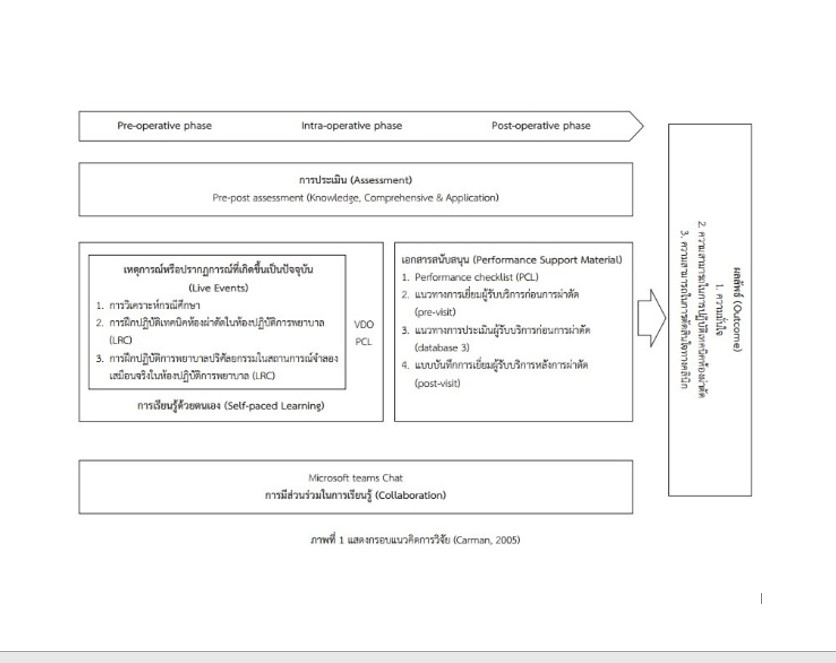
การวิจัยแบบกึ่งทดลองนี้มีวัตถุประสงค์เพื่อเปรียบเทียบระดับความมั่นใจ ความสามารถในการปฏิบัติเทคนิคห้องผ่าตัด และการตัดสินใจทางคลินิกของนักศึกษาพยาบาล ก่อนและหลังเข้าร่วมโปรแกรมการเรียนรู้แบบผสมผสาน กลุ่มตัวอย่างคือ นักศึกษาพยาบาลชั้นปีที่ 3 ที่ฝึกปฏิบัติการพยาบาลปริศัลยกรรม สถาบันการศึกษาแห่งหนึ่ง จำนวน 80 คน คัดเลือกตามเกณฑ์คัดเข้าและการสุ่มอย่างง่าย โปรแกรมการเรียนรู้แบบผสมผสาน ได้แก่ การวิเคราะห์กรณีศึกษา การฝึกปฏิบัติเทคนิคห้องผ่าตัด การฝึกปฏิบัติการพยาบาลขณะผ่าตัดในสถานการณ์จำลองเสมือนจริง และการศึกษาด้วยตนเอง รวม 7 วัน เก็บข้อมูลด้วยแบบประเมินการรับรู้สมรรถนะแห่งตน ความสามารถในการปฏิบัติเทคนิคห้องผ่าตัด และการตัดสินใจทางคลินิก วิเคราะห์ข้อมูลด้วยสถิติพรรณนาและ Dependent t-test
ผลการวิจัยพบว่าหลังเข้าร่วมโปรแกรมกลุ่มตัวอย่างมีคะแนนเฉลี่ยความมั่นใจ ความสามารถในการปฏิบัติเทคนิคห้องผ่าตัดเรื่องการปูผ้าเพื่อทำผ่าตัด และความสามารถในการตัดสินใจทางคลินิกสูงกว่าก่อนเข้าร่วมโปรแกรมอย่างมีนัยสำคัญทางสถิติ (t = -6.992, p < .001; t = -4.011, p < .001; t = -11.381, p < .001) คะแนนเฉลี่ยความสามารถในการปฏิบัติเทคนิคห้องผ่าตัดเรื่องการเตรียมผิวหนังก่อนผ่าตัดสูงกว่าก่อนเข้าร่วมโปรแกรมอย่างไม่มีนัยสำคัญทางสถิติ (t= -0.877, p > .05)
สรุปและเสนอแนะว่าควรนำรูปแบบการเรียนรู้แบบผสมผสานไปใช้ในรายวิชาปฏิบัติก่อนการขึ้นฝึกปฏิบัติจริงบนหอผู้ป่วย
เอกสารอ้างอิง
Bangthamai, P., Srisomphan, K., Somnukprasert, W., & Weerawatthanodom, N. (2020). Effects of blended learning and childbirth delivery simulation-based learning on academic achievement, satisfaction and the students’ opinions towards teaching by reflective thinking of nursing students, Boromarajonani College of Nursing Nonthaburi. Journal of The Royal Thai Army Nurses, 21(3), 350-359. [In Thai]
Buachu, T. (2018). A study of the opinion of teaching and learning model of undergraduate nursing curriculum, Phetchaburi Rajabhat University in the 21st century. Journal of Nursing Science Chulalongkorn University, 30(3), 26-37. [In Thai]
Carman, J. M. (2005). Blended learning design: Five key ingredients. Retrieved from http://blended2010.pbworks.com/f/Carman.pdf
González-Pérez, L. I., & Ramírez-Montoya, M. S. (2020). Components of education 4.0 in 21st century skills frameworks: Systematic review. Sustainability, 14(1493), 1-31.
Jantavat, P. (2018). Preparation of nursing student for stress relief during practice in delivery room. Kuakarun Journal of Nursing, 25(1), 184-191. [In Thai]
Jerayingmongkol, P., Anansirikasem, P., Chalardlon, P., & Damsangsawat, N. (2022). Family and community nursing II practicum course provision under the COVID-19 situation: The effects of blended learning on learning outcomes. Journal of Nursing and Education, 15(3), 71-81. [In Thai]
Jowsey, T., Foster, G., Cooper-Ioelu, P., & Jacobs, S. (2020). Blended learning via distance in pre-registration nursing education: A scoping review. Nurse Education in Practice, 44, 1-10.
Khongkhoontod, P., Wisarutkasempong, A., & Phota, P, (2021). The effects of a pre-training program on knowledge, stress, and nursing competency among 4th year nursing students in nursing care for high-risk pregnant women during labor. The Southern College Network Journal of Nursing and Public Health, 8(3), 173-184. [In Thai]
Klaharn, R. (2014). The factors affecting the practicum achievement of the third-year nursing students of Srinakharinwirot University. Journal of The Royal Thai Army Nurses, 15(3), 412-420. [In Thai]
Kotra, P., Phoklin, S., & Krommuang, A. (2017). A scenario of educational management of undergraduate nursing curricula in the context of ASEAN community, Journal of Health Science Research, 11(2), 18-27. [In Thai]
Kunaviktikul, W. (2015). Teaching and learning in the discipline of nursing in the 21st century. Nursing Journal, 42(2), 152-156. [In Thai]
Lersthavorntham, K., Kitnopkiet, K., & Sawangwattanasait, O. (2014). Factors influencing learning achievement of nursing students in bachelor of nursing science curriculum, Borommarajonani College of Nursing, Ratchaburi. Journal of Nursing and Education, 7(4), 13-24. [In Thai]
Meyer, R., Schalkwyk, S. C., & Prakaschandra, R. (2016). The operating room as a clinical learning environment: An exploratory study. Nurse Education in Practice, 18, 60-72.
Muntari, M. Purwoko, A. A., Siahaan, J., Haris, M., & Supriadi. (2023). Optimization of blended learning using ICT-based media for
improving learning interest, critical thinking ability, and chemistry learning outcomes. Retrieved from https://doi.org/10.1063/5.0130559
Office of the Ministry of Higher Education Science Research and Innovation. (2020). Higher education plans to produce and develop the country's manpower 2021-2027. Bangkok: Phabpim. [In Thai]
Pantaewan, P. (2016). Development of students in the 21st century with active learning in nursing profession. Journal of The Royal Thai Army Nurses, 17(3), 17-24. [In Thai]
Phormpayak, D., Rattana-Umpa, J., & Rungkavat, V. (2019). The effects of using simulation based learning and reflective thinking skill promoting on nursing students’ reflective thinking behavior and clinical decision-making abilities, The Journal of Baromarajonani College of Nusing, Nakhonratchasima, 25(2), 57-71. [In Thai]
Promwong, W., & Meenongwah, J. (2021). Knowledge, attitude, and Pperceived self-efficacy in heart failure care of senior nursing students in Boromarajonani College of Nursing, Sanpasithiprasong. Regional Health Promotion Center 9, 15(37), 377-391.
Thaewopia, S., Thongnarong, P., & Wichai, S. (2017). Learning style of nursing students at Boromarajonani College of Nursing Khon Kean. Journal of Nursing and Health Care, 35(2), 227-235. [In Thai]
Yimyam, S., Charuwatcharapaniskul, U., Chareonsanti, J., Indarangkura Na Ayutthaya, A., Xuto, P., & Chaloumsuk, N. (2015). Developing on blended learning for developing the 21st century learning skills. Nursing Journal, 42, 129-140. [In Thai]
Yuan, H. B., Williams, B. A., & Man, C. Y. (2014). Nursing students’ clinical judgment in high-fidelity simulation - based learning: A quasi-experimental study. Journal of Nursing Education and Practice, 4(5), 7-15.
ดาวน์โหลด
เผยแพร่แล้ว
รูปแบบการอ้างอิง
ฉบับ
ประเภทบทความ
สัญญาอนุญาต

อนุญาตภายใต้เงื่อนไข Creative Commons Attribution-NonCommercial-NoDerivatives 4.0 International License.