Effects of Breastfeeding Promoting Program on Breastfeeding Self-Efficacy and Success of Breastfeeding among First-Time Mothers Having a Planned Cesarean Birth
Keywords:
perceived breastfeeding self-efficacy, breastfeeding promoting program, successful breastfeedingAbstract
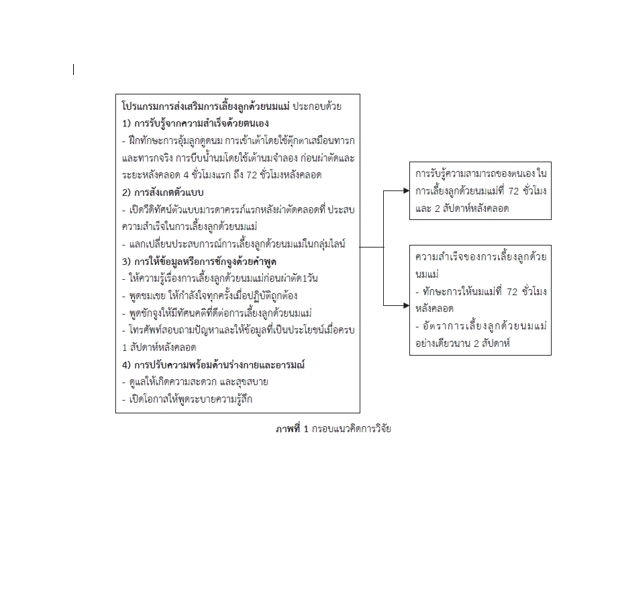
This quasi-experimental research aimed to study effects of the breastfeeding promoting program on breastfeeding self-efficacy and success of breastfeeding among first-time mothers having a planned cesarean birth. The sample consisted of first-time mothers who had a pre-planned cesarean section and recuperating at obstetric postpartum ward at Phrapokklao hospital in Chanthaburi Province ,52 cases, purposive sampling then divided into 26 experimental cases and 26 control cases. The research instruments consisted of Breastfeeding Promoting Program, Breastfeeding Self-efficacy Questionnaire, Breastfeeding Success Record Form and 2-Week Exclusive Breastfeeding Assessment. Data were analyzed by using descriptive statistics, Mann-Whitney U test statistics and Chi-square statistics.
The results found that the experimental group had the breastfeeding skills in 72 hours after birth and an average of perceived self-efficacy in breastfeeding at 2 weeks after birth and was significantly higher than the control group (p <.001, p <.001). While, there were not significant differences of an average score of perceived breastfeeding self-efficacy at 72 hours after birth and the rate of exclusive breastfeeding for 2 weeks between the experimental and control groups (p =.087, p =.465) Therefore, nurses or midwives should continuing promote perceived of breastfeeding self-efficacy to postpartum women to have confidence and success in breastfeeding
References
Kontrakan, S., & Wongwisut, T. (2011). Basic knowledge for successful breastfeeding. in Breastfeeding training center Faculty of medicine Siriraj hospital Mahidol university, Workshop on breastfeeding. (p. 7-26). Bangkok: Mahidol University. [in Thai]
Chansiri, S., Wongwatkit, C., & Noonkanka, A. (2021). The effects of self-efficacy promoting program on knowledge, perceived self-efficacy, efficiency of breastfeeding, and exclusive breastfeeding rate in first-time adolescent mothers. Nursing Science Journal of Thailand, 40(1), 50–68. Retrieved from https://he02.tci-thaijo.org/index.php/ns/article/view/248666
Chusin, K. (2012). Breastfeeding and infant health. In Mudtamra, S. (Ed.), Breastfeeding textbook. Bangkok: Iyara Publishing Company. [in Thai]
De Jager, E., Broadbent, J., Fuller-Tyszkiewicz, M., & Skouteris, H. (2014). The role of psychosocial factors in exclusive breastfeeding to six months postpartum. Midwifery, 30(6), 657–666. https://doi.org/10.1016/j.midw.2013.07.008
Dennis, C.L. (1999). Theoretical underpinnings of breastfeeding confidence: A self-efficacy framework. Journal of Human Lactation, 15, 195-201.
Dennis, C.L. (2003). The breastfeeding self-efficacy scale: Psychometric assessment of the short form. Journal of Obstetric, Gynecologic & Neonatal Nursing,3 2(6),734–744.
Hauck, Y. L., Fenwick, J., Dhaliwal, S. S., Butt, J., & Schmied, V. (2011). The association between women's perceptions of professional support and problems experienced on breastfeeding cessation: A Western Australian study. Journal of Human Lactation, 27(1), 49–57. https://doi.org/10.1177/089033441038695
Hobbs, A. J., Mannion, C. A., McDonald, S. W., Brockway, M., & Tough, S. C. (2016). The impact of caesarean section on breastfeeding initiation, duration and difficulties in the first four months postpartum. BMC Pregnancy and Childbirth,16, 90. https://doi.org/10.1186/s12884-016-0876-1
Intarasukum, P. (2014). Onset of lactation after an uncomplicated cesarean delivery: A study between emergency cesarean delivery and elective cesarean delivery. Journal of Health Science, 23(6), 1058-1066. [in Thai]
Lakornket, N., & Jirapeat, V. (2017). The effects of promoting breast feeding self-efficacy program on sufficient of breast milk supply and maintenance of lactation behavior in mothers of newborn after explore laparotomy. Journal of The Royal Thai Army Nurses, 18, 211-220. [in Thai]
National Statistical Office of Thailand. (2020). Thailand multiple indicator cluster survey 2019, survey findings report. Bangkok, Thailand: National Statistical Office of Thailand. Retrieved from https://www.unicef.org/thailand/Thailand_MICS_Full_Report_EN.pdf. [in Thai]
Ngamgarn, W., Leesiriwattanagul, W., Perksanusak, T., & Nuampa, S. (2021). Effect of a nursing program for continuous breastfeeding promotion with family support and early skin to skin contact on effective suckling breastfeed, neonatal jaundice, and exclusive breastfeeding at one month. Journal Prapokklao Hospital Clinical Medical Education Center, 38(1),67-76. [in Thai]
Otsuka, K., Takayanagi,T., Ueda, C., Kudo, K. , Fujii, T., Ito, Y., Ohki, Y., & Ohgi, N. (2022). Breastfeeding self-efficacy at 72 hours postpartum is associated with longer breastfeeding duration : A longitudinal cohort study. International Breastfeeding Journal, 17(1), 1-7.
Sawatpanich, A., Yimyam, S., & Chaloumsuk , N. (2019). Factors influencing exclusive breastfeeding at discharge among first-time mothers undergoing cesarean section. Nursing Journal, 46(3), 219-231.
Semenic, S., Loiselle, C., & Gottlieb, L. (2008). Predictors of the duration of exclusive breastfeeding among first-time mothers. Research in nursing & Health, 31(5), 428-441.
Tharana, N., & Tanasirijiranont, R. (2019). Effects of enhancing self-Efficacy programs on perceived self-efficacy, knowledge and satisfaction in breastfeeding practice among first-time postpartum mothers. Nursing Journal,46(4), 70-82.
Thussanasupap, B. (2006).The effects of systematic instructional program on breastfeeding self-efficacy, nipple pain, nipple skin changes and incision pain of cesarean mothers. Master’s thesis, Nursing, Mahidol University. [in Thai]
Downloads
Published
How to Cite
Issue
Section
License

This work is licensed under a Creative Commons Attribution-NonCommercial-NoDerivatives 4.0 International License.