
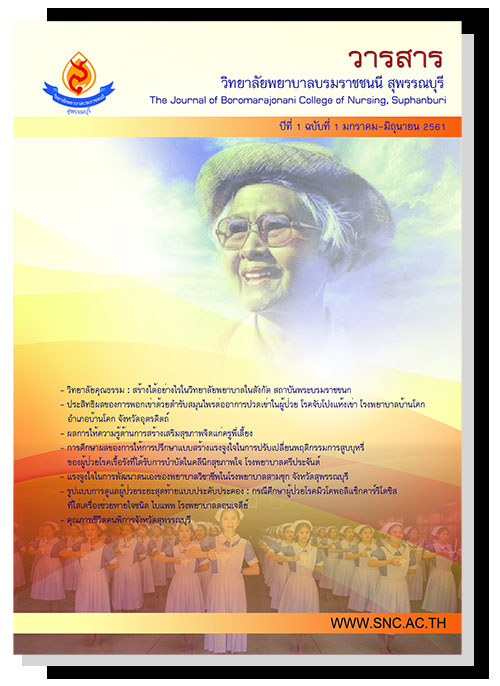
การศึกษาผลของการให้การปรึกษาแบบสร้างแรงจูงใจในการปรับเปลี่ยนพฤติกรรมการสูบบุหรี่ ของผู้ป่วยโรคเรื้อรังที่ได้รับการบำบัดในคลินิกสุขภาพใจ โรงพยาบาลศรีประจันต์
คำสำคัญ:
การเปลี่ยนแปลงพฤติกรรม, การให้การปรึกษาแบบสร้างแรงจูงใจบทคัดย่อ
การศึกษานี้เป็นการวิจัยกึ่งทดลองผลของการให้การปรึกษาแบบสร้างแรงจูงใจในการปรับเปลี่ยนพฤติกรรมการสูบบุหรี่ของผู้ป่วยโรคเรื้อรังที่ได้รับการบำบัดในคลินิกสุขภาพใจ โรงพยาบาลศรีประจันต์จำนวน 26 คน โปรแกรมการให้การปรึกษาแบบสร้างแรงจูงใจจำนวน 5 ครั้ง ระยะเวลาในการบำบัด 3 เดือน เปรียบเทียบปริมาณการสูบบุหรี่และปริมาณ PiCO ของกลุ่มตัวอย่างก่อนและหลัง โดยใช้สถิติทดสอบ Paired t-test for dependent sample
ผลการทดลอง ประชากรเป็นเพศชายร้อยละ 92.31 ช่วงอายุที่สูบบุหรี่มากที่สุดคืออายุ 60 ปีขึ้นไป รูปแบบวิธีการเลิก พบว่า วิธีค่อยๆลด เป็นวิธีที่มีจำนวนผู้รับบริการมากที่สุด ร้อยละ 57.69 และวิธีหักดิบร้อยละ 42.31 ผลการบำบัดครั้งที่ 5 พบว่า ผลการบำบัดเลิกได้ ร้อยละ 57.69 ผลการบำบัดแบบลดการสูบบุหรี่ร้อยละ 38.46
ผลการเปรียบเทียบจำนวนมวนของการสูบบุหรี่ก่อนเข้าโปรแกรมและหลังการเข้าโปรแกรมการปรึกษาแบบสร้างแรงจูงใจ พบว่าค่าเฉลี่ยก่อนเข้าโปรแกรมฯ เท่ากับ 13.94 และค่าเฉลี่ยหลังเข้าโปรแกรมฯ เท่ากับ 1.56 และค่า t-test เท่ากับ 5.169 ซึ่งมีความแตกต่างกันอย่างมีนัยสำคัญทางสถิติที่ระดับ p<.01 และผลการเปรียบเทียบปริมาณ PiCO ก่อนเข้าโปรแกรมและหลังการเข้าโปรแกรมฯ พบว่าค่าเฉลี่ยก่อนเข้าโปรแกรมเท่ากับ 4.30 และค่าเฉลี่ยหลังเข้าโปรแกรมเท่ากับ 1.40 และค่า t-test เท่ากับ 4.851 ซึ่งมีความแตกต่างกันอย่างมีนัยสำคัญทางสถิติที่ระดับ p<.01
ข้อเสนอแนะเพื่อการนำผลการวิจัยไปใช้ประโยชน์
การให้การบำบัดแบบสร้างแรงจูงใจในการปรับเปลี่ยนพฤติกรรมการสูบบุหรี่ของผู้ป่วยโรคเรื้อรังและมีการติดตามต่อเนื่อง 6 เดือน จนถึงขั้นเปลี่ยนแปลงพฤติกรรม (Maintanance) เพื่อป้องกันการกลับมาเสพซ้ำในผู้ที่เลิกสูบได้ ซึ่งสามารถนำไปปรับใช้ในการปรับพฤติกรรมการเสพติดอื่นๆได้
เอกสารอ้างอิง
รุจิรา หวังมั่น. (2557). การศึกษาประสิทธิผลของ การให้คำปรึกษาแบบสร้างแรงจูงใจในการปรับเปลี่ยนพฤติกรรมการสูบบุหรี่ของผู้รับบริการในคลินิกอดบุหรี่โรงพยาบาลสำโรงทาบ อำเภอสาโรงทาบ จังหวัดสุรินทร์. กรุงเทพฯ :บียอนด์ พับลิสชิ่ง.
โรงพยาบาลศรีประจันต์. (2557). สถิติผู้ป่วยโรค เรื้อรังประจำปี 2557.สุพรรณบุรี:โรงพยาบาลศรีประจันต์.
วาริศา แย้มศรี. (2556). ผลของโปรแกรมการสัมภาษณ์เพื่อเสริมสร้างแรงจูงใจต่อพฤติกรรมการสูบบุหรี่ในผู้ที่มีปัจจัยเสี่ยงต่อการเกิดโรคหลอดเลือดหัวใจ.วารสารพยาบาลสาธาณสุข,27(3), 41-57.
วิมาลา เจริญชัย. (2552). การบำบัดเพื่อเสริมสร้างแรงจูงใจในการเปลี่ยนแปลงพฤติกรรมของผู้ป่วยติดสุราที่มารับบริการคลินิกอดสุรา โรงพยาบาลพระศรีมหาโพธิ์: การประชุมวิชาการยาเสพติดแห่งชาติ ครั้งที่ 10 ปี 2552.
สุทัศน์ รุ่งเรืองหิรัญญา. (2552). พิษภัยและการรักษาโรคติดบุหรี่. กรุงเทพฯ:สหประชาพานิชย์.
สำนักงานสถิติแห่งชาติ. (2557). การสำรวจพฤติกรรมการสูบบุหรี่และการดื่มสุราของประชากร : กระทรวงเทคโนโลยีสารสนเทศและการสื่อสาร.
สุนิดา ปรีชาวงษ์ และคณะ. (2558 ). การทบทวนวรรณกรรมเรื่องประสิทธิผลของการให้บริการช่วยเลิกบุหรี่คลินิกโรคเรื้อรัง. วารสารสาธารณสุขศาสตร์ ,45(3), 324-333.
Diclemente,C.C., Prochaska, J.O., Fairhurst, S.K.,Velicer,W.F.Velasquez,M.M., &Rossi,J.S.(1991). The process of smoking cessation:An analysis of precontemplation, contemplation and preparation stages of change.Journal of Consulting and Clinlcal Psychology,59(2),295-304.
Miller,R., &Rollnic, S. (1991). Motivational interviewing Preparing People to change Addictive Behavior.New York:The Guildford Press.
Prochaska,J.O., & Diclemente, C.C. (1984). The Transtheoretical Approach:Crossing Traditional Boundaries of herapy. Homewood,IL: Dow Jones-Irwin.
ดาวน์โหลด
เผยแพร่แล้ว
ฉบับ
ประเภทบทความ
สัญญาอนุญาต
ลิขสิทธิ์ (c) 2018 วิทยาลัยพยาบาลบรมราชชนนี สุพรรณบุรี

อนุญาตภายใต้เงื่อนไข Creative Commons Attribution-NonCommercial-NoDerivatives 4.0 International License.
บทความที่ได้รับการตีพิมพ์เป็นลิขสิทธิ์ของวารสารวิทยาลัยพยาบาลบรมราชชนนี สุพรรณบุรี
ข้อความที่ปรากฏในบทความแต่ละเรื่องในวารสารวิชาการเล่มนี้เป็นความคิดเห็นส่วนตัวของผู้เขียนแต่ละท่านไม่เกี่ยวข้องกับวิทยาลัยพยาบาลบรมราชชนนี สุพรรณบุรี และคณาจารย์ท่านอื่นๆในวิทยาลัยฯ แต่อย่างใด ความรับผิดชอบองค์ประกอบทั้งหมดของบทความแต่ละเรื่องเป็นของผู้เขียนแต่ละท่าน หากมีความผิดพลาดใดๆ ผู้เขียนแต่ละท่านจะรับผิดชอบบทความของตนเองแต่ผู้เดียว


