
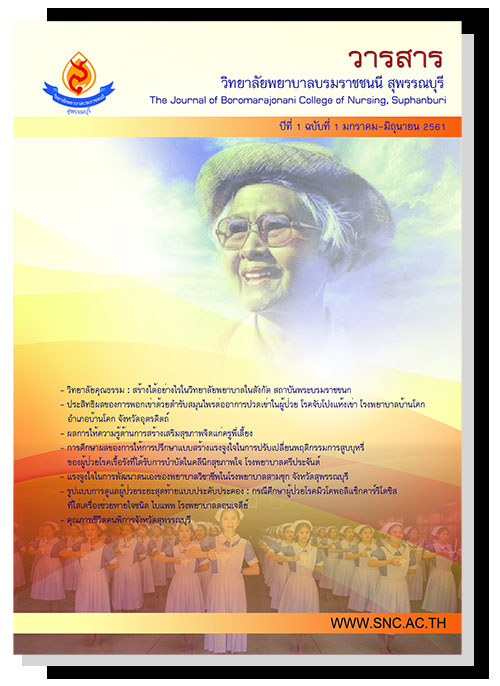
คุณภาพชีวิตของคนพิการจังหวัดสุพรรณบุรี
คำสำคัญ:
จังหวัดสุพรรณบุรี, คนพิการ, คุณภาพชีวิตบทคัดย่อ
การศึกษาเชิงพรรณนา มีวัตถุประสงค์เพื่อศึกษาและเปรียบคุณภาพชีวิตของคนพิการแต่ละประเภทในจังหวัดสุพรรณบุรี กลุ่มตัวอย่างคือคนพิการทุกประเภทในจังหวัดสุพรรณบุรี ได้รับการจดทะเบียนคนพิการและมีรายชื่อ ในฐานข้อมูลทะเบียนคนพิการจังหวัดสุพรรณบุรี จำนวน 395 คนสุ่มตัวอย่างด้วยการสุ่มอย่างง่าย (Simple random sampling) โดยใช้ตารางเลขสุ่ม (Random number table) เครื่องมือในการวิจัยเป็นแบบเครื่องชี้วัดคุณภาพชีวิตขององค์การอนามัยโลกชุดย่อ ฉบับภาษาไทย WHOQOL – BREF – THAI (WHO, 1993) วิเคราะห์ข้อมูลด้วยสถิติเชิงพรรณนา ได้แก่ ความถี่ ร้อยละ ค่าเฉลี่ย ส่วนเบี่ยงเบนมาตรฐาน และการวิเคราะห์ความแตกต่างระหว่างคุณภาพชีวิตของผู้พิการ แต่ละประเภท โดยใช้สถิติ One – Way ANOVA
ผลการศึกษา พบว่า กลุ่มตัวอย่างส่วนมากเป็นเพศชาย (ร้อยละ 56.2) อายุเฉลี่ย 50.69 ปี ระดับการศึกษาส่วนมากอยู่ในระดับชั้นประถมศึกษา (ร้อยละ 56.2) สถานภาพสมรสเป็นโสด ร้อยละ 46.3 ส่วนมากไม่ได้ประกอบอาชีพ (ร้อยละ 94.7) ส่วนมากอาศัยอยู่กับครอบครัว มีผู้ช่วยเหลือ และอยู่ในเขตชนบท (ร้อยละ 94.4, 50.1 และ74.4 ตามลาดับ) และมากกว่าครึ่งเข้าถึงการรักษาพยาบาล (69.4%) คนพิการทุกประเภทโดยรวมมีคุณภาพชีวิตอยู่ในระดับปานกลาง (คะแนนเฉลี่ย 83.26 13.35) ในทั้ง 4 ด้าน คือ ด้านร่างกาย ด้านจิตใจ ด้านสิ่งแวดล้อม และด้านความสัมพันธ์ทางสังคม (คะแนนเฉลี่ย 21.53
4.36, 19.23
3.65, 10.46
2.23 และ 26.60
4.22 ตามลำดับ) จำแนกตามประเภทของความพิการพบว่า คนที่มีความพิการทางการได้ยินมีคะแนนคุณภาพชีวิตสูงที่สุด (คะแนนเฉลี่ย 86.41) เมื่อเปรียบเทียบคุณภาพชีวิตโดยจำแนกตามประเภทความพิการ พบว่า มีคุณภาพชีวิตแตกต่างกันอย่างมีนัยสำคัญทางสถิติที่ระดับ .01 และพบว่า คนพิการมากกว่า 1 ประเภท มีค่าเฉลี่ยคุณภาพชีวิตที่แตกต่างอย่างมีนัยสำคัญทางสถิติกับคนพิการทางการได้ยิน (p = .20) และคนพิการทางการเคลื่อนไหวหรือทางกาย (p = .04) ในขณะที่ประเภทอื่นไม่มีความแตกต่างกัน
เอกสารอ้างอิง
คณะกรรมการฟื้นฟูสมรรถภาพคนพิการ กระทรวงพัฒนาสังคมและความมั่นคงของมนุษย์. (2555). แผนพัฒนาคุณภาพชีวิตผู้พิการแห่งชาติ พ.ศ. 2555-2559. กรุงเทพมหานคร: ศรีเมืองการพิมพ์. คณะอนุกรรมการส่งเสริมและพัฒนาคุณภาพชีวิตคนพิการจังหวัดสุพรรณบุรี. (2558). แผนพัฒนาคุณภาพชีวิตคนพิการจังหวัดสุพรรณบุรี พศ. 2557-2558. สุพรรณบุรี: สอิ้งการพิมพ์.
จิรพรรณ โพธิ์ทอง. (2557). ประสิทธิผลรูปแบบการฟื้นฟูสภาพคนพิการทางกายหรือการเคลื่อนไหวในชุมชน. วารสารพยาบาลกองทัพบก,15 (2)พ.ค. - ส.ค. 232-241.
ชาญ สุปินะ. (2555). บทบาทองค์การบริหารส่วนจังหวัดนนทบุรีในการพัฒนาคุณภาพชีวิตคนพิการ.วิทยานิพนธ์ รัฐศาสนศาสตรมหาบัณฑิต บัณฑิตวิทยาลัย มหาวิทยาลัยรามคำแหง.
ธานีรัตน์ ผ่องแผ้ว. (2558). คุณภาพชีวิตคนพิการขององค์การบริหารส่วนตำบลในอำเภอท่าศาลา จังหวัดนครศรีธรรมราช : ปัจจัยที่มีผลและแนวทางการพัฒนา. รัฐประศาสนศาสตรมหาบัณฑิต, บัณฑิตวิทยาลัย มหาวิทยาลัยสงขลา นครินทร์.
รัตนา ทรัพย์บาเรอ. (2559). ระเบียบวิธีวิจัยทางสาธารณสุข. กรุงเทพ: โอเดียนสโตร์.
สถาบันสิรินธรเพื่อการฟื้นฟูสมรรถภาพทางการแพทย์แห่งชาติ. (2559). รายงาน สรุปผลการดำเนินโครงการสำรวจคุณภาพชีวิตคนพิการไทย. เอกสารอัดสำเนา
สำนักงานคณะกรรมการพัฒนาการเศรษฐกิจและสังคมแห่งชาติ. (2553). แผนยุทธศาสตร์สุขภาพดี วิถีไทย 2554-2564. เอกสารอัดสำเนา.
สำนักนโยบายและยุทธศาสตร์ กระทรวงสาธารณสุข. (2555). บทบาทภาครัฐเพื่อการส่งเสริมและพัฒนาคุณภาพชีวิตคนพิการ. กรุงเทพมหานคร:บริษัทสามเจริญพาณิชย์ จำกัด.
ศศินันท์ วาสิน, ฤาเดช เกิดวิชัย และวรางคณา จันทร์คง. (2556). ปัจจัยที่มีผลต่อคุณภาพชีวิตคนพิการในจังหวัดนนทบุรี. วารสารบัณฑิตศึกษา มหาวิทยาลัยราชภัฎวไลยอลงกรณ์ในพระบรมราชูปถัมภ์.
Hair, J. F., Black, W. C., Babin, B. J., Anderson, R. E., & Tatham, R. L. (2006). Multivariate Data Analysis (6th ed.). New Jersey: Peason Education.
Maes, B. Lambreches, G. Hostyn, I. and Petry,K., ( 2007). Quality-enhancing interventions for people with profound intellectual and multiple disabilities: A review of the empirical research literature. Journal of Intellectual & Developmental Disability, September 2007.
Maslow, A. H. (1970). Motivation and personality. (2 nd ed.) New York. Harper& Row.
Vankova, D. and Mancheva, M. (2015) Quality of life of individuals with disabilities concepts and concerns. Scripta Scientifica Salutis Pbulicae.
ดาวน์โหลด
เผยแพร่แล้ว
ฉบับ
ประเภทบทความ
สัญญาอนุญาต
ลิขสิทธิ์ (c) 2018 วิทยาลัยพยาบาลบรมราชชนนี สุพรรณบุรี

อนุญาตภายใต้เงื่อนไข Creative Commons Attribution-NonCommercial-NoDerivatives 4.0 International License.
บทความที่ได้รับการตีพิมพ์เป็นลิขสิทธิ์ของวารสารวิทยาลัยพยาบาลบรมราชชนนี สุพรรณบุรี
ข้อความที่ปรากฏในบทความแต่ละเรื่องในวารสารวิชาการเล่มนี้เป็นความคิดเห็นส่วนตัวของผู้เขียนแต่ละท่านไม่เกี่ยวข้องกับวิทยาลัยพยาบาลบรมราชชนนี สุพรรณบุรี และคณาจารย์ท่านอื่นๆในวิทยาลัยฯ แต่อย่างใด ความรับผิดชอบองค์ประกอบทั้งหมดของบทความแต่ละเรื่องเป็นของผู้เขียนแต่ละท่าน หากมีความผิดพลาดใดๆ ผู้เขียนแต่ละท่านจะรับผิดชอบบทความของตนเองแต่ผู้เดียว


