
เรื่องภาวะแพ้ยาย้อมผม ยาย้อมผมที่จำหน่ายในประเทศไทย และคำแนะนำที่เกี่ยวข้อง
คำสำคัญ:
ยาย้อมผม, ภาวะแพ้ยาย้อมผม, พาราฟีนิลีนไดอะมีน, ยาย้อมผมสมุนไพรบทคัดย่อ
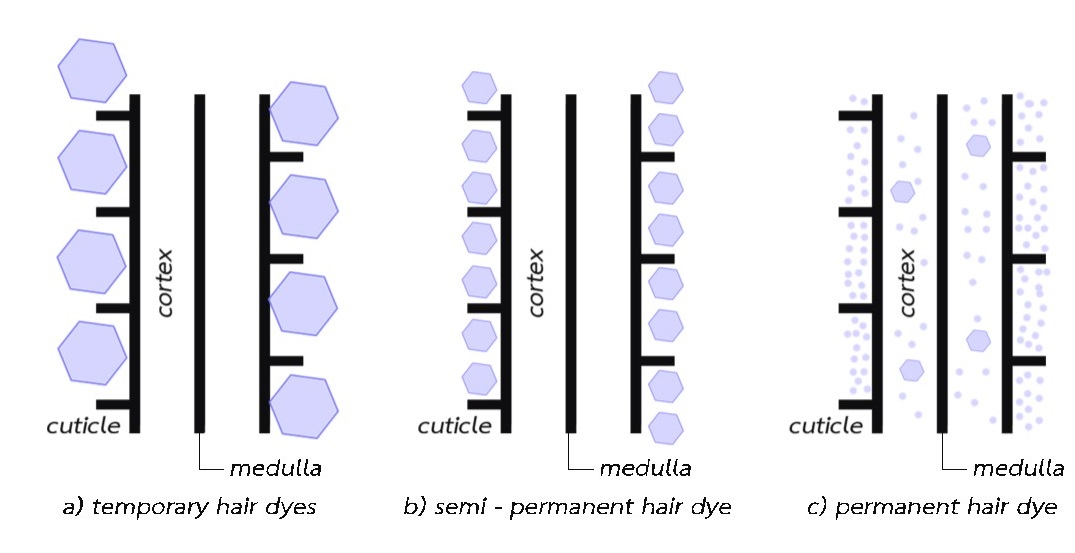
ประชากรผู้สูงอายุเพิ่มมากขึ้นในปัจจุบัน สีผมเป็นลักษณะหนึ่งที่บ่งบอกถึงความอ่อนเยาว์และสุขภาวะที่ดี ดังนั้นการย้อมสีผมในยุคปัจจุบันจึงได้รับความนิยมมากขึ้น ยาย้อมผมประกอบด้วยสารเคมีหลายชนิด ซึ่งสารเคมีเหล่านี้สามารถทำให้เกิดผื่นแพ้ผิวหนังได้ สารเคมีในยาย้อมผมมักมีการเปลี่ยนแปลงตามยุคสมัย และพบอุบัติการณ์การแพ้สารเคมีในยาย้อมผมเพิ่มมากขึ้น ด้วยเหตุนี้ องค์กรอาหารและยาในแต่ละประเทศ รวมถึงประเทศไทย จึงได้ออกกฎหมายเพื่อกำหนดสารเคมีที่สามารถใช้ในยาย้อมผม ทั้งนี้เพื่อความปลอดภัยของผู้บริโภค ดังนั้นบทความฟื้นวิชานี้จึงได้รวบรวมข้อมูลและองค์ความรู้เกี่ยวกับยาย้อมผม ได้แก่ ชนิดของยาย้อมผม ภาวะแพ้ยาย้อมผม ผลข้างเคียงของการย้อมผม และกฎหมายควบคุมสารเคมีในยาย้อมผมในประเทศไทย
เอกสารอ้างอิง
2. Shigidi M, Mohammed O, Ibrahim M, Taha E. Clinical presentation, treatment and outcome of paraphenylene-diamine induced acute kidney injury following hair dye poisoning: a cohort study. Pan Afr Med J 2014; 19: 163.
3.McFadden JP, White IR, Frosch PJ, Sosted H, Johansen JD, Menne T. Allergy to hair dye. BMJ 2007; 334: 220.
4. Antelmi A, Bruze M, Zimerson E, et al. Evaluation of concordance between labelling and content of 52 hair dye products: overview of the market of oxidative hair dye. Eur J Dermatol 2017; 27: 123-31.
5. Guerra-Tapia A, Gonzalez-Guerra E. Hair cosmetics: dyes. Actas Dermosifiliogr 2014; 105: 833-9.
6. Lee JY, Kim CW, Kim SS. Analysis of the Results from the Patch Test to Para-Phenylenediamine in the TRUE Test in Patients with a Hair Dye Contact Allergy. Ann Dermatol 2015; 27: 171-7.
7. Kirchlechner S, Hubner A, Uter W. Survey of sensitizing components of oxidative hair dyes (retail and professional products) in Germany. J Dtsch Dermatol Ges 2016; 14: 707-15.
8. Kim H, Kim K. Prevalence of potent skin sensitizers in oxidative hair dye products in Korea. Cutan Ocul Toxicol 2016; 35: 204-7.
9. Boonchai W, Bunyavaree M, Winayanuwattikun W, Kasemsarn P. Contact sensitizers in commercial hair dye products sold in Thailand. Contact Dermatitis 2016; 74: 222-9.
10. Krasteva M, Bons B, Ryan C, Gerberick GF. Consumer allergy to oxidative hair coloring products: epidemiologic data in the literature. Dermatitis 2009; 20: 123-41.
11. Verhulst L, Goossens A. Cosmetic components causing contact urticaria: a review and update. Contact Dermatitis 2016; 75: 333-44.
12. Washio K, Ijuin K, Fukunaga A, Nagai H, Nishigori C. Contact anaphylaxis caused by Basic Blue 99 in hair dye. Contact Dermatitis 2017; 77: 122-3.
13. Gupta M, Mahajan VK, Mehta KS, Chauhan PS. Hair dye dermatitis and p-phenylenediamine contact sensitivity: A preliminary report. Indian Dermatol Online J 2015; 6: 241-6.
14. Montgomery R, Wilkinson M. Allergic contact urticaria secondary to hair dye use. Contact Dermatitis 2017; 77: 257-9.
15. de Groot AC. Side-effects of henna and semi-permanent 'black henna' tattoos: a full review. Contact Dermatitis 2013; 69: 1-25.
16. Handa S, Mahajan R, De D. Contact dermatitis to hair dye: an update. Indian J Dermatol Venereol Leprol 2012; 78: 583-90.
17. Kim KH, Kabir E, Jahan SA. The use of personal hair dye and its implications for human health. Environ Int 2016; 89-90: 222-7.
18. Steengaard SS, Bregnhoj A, Johansen JD. Hand eczema among hairdressing apprentices in Denmark following a nationwide prospective intervention programme: 6-year follow-up. Contact Dermatitis 2016; 75: 32-40.
19. Alani JI, Davis MD, Yiannias JA. Allergy to cosmetics: a literature review. Dermatitis 2013; 24: 283-90.
20. Soffer GK, Toh J, Clements S, Jariwala S. A case of chronic contact dermatitis resulting from the use of blue hair dye. Contact Dermatitis 2016; 75:258-9.
21. Thoren S, Yazar K. Contact allergens in 'natural' hair dyes. Contact Dermatitis 2016; 74: 302-4.
22. Zanoni TB, Hudari F, Munnia A, et al. The oxidation of p-phenylenediamine, an ingredient used for permanent hair dyeing purposes, leads to the formation of hydroxyl radicals: Oxidative stress and DNA damage in human immortalized keratinocytes. Toxicol Lett 2015; 239: 194-204.
23. Harrison S, Sinclair R. Hair colouring, permanent styling and hair structure. J Cosmet Dermatol. 2003; 2: 180-5.
24. Carl F, Natural. Colored Iron Oxide Pigments. In Lewis P. (eds.) Pigment Handbook. 2nd Edition. New York: John Wiley & Sons; 1988.
25. esalon. Permanent and Demi-Permanent formulation. Available from: https://www.esalon.com/support/category/3/learn-about-hair-color/ 39/permanent-vs-demi-permanent-formulations [Accessed 10th May 2018]
26. Morel OJ, Christie RM. Current trends in the chemistry of permanent hair dyeing. Chem Rev 2011; 111: 2537-61.
27. King T, Sabroe R, Holden C. Allergic contact dermatitis caused by 1-naphthol, a red coupler, in a purple permanent oxidative hair dye. Contact Dermatitis 2018.
28. Medthai. Available from: https://medthai.com/. [Accessed 10th May 2018]
29. Herbal Research Institute. ผลวิจัยกรมวิทยาศาสตร์ พบสูตรสมุนไพรย้อมผมหงอก. Available from: https://webdb.dmsc.moph.go.th/ifc_herbal/news_detail.php?cat=L&id=197 [Accessed 10th May 2018]
30. Swan BC, Tam MM, Higgins CL, Nixon RL. Allergic contact dermatitis to substitute hair dyes in a patient allergic to para-phenylenediamine: Pure henna, black tea and indigo powder. Australas J Dermatol 2016; 57: 219-21.
31. Henna for hair [cited 2018 8 Aug]. Available from: https://www.hennaforhair.com/faq/cassiaobovata.html [Accessed 9th Oct 2018]
32. South China Botanical Garden Checklist. Curcuma longa Linn. Available from: https://www.efloras.org/florataxon.aspx?flora_id=610&taxon_id=200028370 [Accessed 10th May 2018]
33. Pole S. Ayurvedic Medicine: The Principles of Traditional Practice: Singing Dragon; 2006.
34. Royal Thai Government Gazette, book 125 (2008).
35. Soontorntum P. ผลกระทบจากการปรับกฎระเบียบด้านเครื่องสําอาง ให้สอดคล้องกันในกลุ่มประเทศอาเซียนของประเทศไทย: กรณีศึกษาเครื่องสําอางย้อมผม ชนิดสีติดทนถาวร. FDA journal 2011: 72-82.
36. Royal Thai Government Gazette, book 129 (2012).
37. Royal Thai Government Gazette, book 129 (2012).
38. Royal Thai Government Gazette, book 131 (2014).
39. Royal Thai Government Gazette, book 132 (2015).
40. Royal Thai Government Gazette, book 133 (2016).
41. Scheman A, Cha C, Bhinder M. Alternative hair-dye products for persons allergic to para-phenylenediamine. Dermatitis 2011; 22: 189-92.
ดาวน์โหลด
เผยแพร่แล้ว
รูปแบบการอ้างอิง
ฉบับ
ประเภทบทความ
สัญญาอนุญาต
เนื้อหาและข้อมูลในบทความที่ลงตีพิมพ์ในวารสารโรคผิวหนัง ถือเป็นข้อคิดเห็นและความรับผิดชอบของผู้เขียนบทความโดยตรงซึ่งกองบรรณาธิการวารสาร ไม่จำเป็นต้องเห็นด้วย หรือร่วมรับผิดชอบใดๆ
บทความ ข้อมูล เนื้อหา รูปภาพ ฯลฯ ที่ได้รับการตีพิมพ์ในวารสารโรคผิวหนัง ถือเป็นลิขสิทธิ์ของวารสารฯ หากบุคคลหรือหน่วยงานใดต้องการนำทั้งหมดหรือส่วนหนึ่งส่วนใดไปเผยแพร่ต่อหรือเพื่อกระทำการใดๆ จะต้องได้รับอนุญาตเป็นลายลักอักษรจากบรรณาธิการวารสารโรคผิวหนังก่อนเท่านั้น

