
Imaging Findings in Physical Child Abuse
Keywords:
Child maltreatment, Classic metaphyseal lesion, Inflicted injury, Physical child abuseAbstract
Purpose: This study was performed to demonstrate the imaging findings associated with the infliction of physical injuries in children.
Materials and methods: This study involved children who had been diagnosed with physical abuse in King Chulalongkorn Memorial Hospital from 1 January 2006 to 31 December 2015. These children’s radiologic images were obtained from the hospital’s Picture Archiving and Communication System and retrospectively reviewed.
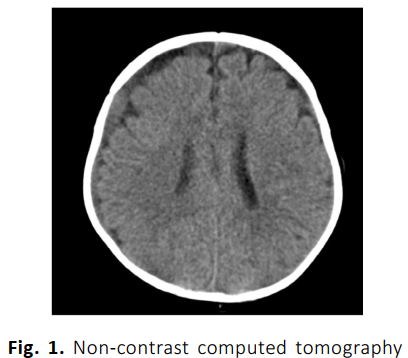
Results: Twenty-five physically abused children ranging in age from 0 days to 10 years were identified. Thirteen children were boys and 12 were girls. Nineteen (76.0%) children were ≤2 years of age. The most common radiologic abnormality in our patient series was head injury, which was found in 12 (48.0%) of the 25 physically abused children. The most common feature of inflicted head injury was a subdural hematoma, which was found in eight children. Skull fractures were found in three children. Fractures of the long bones and ribs were found in six children.
Conclusion: Head injury, including skull fractures, was the most common radiologic abnormality in our study. Long bone fractures were the most common skeletal fractures, followed by skull and rib fractures. A thorough radiologic skeletal survey plays a very important role in the diagnosis of inflicted injuries in children.
Downloads
References
Fry D. Child maltreatment: prevalence, incidence and consequences in the East Asia and Pacific region. Bangkok: UNICEF EAPRO; 2012. https://www.pure.ed.ac.uk/ws/portalfiles/portal/10949528/K201218.pdf
Loder RT, Feinberg JR. Orthopaedic injuries in children with nonaccidental trauma: demographics and incidence from the 2000 kids’ inpatient database. J Pediatr Orthop. 2007;27(4):421-426.
Perez-Rossello JM. The AAP and the SPR Child Abuse Committee issue a clinical report on ‘Evaluating children with fractures for child physical abuse’. Pediatr Radiol. 2014;44(3):243.
Lonergan GJ, Baker AM, Morey MK, Boos SC. From the archives of the AFIP. Child abuse: radiologic-pathologic correlation. Radiographics. 2003;23(4):811-845.
Offiah A, van Rijn RR, Perez-Rossello JM, Kleinman PK. Skeletal imaging of child abuse (non-accidental injury). Pediatr Radiol. 2009;39(5):461-470.
Carty H. Non-accidental injury: a review of the radiology. Eur Radiol. 1997;7(9):1365-1376.
ปานฤทัย ตร ีนวรัตน์, พัธนี โอเจริญ. ความผิกปกติจาก ภาพทางรังสีวิทยาของผู้ป่วยเด็กถูกทารุณกรรม ที่ตรวจพบในโรงพยาบาลจุฬาลงกรณ์. J Med Assoc Thai. 2004;87(9):175
Bruce DA, Zimmerman RA. Shaken impact syndrome. Pediatr Ann. 1989;18(8):482-484, 486-489, 492-494.
Zhang L, Yang KH, King AI. Biomechanics of neurotrauma. Neurol Res. 2001;23(2-3): 144-156.
Caffey J. Some traumatic lesions in growing bones other than fractures and dislocations: clinical and radiological features: The Mackenzie Davidson Memorial Lecture. Br J Radiol. 1957;30(353):225-238.
Kleinman PK, Marks SC, Blackbourne B. The metaphyseal lesion in abused infants: a radio logic-histopathologic study. AJR Am J Roentgenol. 1986;146(5):895-905.
Flaherty EG, Perez-Rossello JM, Levine MA, Hennrikus WL. Evaluating children with fractures for child physical abuse. Pediatrics. 2014;133(2):477-489.
Paddock, M, Sprigg, A, Offiah, AC. Imaging and reporting considerations for suspected physical abuse (non-accidental injury) in infants and young children. Part 1: initial considerations and appendicular skeleton. Clin Radiol. 2017;72(3):179-188.
Feldman KW, Brewer DK. Child abuse, cardiopulmonary resuscitation, and rib fractures. Pediatrics. 1984;73(3):339-42. 15. Sandra L, Bruno P, Adina L. ACR Appropriateness Criteria® Suspected Physical AbuseChild. J Am Coll Radiol. 2017;14(5S):S338-S349.
Downloads
Published
How to Cite
Issue
Section
License
Copyright (c) 2022 Chulabhorn Royal Academy

This work is licensed under a Creative Commons Attribution-NonCommercial-NoDerivatives 4.0 International License.
Copyright and Disclaimer
Articles published in this journal are the copyright of Chulabhorn Royal Academy.
The opinions expressed in each article are those of the individual authors and do not necessarily reflect the views of Chulabhorn Royal Academy or any other faculty members of the Academy. The authors are fully responsible for all content in their respective articles. In the event of any errors or inaccuracies, the responsibility lies solely with the individual authors.


