
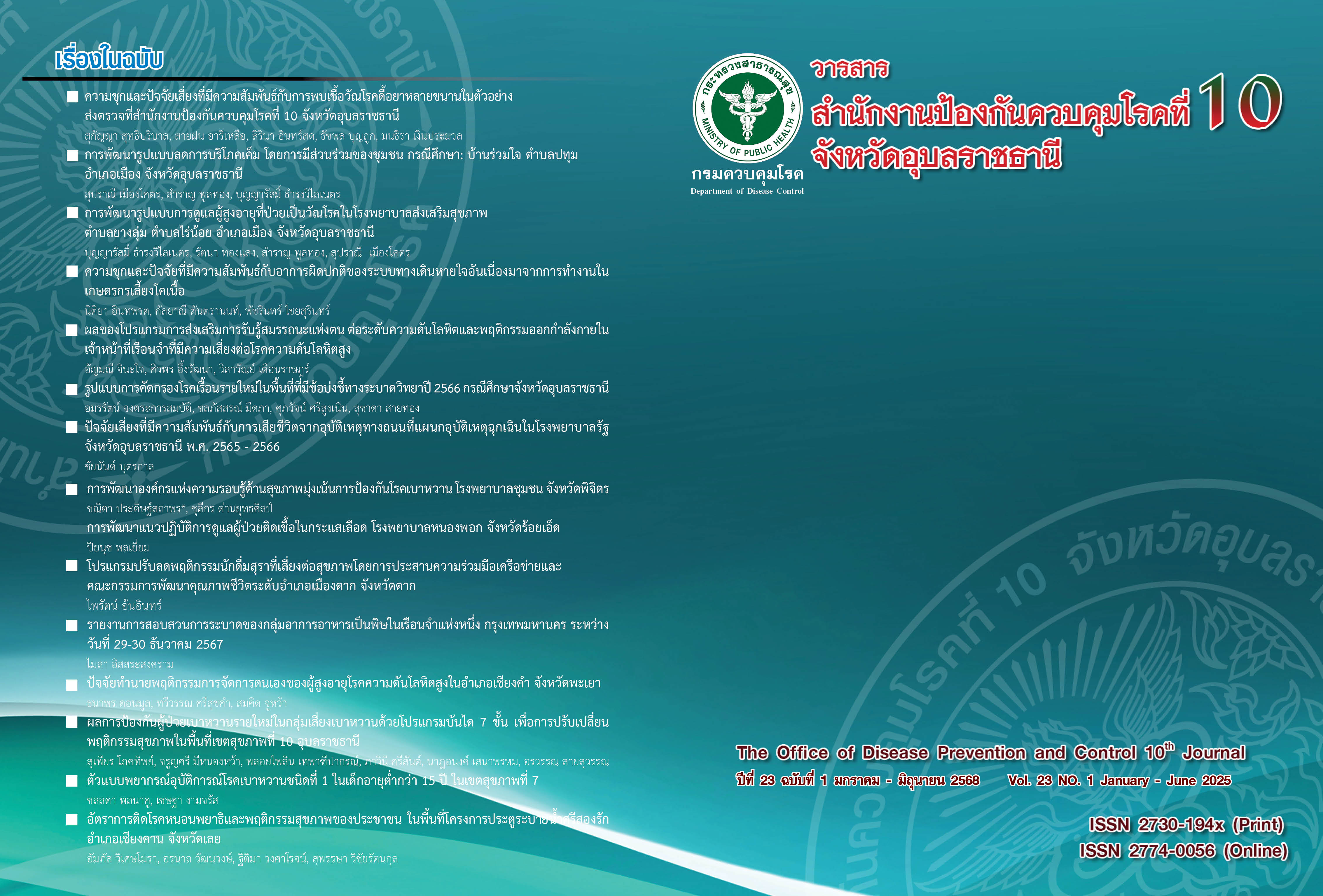
โปรแกรมปรับลดพฤติกรรมนักดื่มสุราที่เสี่ยงต่อสุขภาพโดยการประสานความร่วมมือเครือข่าย และคณะกรรมการพัฒนาคุณภาพชีวิตระดับอำเภอเมืองตาก จังหวัดตาก
คำสำคัญ:
การปรับพฤติกรรม, การดื่มสุราที่เสี่ยงต่อสุขภาพ, คณะกรรมการพัฒนาคุณภาพชีวิตระดับอำเภอบทคัดย่อ
การวิจัยเชิงปริมาณครั้งนี้ มีวัตถุประสงค์ 3 ประการคือ 1) เพื่อศึกษาพฤติกรรมและการรับรู้ความสามารถแห่งตนของนักดื่มสุราที่เสี่ยงต่อสุขภาพ 2) เพื่อพัฒนาโปรแกรมปรับลดพฤติกรรมนักดื่มสุราที่เสี่ยงต่อสุขภาพ 3) เพื่อทดสอบประสิทธิผลโปรแกรมปรับลดพฤติกรรมนักดื่มฯ แบ่งวิธีวิจัยเป็น 3 ระยะ คือ 1) ศึกษาพฤติกรรมดื่มสุราและปัจจัยที่เกี่ยวข้อง ทำการเก็บข้อมูลเชิงปริมาณ โดยใช้แบบสอบถามในกลุ่มนักดื่มสุราที่เสี่ยงต่อสุขภาพทั้งหมด 251 คน และ เก็บข้อมูลเชิงคุณภาพ โดยจัดเวทีสนทนากลุ่ม ในกลุ่มผู้แทนนักดื่ม เลือกแบบเจาะจง 3 กลุ่ม ๆ ละ 8 คน 2) พัฒนาโปรแกรมปรับลดพฤติกรรมตามแนวคิดแรงจูงใจป้องกันโรคและแรงสนับสนุนทางสังคมแบบมีส่วนร่วมของเครือข่ายและคณะกรรมการพัฒนาคุณภาพชีวิตระดับอำเภอ โดยจัดเวทีสนทนากลุ่ม ตามกระบวนการ A.I.C. 3) ทดลองใช้โปรแกรมปรับลดพฤติกรรมการดื่มสุราและประเมินผลกลุ่มนักดื่มสุราที่เสี่ยงต่อสุขภาพ เลือกแบบเจาะจง 15 คน วิเคราะห์ข้อมูลด้วยสถิติเชิงพรรณนาและเปรียบเทียบผลคะแนนก่อนกับหลังเข้าร่วมโปรแกรมปรับพฤติกรรม ด้วยสถิติ Wilcoxon Matched Pairs Signed-Ranks Test ที่ระดับนัยสำคัญ 0.01
ผลวิจัยพบว่า ปัจจัยที่เกี่ยวข้องกับพฤติกรรมดื่มสุราที่เสี่ยงต่อสุขภาพ คือ ปัจจัยส่วนบุคคล ได้แก่ การอยู่คนเดียวและมีความคาดหวังการเลิกดื่มระดับต่ำ ผลพัฒนาโปรแกรมปรับลดพฤติกรรม มุ่งเน้นสร้างความเข้าใจโทษพิษภัยของสุรา เพิ่มการรับรู้ประสิทธิผลแห่งตน ความคาดหวังเชิงบวกจากเลิกดื่ม การควบคุมตนเองเพื่อหลีกเลี่ยงการดื่มและการสนับสนุนทางสังคม ทดสอบประสิทธิผลโปรแกรมกับกลุ่มนักดื่มที่เลือกมาเข้าร่วมกิจกรรมปรับพฤติกรรมครบกำหนด 7 วัน 6 คืน หลังสิ้นสุดกิจกรรมทีมวิจัยติดตามให้กำลังใจโดยเยี่ยมบ้านเดือนละ 1 ครั้ง ครบ 3 ครั้งใน 3 เดือน พบว่า ทุกคนยังหยุดดื่มได้ต่อเนื่อง มีการรับรู้ประสิทธิผลแห่งตนเพื่อปฏิเสธการดื่ม มีความคาดหวังเชิงบวกจากเลิกดื่มและสามารถควบคุมตนเองเพื่อหลีกเลี่ยงการดื่ม โดยมีคะแนนหลังเข้าร่วมโปรแกรมปรับพฤติกรรมเพิ่มสูงมากกว่าก่อนเข้าร่วมโปรแกรมฯ แตกต่างกันอย่างมีนัยสำคัญทางสถิติ (p-value = 0.01)
เอกสารอ้างอิง
สำนักงานสถิติแห่งชาติ. การสำรวจพฤติกรรมการสูบบุหรี่และการดื่มสุราของประชากรไทย พ.ศ. 2564. กรุงเทพฯ: สำนักงานสถิติแห่งชาติ; 2560.
วุฒิศักดิ์ รักเดช, กุลภัสสรณ์ ศิริมนัสกุล, ประภา คงจีระ, นัฐพล ศรียา. การประเมินประสิทธิผลการดำเนินงานควบคุมการบริโภคเครี่องดื่มแอลกอฮอล์ระดับอำเภอ เขตสุขภาพที่ 4 ปี 2561. วารสารการแพทย์และสาธารณสุขเขต 4 [อินเตอร์เน็ต]. 2562 [เข้าถึงเมื่อ 25 พ.ย. 2567]; 9(2):1-14. เข้าถึงได้จาก: https://he01.tci-thaijo.org/index.php/JMPH4/article/view/248565
จักรพันธ์ เพ็ชรภูมิ. วิจัยเชิงปฏิบัติการแก้ไขปัญหาสาธารณสุขในชุมชน. พิษณุโลก: มหาวิทยาลัยนเรศวร; 2563.
Best JW, Kahn JV. Research in education. 10th edition. Boston: Pearson Education Inc; 2014.
สมหญิง ธัมวาสร, สุภาภรณ์ สุดหนองบัว, ธนิษฐา สมัย. พฤติกรรมการดื่มแอลกอฮอล์และปัจจัยที่เกี่ยวข้องในผู้สูงอายุภาคตะวันออกเฉียงเหนือ. วารสารสาธารณสุขศาสตร์ 2562; 49(1):83-95.
วรางคณา จันทร์คง, สมประสงค์ วิทยเกียรติ, กาญจนา ธรรมะวิชัย. ปัจจัยทำนายความตั้งใจในการเลิกดื่มแอลกอฮอล์ของผู้ป่วยที่มารับบริการในคลินิกเลิกเหล้า โรงพยาบาลสงขลา. วารสารพยาบาลสงขลานครินทร์. 2562; 39(3):102-15.
นิตยา ตากวิริยะนันท์, สมพร วัฒนนุกูลเกียรติ, ภาสกร อินทุมาร. ผลของโปรแกรมเสริมสร้างการรับรู้ความสามารถตนเองต่อพฤติกรรมการดื่มแอลกอฮอล์ในกลุ่มวัยทำงาน. วารสารพยาบาลศาสตร์ จุฬาลงกรณ์มหาวิทยาลัย 2561; 30(2):88-99.
บุญเลิศ วุฒิจรัสธำรงค์, วรรณี ศรีวิลัย, ชนัดดา แนบเกษร. อิทธิพลของความคาดหวังในผลลัพธ์ต่อพฤติกรรมการดื่มแอลกอฮอล์ของผู้ป่วยโรคตับแข็ง. วารสารวิทยาลัยพยาบาลพระปกเกล้า จันทบุรี 2561; 29(1):42-50.
ทรงเกียรติ ปิยะกะ, ลัดดา เหมาะสุวรรณ, นันทา อ่อนศรี. อิทธิพลของกลุ่มเพื่อนต่อพฤติกรรมการดื่มแอลกอฮอล์ในกลุ่มวัยทำงานตอนต้น. วารสารวิชาการสาธารณสุข 2563; 29(2):312-24.
Prentice-Dunn S, Rogers R. Protection Motivation Theory and Preventive Health: Beyond the Health Belife Model. Health Education Research 1986; 1(3):153-60.
Bandura A. Self-efficacy: The exercise of control. New York: W.H. Freeman; 1997.
นุจรินทร์ บัวละคร, รังสิมันต์ สุนทรไชยา, สารรัตน์ วุฒิอาภา. ผลของโปรแกรมการบำบัด เพื่อเสริมสร้างแรงจูงใจ โดยครอบครัวมีส่วนร่วมต่อความร่วมมือในการรักษาด้วยยาของผู้ป่วยในโรคร่วมจิตเภทและสุรา. พยาบาลทหารบก 2561; 19(พิเศษ):423-32.
พิมพ์มาดา เชาวลิต, ธนวดี โพธิ์สว่าง, อัจฉราพร สี่หิรัญวงศ์. ปัจจัยที่มีผลต่อการเลิกดื่มสุราของผู้สูงอายุในชุมชนชนบทไทย. วารสารวิจัยทางการพยาบาล 2563; 24(2):249-63.
วาริศา พลายบัว, จรรยา แก้วใจบุญ. ปัจจัยที่มีอิทธิพลต่อความตั้งใจในการเลิกดื่มแอลกอฮอล์ของวัยทำงานในภาคตะวันออกเฉียงเหนือ. วารสารพยาบาลสาธารณสุข 2562; 33(3):128-42.
นิติกร ภู่สว่าง, พันธุ์นภา กิตติรัตนไพบูลย์, ปทานนท์ ขวัญสนิท. ประสิทธิผลของการบำบัดความคิดและพฤติกรรมเพื่อเสริมสร้างความสามารถในการควบคุมตนเองในผู้ติดสุรา. วารสารสุขภาพจิตแห่งประเทศไทย 2563; 28(1):25-37.
อรพรรณ โตสิงห์. ประสิทธิผลของโปรแกรมการมีส่วนร่วมของครอบครัวในการบำบัดผู้ติดสุรา. วารสารการพยาบาลและการดูแลสุขภาพ 2560; 35(4):152-61.
ดาวน์โหลด
เผยแพร่แล้ว
รูปแบบการอ้างอิง
ฉบับ
ประเภทบทความ
สัญญาอนุญาต
ลิขสิทธิ์ (c) 2025 สำนักงานป้องกันควบคุมโรคที่ 10 จังหวัดอุบลราชธานี

อนุญาตภายใต้เงื่อนไข Creative Commons Attribution-NonCommercial-NoDerivatives 4.0 International License.
บทความที่ได้รับการตีพิมพ์เป็นลิขสิทธิ์ของ สำนักงานป้องกันควบคุมโรคที่ 10 จังหวัดอุบลราชธานี
ข้อความที่ปรากฏในบทความแต่ละเรื่องในวารสารวิชาการเล่มนี้เป็นความคิดเห็นส่วนตัวของผู้เขียนแต่ละท่านไม่เกี่ยวข้องกับสำนักงานป้องกันควบคุมโรคที่ 10 จังหวัดอุบลราชธานีและบุคลากรท่านอื่นๆในสำนักงานฯ แต่อย่างใด ความรับผิดชอบองค์ประกอบทั้งหมดของบทความแต่ละเรื่องเป็นของผู้เขียนแต่ละท่าน หากมีความผิดพลาดใดๆ ผู้เขียนแต่ละท่านจะรับผิดชอบบทความของตนเองแต่ผู้เดียว


