
รายงานผู้ป่วยโรคกลากศีรษะที่ได้รับการรักษาด้วยการทาสเตียรอยด์มาก่อนในผู้ใหญ่
คำสำคัญ:
โรคกลากศีรษะ, โรคกลากที่ทาสเตียรอยด์มาก่อน, ผู้ใหญ่บทคัดย่อ
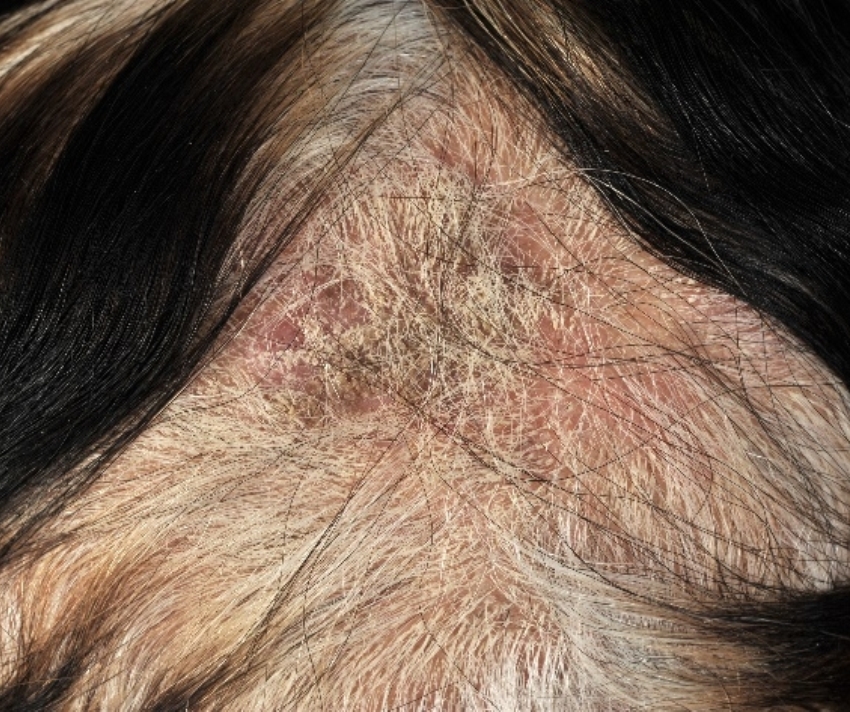
โรคกลากศีรษะ เป็นการติดเชื้อราชั้นตื้นของเส้นผมและหนังศีรษะ ซึ่งเกิดจากเชื้อกลากสายพันธุ์ Trichophyton และ Microsporum ส่วนใหญ่พบในวัยเด็ก ส่วนในวัยผู้ใหญ่ที่เสี่ยงต่อโรคนี้คือผู้ป่วยที่ภูมิคุ้มกันบกพร่องและหญิงวัยหมดประจำเดือน โดยอาการแสดงของโรคกลากศีรษะทั่วไป ได้แก่ ผื่นขุยสีเทา จุดสีดำ ตุ่มหนอง ก้อนอักเสบ และเส้นผมผิดปกติ เป็นต้น แต่อาการของโรคนี้ในวัยผู้ใหญ่อาจแตกต่างไปจากในเด็ก ทำให้วินิจฉัยได้ยากและนำไปสู่การรักษาที่ล่าช้า ยิ่งไปกว่านั้นหากผู้ป่วยได้รับการทาสเตียรอยด์มาก่อน อาจทำให้รอยโรคเปลี่ยนแปลงไปจนดูคล้ายคลึงกับโรคหนังศีรษะอื่นๆได้ รายงานนี้นำเสนอผู้ป่วยหญิงอายุ 64 ปีที่มีโรคกลากศีรษะและได้รับการรักษาด้วยการทาสเตียรอยด์มาก่อน การตรวจด้วยกล้องส่องขยายดูหนังศีรษะและเส้นผม รวมถึงการตรวจด้วย Wood lamp จึงมีส่วนช่วยในการวินิจฉัยเบื้องต้น สำหรับการตรวจหาเชื้อราด้วยกล้องจุลทรรศน์และการเพาะเชื้อรา ยังมีความจำเป็นในการวินิจฉัยโรคและระบุเชื้อก่อโรคอีกด้วย
เอกสารอ้างอิง
2. Khosravi AR, Shokri H, Vahedi G. Factors in etiology and predisposition of adult tinea capitis and review of published literature. Mycopathologia. 2016;181:371-8.
3. Ahmed SM, Rather SR, Kousar H, Bukhari S. Tinea capitis in adults: not so rare. Int J Res Med Sci 2016;4:5426-9.
4. Dutta B, Rasul ES, Boro B. Clinico-epidemiological study of tinea incognito with microbiological correlation. Indian J Dermatol Venereol Leprol.2017;83:326-31.
5. Ansar A, Farshchian M, Nazeri H, Ghiasian SA. Clinico-epidemiological and mycological aspects of tinea incognito in Iran: A 16-year study. Med Mycol J.2011;52:25-32.
6. Kastelan M, Prpic Massari L, Simonic E, Gruber F. Tinea incognito due to Microsporum canis in a 76- year-old woman. Wien Klin Wochenschr.2007;119:455.
7. Campos S, Brasileiro A, Galhardas C, Apetato M, Cabete J, Serrão V, et al. Follow-up of tinea capitis with trichoscopy: a prospective clinical study. J Eur Acad Dermatol Venereol. 2017;31:478-80.
8. Richarz NA, Barboza L, Monsonís M, González- Enseñat MA, Vicente A. Trichoscopy helps to predict the time point of clinical cure of tinea capitis. Australas J Dermatol.2018.
9. Gómez Moyano E, Crespo Erchiga V, Martínez Pilar L, Martinez García S. Correlation between dermoscopy and direct microscopy of morse code hairs in tinea incognito. J Am Acad Dermatol. 2016;74:7-8.
10. Chen X, Jiang X, Yang M, Bennett C, González U, Lin X, et al. Systemic antifungal therapy for tinea capitis in children: An abridged Cochrane Review. J Am Acad Dermatol.2017;76:368-74.
ดาวน์โหลด
เผยแพร่แล้ว
รูปแบบการอ้างอิง
ฉบับ
ประเภทบทความ
สัญญาอนุญาต
เนื้อหาและข้อมูลในบทความที่ลงตีพิมพ์ในวารสารโรคผิวหนัง ถือเป็นข้อคิดเห็นและความรับผิดชอบของผู้เขียนบทความโดยตรงซึ่งกองบรรณาธิการวารสาร ไม่จำเป็นต้องเห็นด้วย หรือร่วมรับผิดชอบใดๆ
บทความ ข้อมูล เนื้อหา รูปภาพ ฯลฯ ที่ได้รับการตีพิมพ์ในวารสารโรคผิวหนัง ถือเป็นลิขสิทธิ์ของวารสารฯ หากบุคคลหรือหน่วยงานใดต้องการนำทั้งหมดหรือส่วนหนึ่งส่วนใดไปเผยแพร่ต่อหรือเพื่อกระทำการใดๆ จะต้องได้รับอนุญาตเป็นลายลักอักษรจากบรรณาธิการวารสารโรคผิวหนังก่อนเท่านั้น

