
Acute Generalized Exanthematous Pustulosis from Allopurinol with Positive HLA-B*58:01: A Case Report
คำสำคัญ:
Acute Generalized Exanthematous Pustulosis, HLA-B*58:01, Allopurinol Hypersensitivityบทคัดย่อ
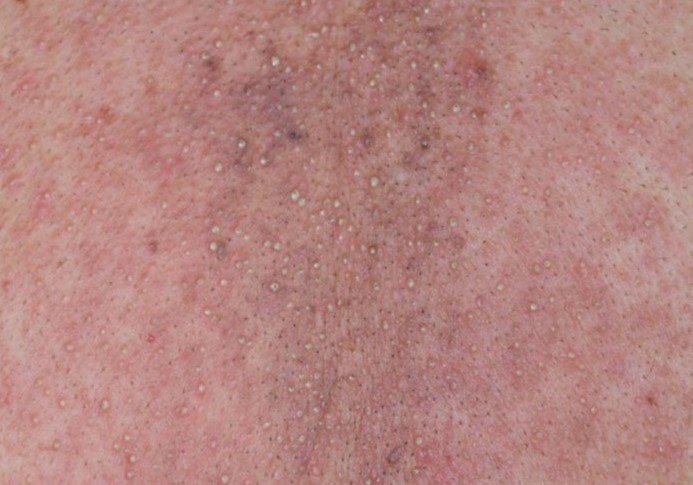
The HLA-B*58:01 allele is associated with severe cutaneous adverse reactions, including Stevens-Johnson syndrome, toxic epidermal necrolysis, drug reaction with eosinophilia and systemic symptoms, and maculopapular eruption. We describe the case of a 58-year-old male who developed non-follicular pustules on the back and flank, along with erythematous papules on the trunk and both upper and lower extremities after taking allopurinol for 2 weeks. Histopathological evaluation confirmed a diagnosis of acute generalized exanthematous pustulosis (AGEP). Genetic testing revealed HLA-B*58:01 positivity. To our knowledge, this is the first reported case of AGEP associated with HLA-B*58:01 in the context of allopurinol-induced hypersensitivity.
เอกสารอ้างอิง
Sidoroff A, Halevy S, Bavinck JNB, Vaillant L, Roujeau JC. Acute generalized exanthematous pustulosis (AGEP) – A clinical reaction pattern. J Cutan Pathol 2001;28:113-9.
Feldmeyer L, Heidemeyer K, Yawalkar N. Acute generalized exanthematous pustulosis: pathogenesis, genetic background, clinical variants and therapy. Int J Mol Sci 2016;17:1214.
De A, Das S, Sarda A, Pal D, Biswas P. Acute generalised exanthematous pustulosis: an update. Indian J Dermatol 2018;63:22-9.
Hotz C, Valeyrie-Allanore L, Haddad C, et al. Systemic involvement of acute generalized exanthematous pustulosis: a retrospective study on 58 patients. Br J Dermatol 2013;169:1223-32.
Sidoroff A, Dunant A, Viboud C, et al. Risk factors for acute generalized exanthematous pustulosis (AGEP): results of a multinational case-control study (EuroSCAR). Br J Dermatol 2007;157:989-96.
Ben Salem C, Saidi W, Larif S, Fathallah N, Slim R, Hmouda H. Pustular drug hypersensitivity syndrome due to allopurinol. Indian J Pharmacol 2015;47:123-4.
Teo WL, Pang SM, Koh HY. Allopurinol hypersensitivity syndrome with acute generalized exanthematous pustulosis manifestations. Cutan Ocul Toxicol 2011;30:243-4.
Lun K, Harley W. Allopurinol-induced pustular eruption: an unusually mild case. Australas J Dermatol 2002;43:140-3.
Masmoudi HC, Afify N, Alnaqbi H, Alhalwachi Z, Tay GK, Alsafar H. HLA pharmacogenetic markers of drug hypersensitivity from the perspective of the populations of the Greater Middle East. Pharmacogenomics 2022;23:695-708.
Yeo SI. HLA-B*58:01: utility and cost-effectiveness in the Asia-Pacific region. Int J Rheum Dis 2013;16:254-7.
Sukasem C, Jantararoungtong T, Kuntawong P, et al. HLA-B*58:01 for allopurinol-induced cutaneous adverse drug reactions: implications for clinical interpretation in Thailand. Front Pharmacol 2016;7:186.
Low DE, Nurul-Aain AF, Tan WC, et al. HLA-B*58:01 association in allopurinol-induced severe cutaneous adverse reactions: the implication of ethnicity and clinical phenotypes in multiethnic Malaysia. Pharmacogenet Genomics 2020;30:153-60.
Puangpetch A, Koomdee N, Chamnanphol M, et al. HLA-B allele and haplotype diversity among Thai patients identified by PCR-SSOP: evidence for high risk of drug-induced hypersensitivity. Front Genet 2015;5:478.
Mahasirimongkol S, Somboonyosdech C, Kumperasart S, et al. HLA-B allelic distribution in samples from Thailand National Health Examination Survey. J Health Sci Thail 2017;23:191-200.
Ko TM, Tsai CY, Chen SY, et al. Use of HLA-B*58:01 genotyping to prevent allopurinol-induced severe cutaneous adverse reactions in Taiwan: national prospective cohort study. BMJ. 2015;351:h4848.
ดาวน์โหลด
เผยแพร่แล้ว
รูปแบบการอ้างอิง
ฉบับ
ประเภทบทความ
สัญญาอนุญาต
ลิขสิทธิ์ (c) 2025 วารสารโรคผิวหนัง

อนุญาตภายใต้เงื่อนไข Creative Commons Attribution-NonCommercial-NoDerivatives 4.0 International License.
เนื้อหาและข้อมูลในบทความที่ลงตีพิมพ์ในวารสารโรคผิวหนัง ถือเป็นข้อคิดเห็นและความรับผิดชอบของผู้เขียนบทความโดยตรงซึ่งกองบรรณาธิการวารสาร ไม่จำเป็นต้องเห็นด้วย หรือร่วมรับผิดชอบใดๆ
บทความ ข้อมูล เนื้อหา รูปภาพ ฯลฯ ที่ได้รับการตีพิมพ์ในวารสารโรคผิวหนัง ถือเป็นลิขสิทธิ์ของวารสารฯ หากบุคคลหรือหน่วยงานใดต้องการนำทั้งหมดหรือส่วนหนึ่งส่วนใดไปเผยแพร่ต่อหรือเพื่อกระทำการใดๆ จะต้องได้รับอนุญาตเป็นลายลักอักษรจากบรรณาธิการวารสารโรคผิวหนังก่อนเท่านั้น

