
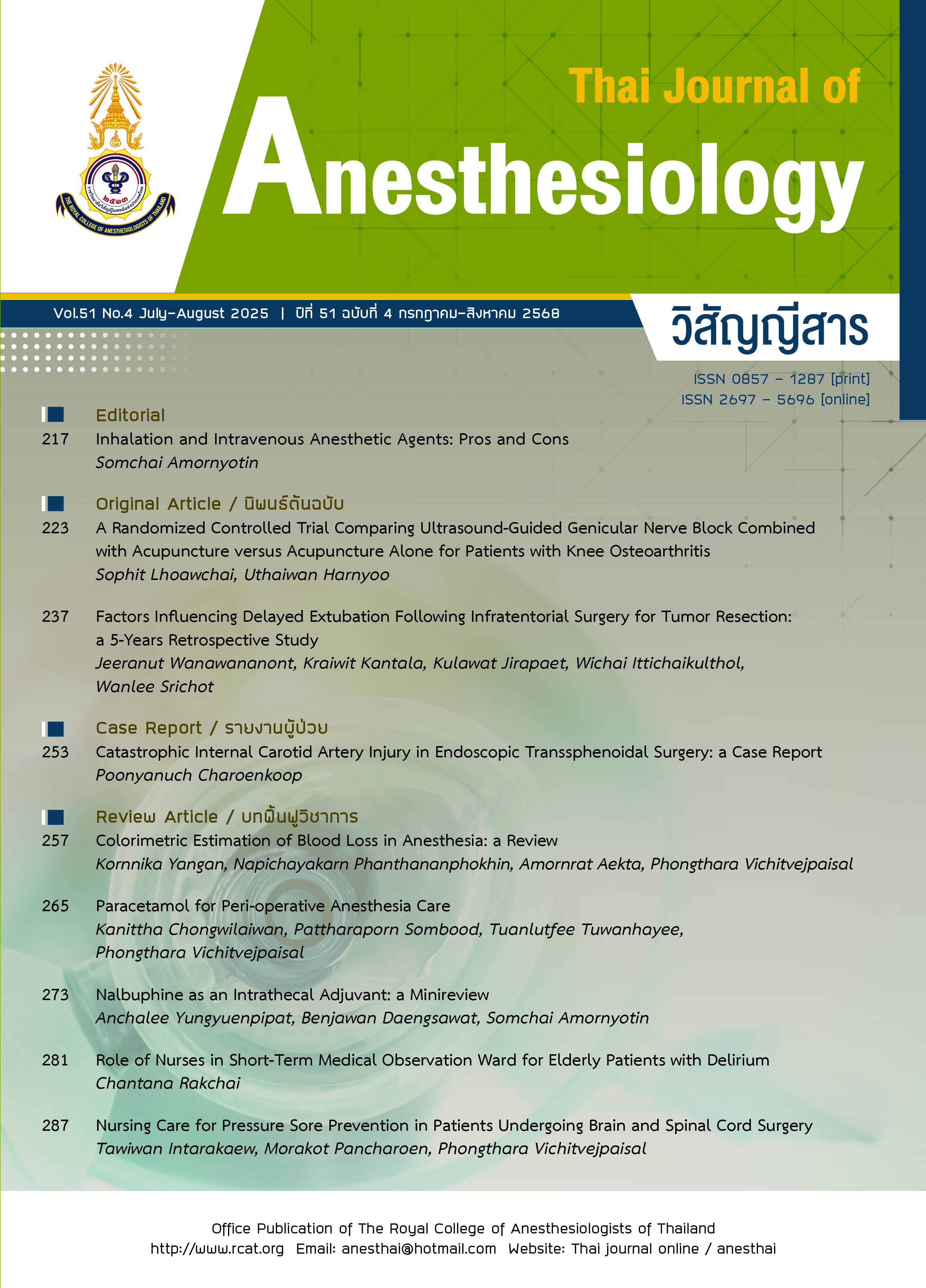
Factors Influencing Delayed Extubation Following Infratentorial Surgery for Tumor Resection: a 5-years Retrospective Study
Keywords:
delayed extubation, infratentorial surgery, neurosurgical patients, tumor resectionAbstract
Background: Infratentorial brain tumor resection presents specific challenges in airway management due to its proximity to vital neurological structures. Postoperative extubation must be carefully timed, as delayed extubation may reflect underlying risk and influence clinical outcomes. The primary aim of this study was to identify perioperative factors independently associated with delayed extubation after elective infratentorial tumor surgery. Secondary aims included determining the incidence of delayed extubation and comparing clinical outcomes between early and delayed extubation groups. Methods: This retrospective cohort study was conducted in adult patients who underwent elective infratentorial tumor resection at a tertiary academic center between January 2018 and December 2022. Patients were categorized based on whether extubation was performed in the operating room (early) or after transfer to others unit (delayed). Demographic, anesthetic, surgical, and outcome data were collected. Multivariable logistic regression was used to identify independent predictors of delayed extubation. Results: Of 210 eligible patients, 84 (40%) underwent delayed extubation. Factors independently associated with delayed extubation included preoperative hydro- cephalus, high intraoperative opioid dose, opioid administration within one hour before surgery end, neuromonitoring without muscle relaxants, large-volume fluid resuscitation, and surgery completed after working hours. Patients with delayed extubation had longer ICU and hospital stays and higher rates of neurological complications. Conclusion: Multiple modifiable perioperative factors were associated with delayed extubation following infratentorial tumor resection. Awareness of these factors may assist anesthesiologists and neurosurgeons in perioperative planning and optimizing postoperative outcomes.
References
Bruder N, Ravussin P. Recovery from anesthesia and postoperative extubation of neurosurgical patients: a review. J Neurosurg Anesthesiol. 1999;11:282-93.
Colice GL, Stukel TA, Dain B. Laryngeal complications of prolonged intubation. Chest. 1989;96:877-84.
Kim MJ, Park YH, Park YS, Song YH. Associations between prolonged intubation and developing post-extubation dysphagia and aspiration pneumonia in non-neurologic critically ill patients. Ann Rehabil Med. 2015;39:763-71.
Skoretz SA, Flowers HL, Martino R. The incidence of dysphagia following endotracheal intubation: a systematic review. Chest. 2010;137:665-73.
Akano AN, Schlichter RA. Anesthetic management for posterior fossa surgery. In: Cottrell JE, Patel PM, Soriano SG, eds. Cottrell and Patel’s Neuroanesthesia. 7 ed. Philadelphia: Elsevier. 2024;p230.
Vidotto MC, Sogame LC, Gazzotti MR, Prandini M, Jardim JR. Implications of extubation failure and prolonged mechanical ventilation in the postoperative period following elective intracranial surgery. Braz J Med Biol Res. 2011;44:1291-8.
Gal J, Hunter S, Reich D, et al. Delayed extubation in spine surgery is associated with increased postoperative complications and hospital episode-based resource utilization. J Clin Anesth. 2022;77:110636.
Cai YH, Zeng HY, Shi ZH, et al. Factors influencing delayed extubation after infratentorial craniotomy for tumour resection: a prospective cohort study of 800 patients in a Chinese neurosurgical centre. J Int Med Res. 2013;41:208-17.
Sloan TB. Muscle relaxant use during intraoperative neurophysiologic monitoring. J Clin Monit Comput. 2013;27:35-46.
Sloan TB, Jameson LC, Janik DJ, Koht A. Evoked potentials. In: Cottrell JE, Patel PM, Soriano SG, eds. Cottrell and Patel’s Neuroanesthesia. 7 ed. Philadelphia: Elsevier; 2024;122-36.
Nivatpumin P, Srisuriyarungrueng S, Saimuey P, Srirojanakul W. Factors affecting delayed extubation after intracranial surgery in Siriraj Hospital. Siriraj Med J. 2020;62:119-23.
Sangtongjaraskul S, Yuwapattanawong K, Sae-phua V, Jearranaiprepame T, Paarporn P. Incidence and perioperative risk factors of delayed extubation following pediatric craniotomy for intracranial tumor: a 10-year retrospective analysis in a Thailand hospital. J Neuroanaesth Crit Care. 2022;09:155-61.
Rishi MA, Kashyap R, Wilson G, Schenck L, Hocker S. Association of extubation failure and functional outcomes in patients with acute neurologic illness. Neurocrit Care. 2016;24:217-25.
Cata JP, Saager L, Kurz A, Avitsian R. Successful extubation in the operating room after infratentorial craniotomy: the Cleveland Clinic experience. J Neurosurg Anesthesiol. 2011;23:25-9.
Ziai WC, Varelas PN, Zeger SL, Mirski MA, Ulatowski JA. Neurologic intensive care resource use after brain tumor surgery: an analysis of indications and alternative strategies. Crit Care Med. 2003;31:2782-7.
Dahan A, Aarts L, Smith TW. Incidence, reversal, and prevention of opioid-induced respiratory depression. Anesthesiology. 2010;112:226-38.
Pathan H, Williams J. Basic opioid pharmacology: an update. Br J Pain. 2012;6:11-6.
Koht AH, Sloan TB, editors. Intraoperative neurophysiological monitoring and the anesthesiologist. ASA Newsletter. 2013.
Nunes RR, Bersot CDA, Garritano JG. Intraoperative neurophysiological monitoring in neuroanesthesia. Curr Opin Anaesthesiol. 2018;31:532-8.
Dubey A, Sung WS, Shaya M, et al. Complications of posterior cranial fossa surgery-an institutional experience of 500 patients. Surg Neurol. 2009;72:369-75.
Hansen B. Fluid overload. Front Vet Sci. 2021;8:668688.
Michinaga S, Koyama Y. Pathogenesis of brain edema and investigation into anti-edema drugs. Int J Mol Sci. 2015;16:9949-75.
Zajic P, Eichinger M, Eichlseder M, et al. Association of immediate versus delayed extubation of patients admitted to intensive care units postoperatively and outcomes: a retrospective study. PLoS One. 2023;18:e0280820.
Kappen PR, Kakar E, Dirven CMF, et al. Delirium in neurosurgery: a systematic review and meta-analysis. Neurosurg Rev. 2022;45:329-41.
Moran HRM, Maguire D, Maguire D, et al. Association of earlier extubation and postoperative delirium after coronary artery bypass grafting. J Thorac Cardiovasc Surg. 2020;159:182-90.e7.
Abelha FJ, Luís C, Veiga D, et al. Outcome and quality of life in patients with postoperative delirium during an ICU stay following major surgery. Crit Care. 2013;17:R257.
Downloads
Published
How to Cite
Issue
Section
License

This work is licensed under a Creative Commons Attribution-NonCommercial-NoDerivatives 4.0 International License.
Copyright
Copyright of all articles published in the Thai Journal of Anesthesiology is held by the Thai Journal of Anesthesiology, the Royal College of Anesthesiologists of Thailand. Submission of a manuscript constitutes the authors' agreement that, upon acceptance for publication, copyright of the work is transferred to the Journal. The content and any opinions expressed in published articles are the sole responsibility of the authors and do not necessarily reflect the views of the editorial board or the Royal College of Anesthesiologists of Thailand.
Licensing
All articles are published open access under the Creative Commons Attribution-NonCommercial-NoDerivatives 4.0 International License (CC BY-NC-ND 4.0). Under this license, anyone may copy and redistribute published articles in any medium or format for non-commercial purposes, provided that appropriate credit is given to the authors and to the Thai Journal of Anesthesiology as the original source of publication, a link to the license is included, and the material is not modified in any way. Requests for commercial use or for adaptation of published material should be directed to the editorial office.
Authors' Rights
Although copyright is held by the Journal, authors retain the right to reuse their own published material in their future scholarly works, theses and dissertations, teaching, and academic presentations, and to deposit the final published version (PDF) in institutional or subject repositories or on personal and institutional websites, without embargo, provided that the Thai Journal of Anesthesiology is clearly acknowledged as the original place of publication.