Evaluation of the sanitary condition and drinking water quality of automatic drinking water dispensers in the municipality
Keywords:
Contamination, Drinking water quality, The automatic drinking water dispenser, Sanitary conditionAbstract
Background: Consumption of water from automatic water dispensers for people in municipal areas is an easily accessible and convenient channel for consumers. The quality of water from automatic water
dispensers is very important because the presence of contaminants in water, as well as the substandard sanitary and environmental conditions of automatic water dispensers, will affect the cleanliness of the
water and the safety of consumers’ health. Objectives: 1.) To evaluate the physical, chemical, and biological qualities of drinking water from an automatic drinking water dispenser. 2.) To assess the environmental
sanitation conditions around the location of the automatic drinking water dispenser in the municipality area,
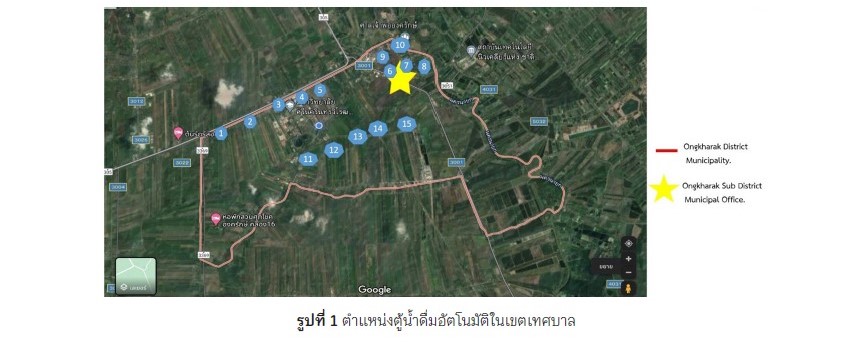
a total of 15 samples. Methods: This research is a survey study. Data were analyzed using descriptive statistics
consisting of frequency, percentage, and mean. Results: When compared to the Ministry of Public Health's standard for drinking water from the automatic drinking water dispensers, the results showed that the physical quality of drinking water samples was clear and odorless, with a pH value of between 6.0 and 7.6. Ten dispensers met the required standards (66.7%), while 5 water dispensers (33.3%) did not pass. The chemical quality of the water passed the standard criteria for all 15 water dispensers. Analyzing biological water quality found that drinking water samples were contaminated with coliform and fecal coliform in 7 and 1 water dispensers (46.7% and 6.7%), respectively, and no Escherichia coli contamination was found. In addition, based on the results of the evaluation of the environmental sanitation conditions of the automatic drinking water dispensers, it was found that all 15 water dispensers (100%) did not have records of water tank cleaning and did not have business licenses attached. As for the location, 13 water dispensers (86.7%) were less than 10 meters from dusty areas. Conclusions: Therefore, the information from this research can be used to improve the environmental sanitation and water quality of automatic drinking water dispensers in municipal areas.
Downloads
References
ศูนย์วิจัยและสนับสนุนเป้าหมายการพัฒนาที่ยั่งยืน. เป้าหมายที่ 6: สร้างหลักประกันเรื่องน้ำและการสุขาภิบาล ให้มีการจัดการอย่างยั่งยืนและมีสภาพพร้อมใช้สำหรับทุกคน. https://www.sdgmove.com/2016/10/06/goal-6-clean-water-and-sanitation. Accessed March 15, 2022.
สำนักคุณภาพและความปลอดภัยอาหาร กรมวิทยาศาสตร์การแพทย์ กระทรวงสาธารณสุข. คู่มือมาตรฐานน้ำดื่มประเทศไทย. นนทบุรี: กรมวิทยาศาสตร์การแพทย์. http://bqsf.dmsc.moph.go.th/bqsfWeb/wp-content/uploads/2017/Publish/e-book/water_handbook.pdf. Accessed March 15, 2022.
ลีลานุช สุเทพารักษ์. การประเมินคุณภาพน้ำดื่มจากตู้น้ำดื่มหยอดเหรียญ. วารสารสุขาภิบาลอาหารและน้ำ. 2558;6(3): 9-21.
น้ำทิพย์ มุมมาลา, ดนิตา ภาณุจรัส, สินีนาฏ กริชชาญชัย และณัฏฐิญา ค้าผล. การควบคุมกำกับตู้น้ำดื่มหยอดเหรียญอัตโนมัติ. วารสารไทยไภษัชยนิพนธ์. 2564;16(1): 75-91.
สลักจิตร ชุติพงษ์วิเวท. การประเมินคุณภาพน้ำดื่มจากตู้น้ำหยอดเหรียญ. วารสารวิชาการสาธารณสุข. 2560;26(4): 667-679.
ภาควิชาอนามัยชุมชน คณะสาธารณสุขศาสตร์ มหาวิทยาลัยมหิดล. โครงการสำรวจคุณภาพน้ำดื่มจาก ตู้น้ำดื่มหยอดเหรียญอัตโนมัติในกรุงเทพมหานคร พ.ศ.2561. กรุงเทพฯ: มหาวิทยาลัยมหิดล. https://infocenter.nationalhealth.or.th/Ebook/DrinkingWater/book.html. Accessed March 24, 2022.
สถิติสุขภาพคนไทย. อัตราป่วยจากโรคอุจจาระร่วงเฉียบพลันซึ่งจำแนกข้อมูลเป็นรายตำบลของอำเภอองครักษ์ จังหวัดนครนายก พบว่า ปี พ.ศ.2564. นนทบุรี: ฐานข้อมูลเฝ้าระวังโรคทางระบาดวิทยา กองระบาดวิทยา กรมควบคุมโรค. https://www.hiso.or.th/thaihealthstat/area/index.php?ma=4&pf=01261001&tp=202. Accessed April 10, 2025.
สุบัณฑิต นิ่มรัตน์, หทัยทิพย์ บรรเจิดจรัสเลิศ และวีรพงศ์ วุฒิพันธุ์. คุณภาพทางด้านความเป็นกรด-ด่าง และกลิ่น ของน้ำดื่มบรรจุขวดชนิดน้ำดื่มและน้ำแร่ที่ผลิตในสาธารณรัฐประชาชนจีน สาธารณรัฐเกาหลีและสาธารณรัฐฝรั่งเศส. วารสารวิจัย มข. (บศ.) 2559;16(4): 92-100.
ญาณสินี สุมา, กฤติกา ณ ลำปาง, ศิริวรรณ บุดดี, สุภาวิณี ศรีคำ และประดับดวง เกียรติศักดิ์ศิริ. การประเมินคุณภาพน้ำดื่มจากตู้กดน้ำดื่มประเภทต่างๆ ในสถาบันการศึกษา. สิ่งแวดล้อมไทย. 2567;28(2): 1-9.
ประกาศสำนักงานคณะกรรมการอาหารและยา เรื่อง คำชี้แจงประกาศกระทรวงสาธารณสุข (ฉบับที่ 362) พ.ศ. 2556 เรื่อง น้ำบริโภคจากตู้น้ำดื่มอัตโนมัติ. นนทบุรี: สำนักงานคณะกรรมการอาหารและยา. https://exfood.fda.moph.go.th/law/data/announ_fda/8_No56_362.pdf. Accessed April 9, 2022.
กองห้องปฏิบัติการสาธารณสุขกรมอนามัย. ชุดตรวจความกระด้างในน้ำ (อ 37). นนทบุรี: กรมอนามัย กระทรวงสาธารณสุข. https://phld.anamai.moph.go.th/th/rldc-faqs-2/195198. Accessed April 9, 2022.
กองห้องปฏิบัติการสาธารณสุขกรมอนามัย. ชุดทดสอบคลอรีนอิสระคงเหลือในน้ำดื่ม (อ 31). นนทบุรี: กรมอนามัย กระทรวงสาธารณสุข. https://phld.anamai.moph.go.th/th/rldc-faqs-2/195203. Accessed October 5, 2024.
Apha, AWWA, Wef. Standard Methods for the Examination of Water and Wastewater. 22nd ed. American Public Health Association; 2012.
นรา ระวาดชัย, และวรางคณา สังสิทธิสวัสดิ์. ปัจจัยที่มีผลต่อคุณภาพนํ้าดื่มจากตู้หยอดเหรียญอัตโนมัติ. วารสารวิจัย มข. (ฉบับบัณฑิตศึกษา). 2555;17(3): 480-492.
เมทินี แสงเมือง, สายัณต์ แก้วบุญเรือง, บุญร่วม แก้วบุญเรือง และณิชกานต์ มีลุน. คุณภาพน้ำดื่มของโครงการน้ำดื่มประชารัฐในเขตเทศบาลนครขอนแก่น. วารสารวิทยาศาสตร์สุขภาพและการสาธารณสุขชุมชน. 2563;3(1): 95-105.
สุธีรา ศรีสุข และภารดี พละไชย. คุณภาพทางจุลินทรีย์ของน้ำบริโภคจากตู้น้ำดื่มหยอดเหรียญอัตโนมัติในเขตเทศบาลนครยะลา. วารสารวิจัยมหาวิทยาลัยเทคโนโลยีราชมงคลศรีวิชัย. 2559;8(2):277-288.
สลักจิต ชุติพงษ์วิเวท. การประเมินคุณภาพน้ำดื่มจากตู้น้ำหยอดเหรียญ. วารสารวิชาการสาธารณสุข. 2560;26(4): 668-679.
มัทนา สมบัติวัฒนาเวศ และชิดชนก เรือนก้อน. สถานการณ์คุณภาพน้ำดื่มจากตู้หยอดเหรียญและระบบการบำรุงรักษาในพื้นที่อำเภอเชียงม่วน จังหวัดพะเยา. วารสารเภสัชกรรมไทย. 2563;12(2): 389-398.
ธนพงศ์ ภูผาลี, สมศักดิ์ อาภาศรีทองสกุล, อรนุช วงศ์วัฒนาเสถียร และมาลี สุปันตี. คุณภาพและความปลอดภัยของน้ำดื่มจากตู้น้ำดื่มหยอดเหรียญอัตโนมัติในจังหวัดมหาสารคาม. วารสารเภสัชกรรมไทย. 2561.10(2); 356-365.
Downloads
Published
How to Cite
Issue
Section
License
Copyright (c) 2025 Chulabhorn Royal Academy

This work is licensed under a Creative Commons Attribution-NonCommercial-NoDerivatives 4.0 International License.
Copyright and Disclaimer
Articles published in this journal are the copyright of Chulabhorn Royal Academy.
The opinions expressed in each article are those of the individual authors and do not necessarily reflect the views of Chulabhorn Royal Academy or any other faculty members of the Academy. The authors are fully responsible for all content in their respective articles. In the event of any errors or inaccuracies, the responsibility lies solely with the individual authors.


