
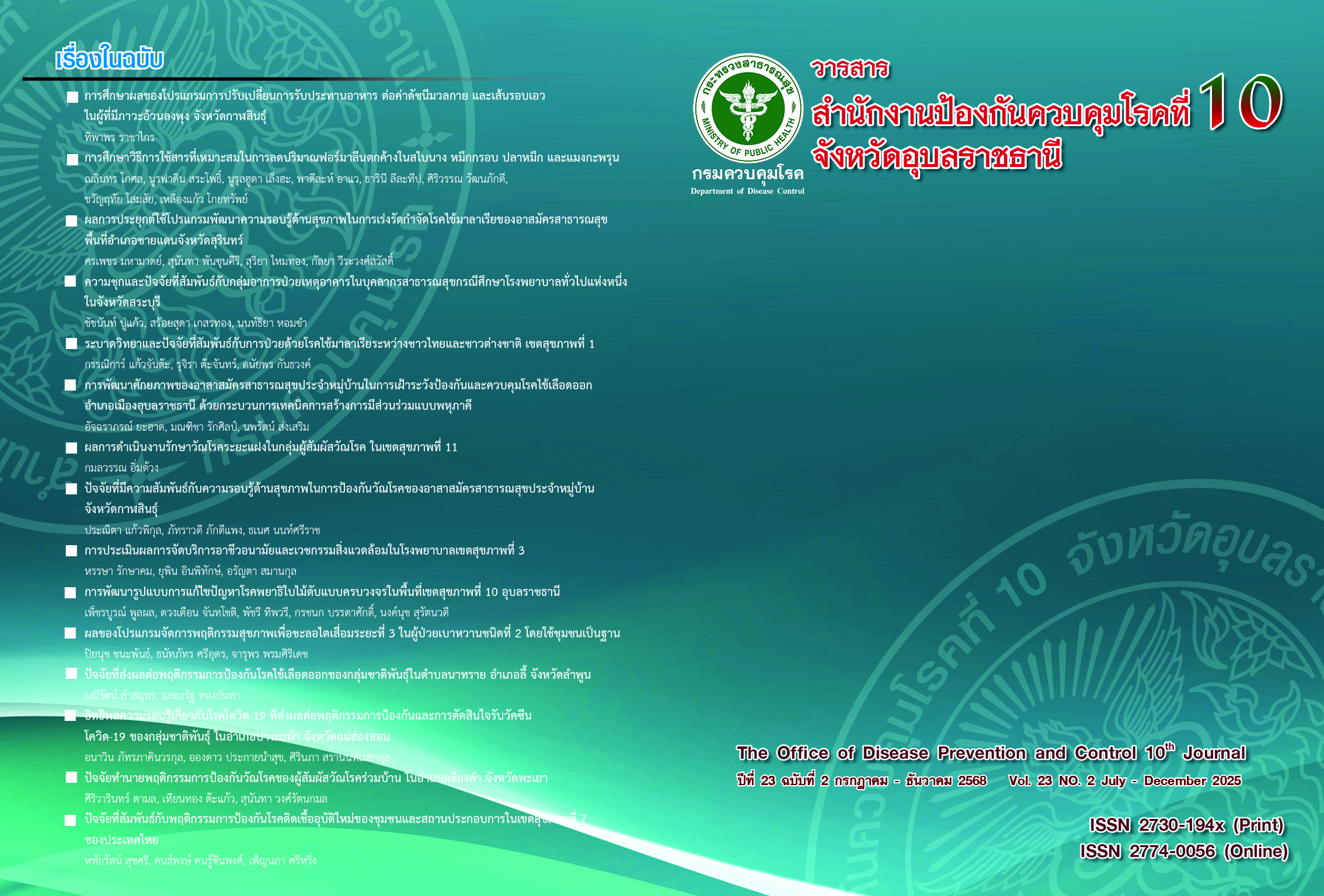
ความชุกและปัจจัยที่สัมพันธ์กับกลุ่มอาการป่วยเหตุอาคารในบุคลากรสาธารณสุข กรณีศึกษาโรงพยาบาลทั่วไปแห่งหนึ่งในจังหวัดสระบุรี
คำสำคัญ:
กลุ่มอาการป่วยเหตุอาคาร, บุคลากรด้านสาธารณสุข, คุณภาพอากาศภายในอาคารบทคัดย่อ
การศึกษาเชิงวิเคราะห์แบบภาคตัดขวางครั้งนี้มีวัตถุประสงค์เพื่อศึกษาความชุกและปัจจัยที่มีความสัมพันธ์กับการเกิดกลุ่มอาการป่วยเหตุอาคารในบุคลากรด้านสาธารณสุขของโรงพยาบาลทั่วไปแห่งหนึ่งในจังหวัดสระบุรี กลุ่มตัวอย่างประกอบด้วยบุคลากรด้านสาธารณสุขจำนวน 154 คน โดยสุ่มตัวอย่างแบบแบ่งชั้นตามแผนกที่ให้บริการผู้ป่วย เก็บข้อมูลโดยใช้แบบสอบถามที่ครอบคลุมปัจจัยด้านบุคคล ลักษณะงาน และสิ่งแวดล้อมร่วมกับการตรวจวัดคุณภาพอากาศภายในอาคารด้านกายภาพ เคมี ชีวภาพ และการระบายอากาศ การวิเคราะห์ข้อมูลใช้สถิติพรรณนาเพื่อแสดงค่าร้อยละ ค่าเฉลี่ย และส่วนเบี่ยงเบนมาตรฐาน และใช้การวิเคราะห์การถดถอยโลจิสติค เพื่อวิเคราะห์ความสัมพันธ์ระหว่างปัจจัยต่าง ๆ กับการเกิดกลุ่มอาการป่วยเหตุอาคาร ผลการศึกษาพบความชุกของกลุ่มอาการป่วยเหตุอาคารร้อยละ 28.6 (ค่าความเชื่อมั่นที่ 95% = 21.4–35.7) ปัจจัยที่มีความสัมพันธ์กับการเกิดกลุ่มอาการป่วยเหตุอาคารอย่างมีนัยสำคัญทางสถิติ ได้แก่ ปัจจัยด้านบุคคล คือ การมีโรคประจำตัว (ORadj = 2.85, 95% CI: 1.32-6.14) และปัจจัยด้านลักษณะงาน คือ ความคิดเห็นด้านอากาศในที่ทำงาน (ORadj = 3.50, 95% CI: 1.60-7.64) ผลการศึกษาชี้ให้เห็นถึงความสำคัญของการเฝ้าระวังสุขภาพในกลุ่มบุคลากรด้านสาธารณสุขที่มีโรคประจำตัวควบคู่กับการปรับปรุงคุณภาพอากาศภายในอาคารให้เป็นไปตามเกณฑ์มาตรฐานที่กำหนด รวมทั้งส่งเสริมการประเมินความพึงพอใจของผู้ใช้อาคารต่อสภาพแวดล้อมภายในอาคารโดยเฉพาะด้านคุณภาพอากาศ เพื่อใช้เป็นแนวทางในการป้องกันและลดความชุกของกลุ่มอาการป่วยเหตุอาคารในสถานพยาบาลอย่างมีประสิทธิภาพ
เอกสารอ้างอิง
มหาวิทยาลัยเทคโนโลยีพระจอมเกล้าธนบุรี. เพราะ “คุณภาพอากาศภายในอาคาร” เป็นสิ่งสำคัญ [อินเตอร์เน็ต]. 2564 [เข้าถึงเมื่อ 5 ต.ค. 2566]. เข้าถึงได้จาก: https://shorturl.asia/lXMTO
Roser M. Data Review: How many people die from air pollution? [Internet]. 2021 [cited 2023 Dec 16]. Available from: https://ourworldindata.org/data-review-air-pollution-deaths
อารุญ เกตุสาคร. กรณีตัวอย่าง : เทคนิคการจัดการปัญหาคุณภาพอากาศภายในอาคารโดยใช้หลักการระบายอากาศ. พิมพ์ครั้งที่ 1. ปทุมธานี: สำนักพิมพ์มหาวิทยาลัยธรรมศาสตร์; 2565.
ยมนา จรรยา. ความชุกและปัจจัยที่มีผลกับการเกิดกลุ่มอาการโรคจากการทำงานในตึกของผู้ที่ทำงานในอาคารสำนักงานเขตราษฎร์บูรณะ [วิทยานิพนธ์ปริญญาสาธารณสุขศาสตรมหาบัณฑิต]. ปทุมธานี: มหาวิทยาลัยธรรมศาสตร์; 2559. 139 หน้า.
Swangsoonthonwes P, Kesornthong S, Homkham N. Risk Factors and Prevalent of Sick Building Syndrome among Back-office Workers in a Thai University Hospital. Indian Journal of Public Health Research & Development 2021; 13(1):231-9.
สาธินี ศิริวัฒน์, กฤษณา นาสูงชน, ฐิติรัช งามฉมัง. การประเมินคุณภาพอากาศภายในอาคารและกลุ่มอาการเจ็บป่วยจากอาคารของผู้ปฏิบัติงานในอาคารใหม่ของโรงพยาบาลแห่งหนึ่ง. วารสารความปลอดภัยและสุขภาพ 2565; 15(1):161-72.
Hai ND, Thy LL, Chanh DN. Prevalence of Sick Building Syndrome - Related Factors among Hospital Workers at University Medical Center Ho Chi Minh City, Vietnam. MedPharmRes 2018; 2(2):1-4.
กองยุทธศาสตร์และแผนงาน สำนักงานปลัดกระทรวงสาธารณสุข. สรุปรายงานการป่วย [อินเตอร์เน็ต]. 2567 [เข้าถึงเมื่อ 17 พ.ค. 2567]. เข้าถึงได้จาก: https://spd.moph.go.th/illness-report/
อนุสสรา ฤทธิ์วิชัย, ณภัควรรต บัวทอง. กลุ่มอาการป่วยเหตุอาคารและความเครียดของพนักงานที่ปฏิบัติงานในอาคารสำนักงาน. เวชศาสตร์ร่วมสมัย 2560; 61(4):525-38.
มัลลิกา วิจิตรเวชการ, สราวุธ สุธรรมาสา, จักรกฤษณ์ ศิวะเดชาเทพ. ความชุกและความสัมพันธ์ของปัจจัยที่เกี่ยวข้องกับการเกิดกลุ่มอาการป่วยเหตุอาคารของผู้ที่ทำงานในอาคารสำนักงาน กรณีศึกษาอุตสาหกรรมผลิตชิ้นส่วนอิเล็กทรอนิกส์แห่งหนึ่งในจังหวัดปทุมธานี. การจัดประชุมเสนอผลงานวิจัยระดับบัณฑิตศึกษา มหาวิทยาลัยสุโขทัยธรรมาธิราช ครั้งที่ 4; วันที่ 26-27 พ.ย. 2557; มหาวิทยาลัยสุโขทัยธรรมาธิราช, ปทุมธานี: 2557. หน้า 1-13.
Daniel WW. Biostatistics: A foundation for analysis in the health sciences. 6th edition. New York: John Wiley & Sons; 1995.
Singapore Standards Council. SS 554-+A1:2016:2021; Code of Practice for Indoor Air Quality for Air-Conditioned Buildings. Singapore: SSC—Singapore Standard Council; 2021.
กรมอนามัย. ประกาศกรมอนามัย เรื่อง ค่าเฝ้าระวังคุณภาพอากาศภายในอาคารสาธารณะ พ.ศ. 2565. [อินเตอร์เน็ต]. 2565 [เข้าถึงเมื่อ 20 ต.ค. 2566]. เข้าถึงได้จาก: https://laws.anamai.moph.go.th/th/practices/download/?did=211864&id=99012&reload=
ACGIH. Threshold Limit Values for Chemical Substances and Physical Agents & Biological Exposure Indices: American Conference of Governmental Industrial Hygienists Publisher; 2023.
สถาบันบำราศนราดูร. คู่มือการปรับปรุงคุณภาพอากาศภายในอาคารสถานพยาบาล. กรุงเทพมหานคร: โรงพิมพ์สำนักงานพระพุทธศาสนาแห่งชาติ; 2550.
Hosmer DW, Lemeshow S, Sturdivant RX. Model-building strategies and methods for logistic regression. In: Applied logistic regression. 3rd edition. Hoboken: John Wiley & Sons; 2013.
Kannirun M, Surawattanasakul V, Rattananupong T, Jiamjarasrangsi W. Prevalence and Association of Indoor Environmental Factors and Sick Building Syndrome among Workers of Army Medical Department Headquarter, Bangkok. Journal of The Royal Thai Army Nurses 2023; 23(3):197-205.
Surawattanasakul V, Sirikul W, Sapbamrer R, Wangsan K, Panumasvivat J, Assavanopakun P, et al. Respiratory Symptoms and Skin Sick Building Syndrome among Office Workers at University Hospital, Chiang Mai, Thailand: Associations with Indoor Air Quality, AIRMED Project. International Journal of Environmental Research and Public Health 2022; 19(17):10850.
Rahayu EP, Maharani R, Jepisah D, Suhara AI. Analysis of Symptoms of Sick Building Syndrome for Nurses in Hospital Inpatient Rooms. Journal Penelitian Pendidikan IPA 2023; 9(2):770-4.
Niza IL, de Souza MP, da Luz IM, Broday EE. Sick building syndrome and its impacts on health, well-being and productivity: A systematic literature review. Indoor and Built Environment 2024; 33(2):218-36.
ดาวน์โหลด
เผยแพร่แล้ว
รูปแบบการอ้างอิง
ฉบับ
ประเภทบทความ
สัญญาอนุญาต
ลิขสิทธิ์ (c) 2025 สำนักงานป้องกันควบคุมโรคที่ 10 จังหวัดอุบลราชธานี

อนุญาตภายใต้เงื่อนไข Creative Commons Attribution-NonCommercial-NoDerivatives 4.0 International License.
บทความที่ได้รับการตีพิมพ์เป็นลิขสิทธิ์ของ สำนักงานป้องกันควบคุมโรคที่ 10 จังหวัดอุบลราชธานี
ข้อความที่ปรากฏในบทความแต่ละเรื่องในวารสารวิชาการเล่มนี้เป็นความคิดเห็นส่วนตัวของผู้เขียนแต่ละท่านไม่เกี่ยวข้องกับสำนักงานป้องกันควบคุมโรคที่ 10 จังหวัดอุบลราชธานีและบุคลากรท่านอื่นๆในสำนักงานฯ แต่อย่างใด ความรับผิดชอบองค์ประกอบทั้งหมดของบทความแต่ละเรื่องเป็นของผู้เขียนแต่ละท่าน หากมีความผิดพลาดใดๆ ผู้เขียนแต่ละท่านจะรับผิดชอบบทความของตนเองแต่ผู้เดียว


