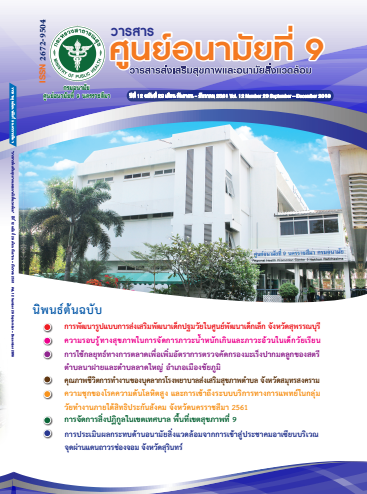
การพัฒนารูปแบบการส่งเสริมพัฒนาการเด็กปฐมวัยในศูนย์พัฒนาเด็กเล็ก จังหวัดสุพรรณบุรี
คำสำคัญ:
เด็กปฐมวัย, รูปแบบการส่งเสริมพัฒนาการ, ศูนย์พัฒนาเด็กเล็กบทคัดย่อ
การวิจัยและพัฒนานี้ มีวัตถุประสงค์เพื่อพัฒนารูปแบบการส่งเสริมพัฒนาการเด็กปฐมวัย และศึกษาประสิทธิผลของรูปแบบการส่งเสริมพัฒนาการเด็กปฐมวัย ในศูนย์พัฒนาเด็กเล็ก จังหวัดสุพรรณบุรี เครื่องมือที่ใช้ในการศึกษา คือ รูปแบบการส่งเสริมพัฒนาการเด็กปฐมวัย แบบสอบถาม แบบรายงานผลการประเมินพัฒนาการเด็ก และแบบบันทึกผลการประเมินพัฒนาการเด็กปฐมวัย DSPM เก็บข้อมูลใน 2 ส่วนดังนี้ ส่วนที่ 1 การพัฒนารูปแบบการส่งเสริมพัฒนาการเด็กปฐมวัยในศูนย์พัฒนาเด็กเล็ก กลุ่มตัวอย่างได้แก่ ผู้อำนวยการโรงพยาบาล เจ้าหน้าที่สาธารณสุข ครูพี่เลี้ยง และผู้นำชุมชน จำนวน 30 คน ส่วนที่ 2 การประเมินประสิทธิผลรูปแบบการส่งเสริมพัฒนาการเด็กปฐมวัย เก็บข้อมูลในกลุ่มครูพี่เลี้ยงเด็ก จำนวน 80 คน (กลุ่มทดลอง และกลุ่มเปรียบเทียบ กลุ่มละ 40 คน) และกลุ่มเด็กที่มีพัฒนาการสงสัยล่าช้า จำนวน 80 คน (กลุ่มทดลอง และกลุ่มเปรียบเทียบ กลุ่มละ 40 คน) โดยกลุ่มทดลองจะใช้รูปแบบการส่งเสริมพัฒนาการเด็กปฐมวัยที่พัฒนาขึ้น ส่วนกลุ่มเปรียบเทียบ ใช้รูปแบบเดิมที่ปฏิบัติกันมา ระยะเวลาเก็บข้อมูลก่อนและหลังการทดลอง 6 เดือน วิเคราะห์ข้อมูลโดยใช้สถิติเชิงพรรณนา Independent t-test และ Paired sample t-test
ผลการวิจัยพบว่า รูปแบบการส่งเสริมพัฒนาการเด็กปฐมวัยในศูนย์พัฒนาเด็กเล็กจังหวัดสุพรรณบุรี ประกอบด้วย 2 กลวิธีคือ 1) จัดการเรียนการสอนกิจกรรมส่งเสริมพัฒนาการเด็กปฐมวัยตามหลักสูตรและแผนการสอนชุดกิจกรรมส่งเสริมพัฒนาการเด็กปฐมวัย โดยครูพี่เลี้ยงเป็นระยะเวลา 6 เดือนติดต่อกัน 2) เฝ้าระวังและคัดกรองพัฒนาการเด็กปฐมวัยในศูนย์พัฒนาเด็กเล็กโดยครูพี่เลี้ยงเด็ก และเจ้าหน้าที่สาธารณสุข ปีละ 2 ครั้ง และ 3) ติดตามและเยี่ยมบ้านเด็กที่สงสัยมีพัฒนาการล่าช้า ทั้งนี้ จากการประเมินประสิทธิผลการใช้รูปแบบการส่งเสริมพัฒนาการเด็กปฐมวัย พบว่า ครูพี่เลี้ยงเด็กเกิดความรู้ในการส่งเสริมพัฒนาการเด็กปฐมวัย มีพฤติกรรมการจัดกิจกรรมส่งเสริมพัฒนาการเด็กปฐมวัยดีขึ้น และทำให้เด็กมีพัฒนาการดีขึ้นอย่างมีนัยสำคัญทางสถิติ (p-value< 0.05)
จากผลการวิจัย ควรใช้รูปแบบการส่งเสริมพัฒนาการเด็กปฐมวัย และดำเนินการในศูนย์พัฒนาเด็กเล็กต่าง ๆ ต่อไป
เอกสารอ้างอิง
2. กรมอนามัย กระทรวงสาธารณสุข. ผลการดำเนินงานส่งเสริมพัฒนาการเด็กปฐมวัยปีงบประมาณ 2558. ใน สรุปผลการดำเนินโครงการส่งเสริมพัฒนาการเด็กเฉลิมพระเกียรติสมเด็จพระเทพรัตนราชสุดาฯ เนื่องในโอกาสฉลองพระชนมายุ 5 รอบ 2 เมษายน 2558. มปท; 2558.
3. สำนักสาธารณสุขจังหวัดสุพรรณบุรี. รายงานผลการสำรวจพัฒนาการเด็ก ปี พ.ศ.2560. มปท; 2560.
4. Isaranurug C, Nanthamongkol S and Kaewsiri D. Factors influencing development of children aged one to under six years old. J Med Assoc Thai 2005;88(1): 86-90.
5. รัตโนทัย พลับรู้การ และคณะ. วิเคราะห์สุขภาวะเด็กและวัยรุ่นอายุ 2-5 ปี. ใน: วันดี นิงสานนท์ และคณะ, บรรณาธิการ. สุขภาวะของเด็กและวัยรุ่นไทย พ.ศ. 2552. กรุงเทพฯ: บียอนด์เอ็นเทอร์ไพรซ์, 2552.
6. ทิพย์สุดา สุเมธาเสนีย์. ความร่วมมือในการจัดการศึกษาความเชื่อมโยงระหว่างบ้าน โรงเรียน และชุมชนในภูมิภาคเอเชียแปซิฟิก. กรุงเทพฯ: คณะกรรมการแห่งชาติว่าด้วยการศึกษาแห่งสหประชาชาติ; 2559.
7. Dey KP, Hariharan S. Integrated approach to healthcare Quality management: A case study. The TQM Magazine 2006;18(6): 583-605.
8. Yamanae T. Statistics: An Introductory Analysis. London: John Weather Hill; 1967.
9. ปฐม นวลคำ. การพัฒนารูปแบบการส่งเสริมพัฒนาการเด็กปฐมวัยในศูนย์พัฒนาเด็กเล็กจังหวัดแม่ฮ่องสอน. แม่ฮ่องสอน: มปท; 2559.
ดาวน์โหลด
เผยแพร่แล้ว
รูปแบบการอ้างอิง
ฉบับ
ประเภทบทความ
สัญญาอนุญาต
บทความหรือข้อคิดเห็นใด ๆ ที่ประกฎในวารสารศูนย์อนามัยที่ 9 เป็นความคิดเห็นของผู้เขียน บรรณาธิการ คณะผู้จัดทำ และศูนย์อนามัยที่ 9 นครราชสีมา (เจ้าของ) ไม่จำเป็นต้องเห็นด้วย ผู้เขียนต้องรับผิดชอบต่อบทความของตนเอง
ผลการพิจารณาของกองบรรณาธิการและผู้ทรงคุณวุฒิถือเป็นที่สิ้นสุด คณะบรรณาธิการวารสารฯ ขอสงวนสิทธิ์ในการตรวจแก้ไขข้อความให้ถูกต้องตามหลักภาษาและมีความเหมาะสม
กองบรรณาธิการวารสารฯ ขอสงวนสิทธิ์มิให้นำเนื้อหาใด ๆ ของบทความ หรือข้อคิดเห็นใด ๆ ของผลการประเมินบทความในวารสารฯ ไปเผยแพร่ก่อนได้รับอนุญาตจากกองบรรณาธิการ อย่างเป็นลายลักษณ์อักษร และผลงานที่ได้รับการตีพิมพ์ถือเป็นลิขสิทธิ์ของวารสารศูนย์อนามัยที่ 9

