ความสัมพันธ์ระหว่างการรับวัคซีนสูตรไขว้และการเกิดโรคติดเชื้อไวรัสโคโรนา 2019 ของประชาชนในจังหวัดพะเยา: การศึกษาย้อนหลังโดยมีกลุ่มควบคุมแบบจับคู่
คำสำคัญ:
วัคซีนป้องกันโรค, การรับวัคซีนสูตรไขว้, โรคโควิด-19บทคัดย่อ
โรคติดเชื้อไวรัสโคโรนา 2019 เป็นโรคระบบทางเดินหายใจที่อาจก่อให้เกิดความเจ็บป่วยรุนแรงได้หากผู้ป่วยไม่ได้รับวัคซีนป้องกันโรคติดเชื้อไวรัสโคโรนา 2019 ซึ่งการวิจัยนี้มีวัตถุประสงค์เพื่อศึกษาความสัมพันธ์ระหว่างการรับวัคซีนป้องกันโรคติดเชื้อไวรัสโคโรนา 2019 สูตรไขว้และการเกิดโรคติดเชื้อไวรัสโคโรนา 2019 ของประชาชนในจังหวัดพะเยา รูปแบบการวิจัยเป็นการศึกษาย้อนหลังโดยมีกลุ่มควบคุมแบบจับคู่ มีกลุ่มป่วยและ
ไม่ป่วย กลุ่มตัวอย่างเป็นประชาชนในจังหวัดพะเยาที่มีอายุ 18 ปีขึ้นไป จำนวน 385 คน แบ่งเป็นกลุ่มป่วย จำนวน 77 คน และกลุ่มไม่ป่วย จำนวน 308 คน ตามอัตราส่วน 1: 4 เลือกตัวอย่างโดยใช้การสุ่มแบบชั้นภูมิ ทำการเก็บข้อมูลในเดือนกันยายน 2565 วิเคราะห์ข้อมูล ความถี่ ร้อยละ ค่าเฉลี่ย ส่วนเบี่ยงเบนมาตรฐาน และการวิเคราะห์ conditional logistic regression
ผลการศึกษาพบว่า การรับวัคซีนป้องกันโรคติดเชื้อไวรัสโคโรนา 2019 สูตรไขว้มีความสัมพันธ์กับการเกิดโรคติดเชื้อไวรัสโคโรนา 2019 โดยการฉีดวัคซีนแบบดังกล่าวมีโอกาสติดเชื้อไวรัสโคโรนา 2019 ได้น้อยกว่ากลุ่มที่ไม่ได้รับการฉีดวัคซีนป้องกันโรคติดเชื้อไวรัสโคโรนา 2019 ใด ๆ ร้อยละ 56.0 อย่างมีนัยสำคัญทางสถิติ (ORadj = 0.44, 95% CI = 0.23-0.87, p = 0.017)
ผลการศึกษานี้ เป็นข้อมูลสำคัญที่จะส่งเสริมการได้รับวัคซีน ประชาชนสามารถใช้ประกอบการตัดสินใจเข้ารับการฉีดวัคซีนป้องกันโรคติดเชื้อไวรัสโคโรนา 2019 สูตรไขว้ เพื่อป้องกันการเกิดโรคติดเชื้อไวรัสโคโรนา 2019 ต่อไป
เอกสารอ้างอิง
Cerqueira-Silva, T., Katikireddi, S. V., de Araujo Oliveira, V., Flores-Ortiz, R., Júnior, J. B., Paixão, E. S., Robertson, C., Penna, G. O., Werneck, G. L., Barreto, M. L., Pearce, N., Sheikh, A., Barral-Netto, M., & Boaventura, V. S. (2022). Vaccine effectiveness of heterologous CoronaVac plus BNT162b2 in Brazil. Nature Medicine, 28(4), 838–843.https://doi.org/10.1038/s41591-022-01701
Chuenjai, K., & Punturaumporn, B. (2021). Factors affecting the decision to vaccinate against Coronavirus (Covid-19) of the population in Bangkok. Faculty of Business Administration Program in Finance and Banking, Ramkhamhaeng University.
Cucinotta, D., & Vanelli, M. (2020). WHO declares COVID-19 a pandemic. Acta Biomed, 91(1), 157–160. https://doi.org/10.23750/abm.v91i1.9397
Filon, F. L., Rui, F., Ronchese, F., Michieli, P. D., & Negro, C. (2022). Incidence of COVID-19 infection in hospital workers from March 1, 2020 to May 31, 2021 routinely tested, before and after vaccination with BNT162B2. Scientific Reports.
Gu, T., Mack, J. A., Salvatore, M., Sankar, S. P., Valley, T. S., Singh, K., Nallamothu, B. K., Kheterpal, S., Lisabeth, L., Fritsche, L. G., & Mukherjee, B. (2020). COVID-19 outcomes, risk factors and associations by race: A comprehensive analysis using electronic health records data in Michigan Medicine. The Journal of the American Medical Association Network Open, 3(10), e2025197. https://doi.org/10.1101/2020.06.16.20133140
Immunization Subcommittee. (2021, August 25). COVID-19 vaccination as recommended for medical and public health personnel performing vaccination by the Immunization Sub-Committee. [The meeting of the Subcommittee on Immunization No. 5/2021]. Ministry of Public Health.
Kajhonlit, B., & Panthuramphorn, B. (2020). Factors affecting the decision making on Covid-19 vaccination among population in Samutprakarn Province [Unpublished doctoral dissertation]. Ramkhamhaeng University.
Khan, M. A., Khan, N., Mustagir, G., Rana, J., Islam, S., & Kabir, I. (2020). Effects of underlying morbidities on the occurrence of deaths in COVID-19 patients: A systematic review and meta-analysis. Journal of Global Health, 10(2), 020503. https://doi.org/10.7189/ jogh.10.020503
Ministry of Public Health. (2022a). Weekly COVID-19 patient situation. https://ddc.moph.go.th/covid19-daily-dashboard/? dashboard=analysis-province
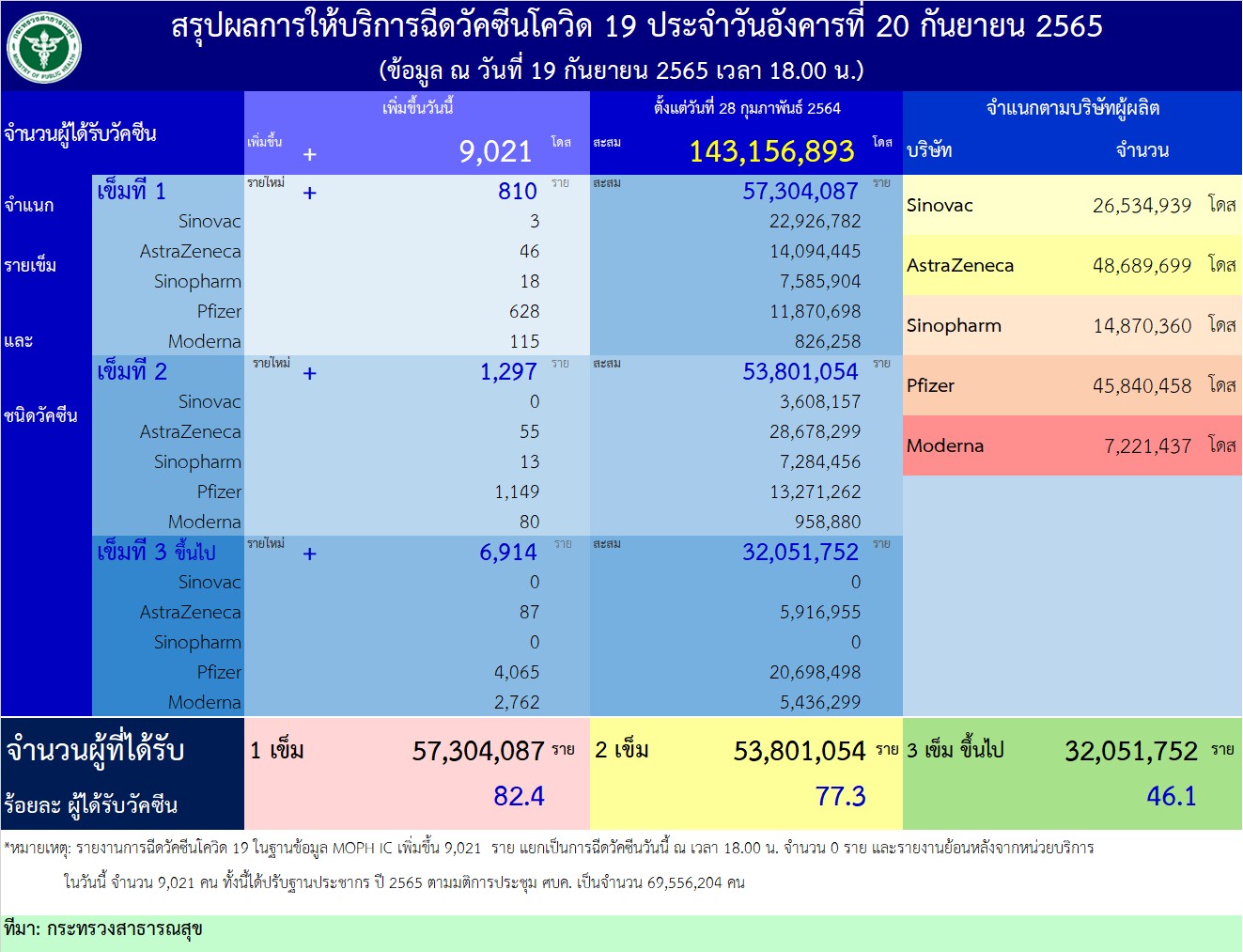
Ministry of Public Health. (2022b). Summary of COVID-19 vaccination service results. https://ddc.moph.go.th/vaccine-covid19/getFiles/7/1664248847696.jpg
Ministry of Public Health. (2022c). Consideration of COVID-19 vaccination. https://ddc.moph.go.th/vaccine-covid19/getFiles/14/1651205056683.pdf
Moeradiothai. (2018). Eastern Lanna ethnic festival. http://www.moeradiothai.net/web/ news/detail/2890
Mukherjee, S., & Pahan, K. (2020). Is COVID-19 gender-sensitive? Journal of Neuroimmune Pharmacology, 16(1), 38-47. https://doi.org/10.1007/s11481-020-09974-z
Multimedia Department of Health. (2022). The 608 group is the group of people most in need of a COVID-19 vaccine. https://multimedia.anamai.moph.go.th/anamai-toons/covid-vaccine-4/
Nordstrom, P., Ballin, M., & Nordstrom, A. (2021). Effectiveness of heterologous ChAdOx1 nCoV-19 and mRNA prime-boost vaccination against symptomatic Covid-19 infection in Sweden: A nationwide cohort study. https://doi.org/10.1016/j.lanepe.2021.100249
O'Driscoll, M., Santos, G. R. D., Wang, L., Cummings, D. A. T., Azman, A. S., Paireau, J., Fontanet, A., Cauchemez, S., & Salje, H. (2021). Age-specific mortality and immunity patterns of SARS-CoV-2. Nature, 590, 140–145. https://doi.org/10.1038/s41586-020-2918-0
Phayao Provincial Public Health Office. (2022). Situation of corona virus infection 2019 (Covid-19) Phayao Province. https://t.ly/fdKBf
Pienthong, T., Khawcharoenpor, T., Apisarnthanarak, P., Webe, D. J., & Apisarnthanarak, A. (2022). Factors associated with coronavirus disease 2019 (COVID-19) among Thai healthcare personnel with high-risk exposures: The important roles of double masking and physical distancing while eating. Infection Control & Hospital Epidemiology, 43(12), 1978-1980. https://doi.org/10.1017/ice.2022.58
Sathitakorn, O., Jantarathaneewat, K., Weber, D. J., Warren, D. K., & Apisarnthanarak, A. (2022). Factors associated with intensified infection prevention and vaccination practice among Thai health care personnel: A multicenter survey during COVID-19 pandemic. American Journal of Infection Control, 50(6), 704-706.
Schlesselman, J. J. (1982). Case-control studies design, conduct analysis. Oxford University Press.
Sritipsukho, P., Khawcharoenporn, T., Siribumrung, B., Damronglerd, P., Suwantarat, N., Satdhabudha, A., Chaiyakulsil, C., Sinlapamongkolkul, P., Tangsathapornpong, A., Bunjoungmanee, P., Nanthapisal, S., Tanprasertkul, C., Sritipsukho, N., Mingmalairak, C., Apisarnthanarak, A., & Tantiyavarong, P. (2022). Comparing real-life effectiveness of various COVID-19 vaccine regimens during the delta variant-dominant pandemic: A test-negative case-control study. Emerging Microbes & Infections, 11(1), 585-592.
Tragultaweesuk, P. (2022). Factors of influence COVID-19 vaccine intent and vaccine’s concerns among hospital staffs. Journal of Research and Health Innovative Development, 3(1). 47-57. https://he01.tci-thaijo.org/index.php/jrhi/article/view/ 253883/171317
Vokó, Z., Kiss, Z., Surján, G., Surján, O., Barcza, Z., Pályi, B., Formanek-Balku, E., Molnár, G. A., Herczeg, R., Gyenesei, A., Miseta, A., Kollár, L., Wittmann, I., Müller, C., & Kásler, M. (2021). Nationwide effectiveness of five SARS-CoV-2 vaccines in Hungaryd the HUN-VE study. Clinical Microbiology and Infection, 28(3), 398-404.
Wanlapakorn, N., Suntronwong, N., Phowatthanasathian, H., Yorsang, R., Thongmee, T., Vichaiwattana, P., Auphimai, C., Wongsrisang, L., Klinfueng, S., Sudhinaraset, N., & Poovorawan, Y. (2021). Immunogenicity of heterologous inactivated and adenoviral-vectored COVID-19 vaccine: Real-world data. Vaccine, 40(23), 3203-3209. https://doi.org/10.1016/j.vaccine.2022.04.043
WHO. (2021). Interim recommendations for heterologous COVID-19 vaccine schedules; 2021. https://www.who.int/publications/i/item/WHO-2019-nCoV-vaccines-SAGE-recommendation-heterologous-schedules?fbclid= IwAR0uuDAq8ra6E_ iQfIBq8ln1oHpkF6uJPqktyrKqQ8OJKcHxQuI-u3GRcEo
Zhou, Y., Yang, Q., Chi, J., Dong, B., Lv, W., Shen, L., & Wang, Y. (2020). Comorbidities and the risk of severe or fatal outcomes associated with coronavirus disease 2019: A systematic review and meta-analysis. International Journal of Infectious Diseases, 99, 47-56. https://doi.org/10.1016/j.ijid.2020.07.029
ดาวน์โหลด
เผยแพร่แล้ว
รูปแบบการอ้างอิง
ฉบับ
ประเภทบทความ
สัญญาอนุญาต
ลิขสิทธิ์ (c) 2023 พยาบาลสาร

อนุญาตภายใต้เงื่อนไข Creative Commons Attribution-NonCommercial-NoDerivatives 4.0 International License.
บทความที่ได้รับการตีพิมพ์เป็นลิขสิทธิ์ของวารสารพยาบาลสาร
ข้อความที่ปรากฏในบทความแต่ละเรื่องในวารสารวิชาการเล่มนี้เป็นความคิดเห็นส่วนตัวของผู้เขียนแต่ละท่านไม่เกี่ยวข้องกับมหาวิทยาลัยเชียงใหม่ และคณาจารย์ท่านอื่นๆในมหาวิทยาลัยฯ แต่อย่างใด ความรับผิดชอบองค์ประกอบทั้งหมดของบทความแต่ละเรื่องเป็นของผู้เขียนแต่ละท่าน หากมีความผิดพลาดใด ๆ ผู้เขียนแต่ละท่านจะรับผิดชอบบทความของตนเองแต่ผู้เดียว