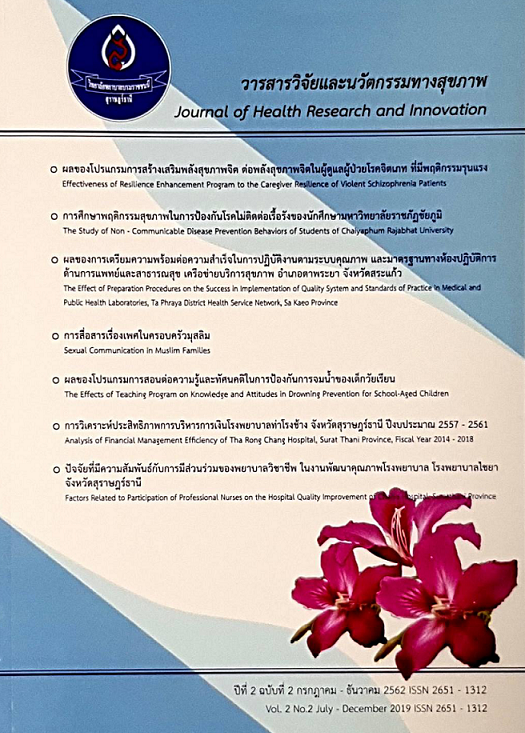
การสื่อสารเรื่องเพศในครอบครัวมุสลิม
คำสำคัญ:
การสื่อสารเรื่องเพศ, ครอบครัวมุสลิมบทคัดย่อ
การวิจัยครั้งนี้เป็นการวิจัยเชิงคุณภาพ เพื่อศึกษาสถานการณ์ ปัญหา อุปสรรคด้านการสื่อสารเรื่องเพศในครอบครัวมุสลิม รวมทั้งค้นหาแนวทางการสื่อสาร เรื่องเพศที่เหมาะสมแก่ครอบครัวที่เลี้ยงดูเด็กในวัยประถมศึกษา กลุ่มตัวอย่างที่ใช้ในการศึกษาเป็น ผู้ปกครองนักเรียนชั้นประถมศึกษาปีที่ 4-6 นับถือศาสนามุสลิม จังหวัดนครศรีธรรมราช จำนวน 50 คน เก็บข้อมูลโดยการสัมภาษณ์เชิงลึก โดยใช้แนวคำถามสร้างตามกรอบแนวคิดของการศึกษาวิจัย ผลการศึกษาวิจัย พบว่า ผู้ปกครองส่วนใหญ่เห็นว่าการอบรมเรื่องเพศเป็นหน้าที่ของครูในโรงเรียนสอนศาสนาโดยใช้หลักศาสนาอิสลามมาเป็นสื่อกลางในสื่อสาร แต่ก็มีผู้ปกครองบางคนสอนลูกตั้งแต่อายุประมาณ 7-10 ขวบ โดยเฉพาะเรื่องความเป็นส่วนตัว การปะปนระหว่างชายหญิง และความจำเป็นของ “ฮิญาบ” วัยรุ่นมุสลิมได้รับการสั่งสอนเรื่อง “ฮะยา” มีห้องนอนเป็นสัดส่วน มีเพศสัมพันธ์ก่อนแต่งงานไม่ได้ แต่สามารถแต่งงานอายุยังน้อยได้หากได้รับอนุญาตจากผู้ปกครอง รูปแบบและวิธีการพูดคุย เป็นการพูดคุยในลักษณะนั่งคุยกันในช่วงเวลาก่อนละหมาด ทานอาหารเย็นร่วมกัน หรือช่วงนั่งดูทีวี และมีการคุยผ่าน Facebook และLine ด้านอุปสรรคของการสื่อสารเรื่องเพศผู้ปกครองจะยังไม่คุ้นเคยกับการสื่อสารพูดคุยเรื่องเพศกับบุตร เพราะคิดว่าบุตรยังเด็ก และควรเรียนรู้ในโรงเรียนสอนศาสนาตามหลักศาสนาอิสลามจะดีกว่าผู้ปกครองสอนเอง
สรุป ผู้ปกครองส่วนใหญ่ใช้หลักศาสนาอิสลามมาเป็นสื่อกลางในสอน อบรมเรื่องเพศกับบุตร และมองว่าเป็นหน้าที่ของครูในโรงเรียนเป็นผู้สอน
เอกสารอ้างอิง
Boonchieng, W., Tuanrat, W., Fongkaew, W., & Klunkli, P. (2013). Early adolescents’ knowledge of HIV/AIDS and attitudes towards sexual behavior. Thai Journal of Nursing Council, 28 (1), 124-137. (in Thai).
Daengchon, C. (2009). Talk about sexuality between parents and youth rural northern Thailand. Master’s thesis, Health Social Science, Faculty of Graduate studies, Mahidol University. (in Thai).
Junnual N, Manwong M, Suebsamran P., & Singto S. (2014). Factors related to sexual behavior among the lower secondary school students at a school in Ubon Ratchathani province. The Public Health Journal of Burapha University, 9(2), 56-65. (in Thai).
Kaewjinda, P. (2012). Parents school for sex communication and volunteer parent network in the community. Uttaradit Province: Developing the Potential of Parents and Teens in Solving Pregnancy Problems in Lower Secondary Adolescents. Uttaradit: Laplae Hospital. (in Thai)
Khamsuwan,K. (2013). Grandma teaches mother, mother, teach children, children, how to know about sex to be safe. Newsletters and Mahidol University Development; 33: 6. (in Thai)
Kritcharoen, S. & PhonIn, G. (2008). Teaching about sex of parents and the desire to learn about sex of their children. Songkhla Nakarin Medical Journal. 26 (1), 61-70. (in Thai)
Manu, A. A., Mba, C. J., Asare, G. Q., Odoi-Agyarko, K., & Asante, R. K. (2015). Parent-child communication about sexual and reproductive health: evidence from the Brong Ahafo region, Ghana Reproductive health, 12, 1-13. doi:10.1186/s12978-015-0003-1.
Mc Bride, C. K., Paikoff, R. L., & Holmbeck, G. N. (2003). Individual and familial influences on the onset of sexual intercourse among urban African American adolescents. Journal of consulting and clinical psychology, 71(1), 159-167.
Ministry of Social Development and Human Security. (2011). The status of childbirth of Thai adolescents 2011. Search from https://www.mociety.go.th/article_attach/ 9885/ 14470.pdf
Office of the National Human Rights Commission. (2016). Young women problems who are pregnant prematurely with the human rights dimension. Retrieved from http://www.nhrc.or.th/ getattachment/ b814c4a4-21f6-4e8b-859f-af26a22fb351/.aspx (in Thai)
Phoowachanathipong, K. (2009) A Study of the relationship between Buddhistic child rearing practices and grateful behaviors of adolescents. Master’s thesis, Faculty of Psychology. Ramkhamhaeng University. (in Thai).
Sukkrarerk.P. (2012). Sexual communication in Family.(Online). P.S.C. can be accessed from http://www.elib-online.com (in Thai)
Siriluckkananan, K. (2010). Development of a non-formal education program for parents to enhance communicative abilities on sex education of their adolescent children. Doctor dissertation. Department of Educational Policy, Management and Leadership, Faculty of Education. Chulalongkorn University. (in Thai).
Smuseneto,A., Tongsamsi,K., Benrit P., & Useng, N. (2017). Sexuality in the Marital Life of Thai Muslims in Pattani Province. The Thammasat Journal of History. 4(1). 270-323. file:///C:/Users/ACER/Downloads/92272-%23%23default.genres.article%23%23-237621-1-10-20170807%20(1).pdf
Sukrat, B., Saengeng, K., & Phrompraphat, P. (2015). Situation of Adolescent Pregnancy in, Saengeng, K., Sukrat, B.,Kovavisarach,E.,Promprapat, P. & Kanjanawetang, C. (Editors). Handbook for Practicing Adolescent Mothers. (2ndedition). (1-15). Bangkok: Kaew Chao Chom Media and Publishing Center. (in Thai)
UNFPA. (2014). Motherhood in childhood facing the challenge of adolescent pregnant. Bangkok: United Nations Population Fund.
World Health Organize [WHO]. (2014). Adolescent Pregnancy. Retrieved 23 October 2018, from http://www.who.int/en/news-room/fact-sheets/detail/adolescent-pregnancy
ดาวน์โหลด
เผยแพร่แล้ว
รูปแบบการอ้างอิง
ฉบับ
ประเภทบทความ
สัญญาอนุญาต
บทความที่ได้รับการตีพิมพ์เป็นลิขสิทธิ์ของวารสารวิทยาลัยพยาบาลบรมราชชนนี สุราษฎร์ธานี
ข้อความที่ปรากฏในบทความแต่ละเรื่องในวารสารวิชาการนี้เป็นความคิดเห็นส่วนตัวของผู้เขียนแต่ละท่านไม่เกี่ยวข้องกับวิทยาลัยพยาบาลบรมราชชนนี สุราษฎร์ธานี และคณาจารย์ท่านอื่นๆในวิทยาลัยฯ แต่อย่างใด ความรับผิดชอบองค์ประกอบทั้งหมดของบทความแต่ละเรื่องเป็นของผู้เขียนแต่ละท่าน หากมีความผิดพลาดใดๆ ผู้เขียนแต่ละท่านจะรับผิดชอบบทความของตนเองแต่ผู้เดียว