Factors Affecting Self-Management of Older Persons After the COVID-19 Epidemic to the Next Normal, Mueang District Chaiyaphum Province
Keywords:
Older Person, COVID-19, Next NormalAbstract
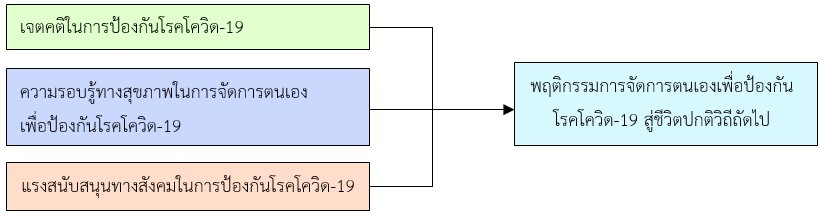
This predictive correlational research aimed to study the level of self-management behaviors and identify factors influencing self-management behaviors among older adults for the prevention of COVID-19 during the transition to the next normal. The sample consisted of 161 older adults aged 60 years and above residing in Mueang District, Chaiyaphum Province, selected through multistage sampling. The research instruments were questionnaires measuring four key areas: attitudes toward COVID-19 prevention, health literacy related to COVID-19 self-management, social support for COVID-19 prevention, and self-management behaviors for COVID-19 prevention among older adults. The reliability coefficients for these instruments were 0.72, 0.70, 0.75, and 0.82, respectively. Data were analyzed using descriptive statistics, Pearson’s correlation, and enter multiple regression analysis.
The results revealed that the overall level of self-management behavior was moderate (Mean = 3.29, SD = 0.64). Attitudes toward COVID-19 prevention, health literacy, and social support were all associated with self-management behaviors. These three factors jointly explained 35% of the variance in self-management behavior (R2 = 0.35, F = 27.64, p-value < 0.001). Among these, health literacy was the strongest predictor (beta = 0.51, p-value < 0.001), followed by social support (beta = 0.19, p-value < 0.01). In conclusion, enhancing health literacy and providing social support can effectively promote self-management behaviors among older adults for COVID-19 prevention. Therefore, public health professionals should incorporate these factors into the design of health promotion programs aimed at supporting older adults during the post-pandemic transition to next normal.
References
กรมกิจการผู้สูงอายุ กระทรวงการพัฒนาสังคมและความมั่นคงของมนุษย์. (2564). คู่มือแนวทางการดูแลผู้สูงอายุในช่วงที่มีการระบาดของเชื้อไวรัสโคโรนา 2019 (COVID-19) ฉบับปรับปรุง. กรุงเทพฯ: กองส่งเสริมสวัสดิการและคุ้มครองสิทธิผู้สูงอายุ.
กรมอนามัย กระทรวงสาธารณสุข. (2563). แนวทางการพัฒนาโรงเรียนรอบรู้ด้านสุขภาพ. กรุงเทพฯ: โรงพิมพ์องค์การสงเคราะห์ทหารผ่านศึก.
กองระบาดวิทยา กรมควบคุมโรค กระทรวงสาธารณสุข. (2567). ข่าวเพื่อสื่อมวลชน. สืบค้นเมื่อ 23 กันยายน 2567 จาก https://ddc.moph.go.th/uploads/files/4423820240703070652.pdf.
กองโรคติดต่อทั่วไป กรมควบคุมโรค กระทรวงสาธารณสุข. (2565). โรคติดเชื้อไวรัสโคโรนา 2019. สืบค้นเมื่อ 22 กันยายน 2567 จาก https://ddc.moph.go.th/uploads/files/2426720220330084652.pdf.
กองโรคติดต่อทั่วไป กรมควบคุมโรค กระทรวงสาธารณสุข. (2566). โรคติดเชื้อไวรัสโคโรนา 2019. สืบค้นเมื่อ 22 กันยายน 2567 จาก https://www.ddc.moph.go.th/uploads/files/3146920230120095730.pdf.
จักรพันธ์ เพ็ชรภูมิ. (2562). พฤติกรรมสุขภาพ แนวคิด ทฤษฎี และการประยุกต์ใช้. (พิมพ์ครั้งที่ 3). พิษณุโลก: รัตนสุวรรณการพิมพ์.
จิตนธี ริชชี่. (2565). โควิด-19 และความปกติถัดไป: การปฏิบัติการพยาบาลอนามัยโรงเรียน. วารสารวิจัยการพยาบาลและสุขภาพ, 23(2), 1-12.
ฉัตรชัย สุกสิ, พุธิตา กีรติมงคลชัย, ธีรังกูร วรบำรุงกุล, เริงวิชญ์ นิลโคตร, วัยวุฒิ บุญลอย และอรุณเกียรติ จันทร์ส่งแสง. (2565). ผู้บริหารมืออาชีพยุคชีวิตวิถีถัดไป. วารสารคุณภาพชีวิตกับกฎหมาย, 18(2), 65-76.
ณัฐรัตน์ จันเครื่อง (2565). ปัจจัยทำนายพฤติกรรมการจัดการตนเองของผู้สูงอายุภายใต้การระบาดของโรคติดเชื้อไวรัสโคโรนา 2019 ในชุมชน อำเภอเวียงชัย จังหวัดเชียงราย. การศึกษาค้นคว้าด้วยตนเอง ปริญญาสาธารณสุขศาสตรมหาบัณฑิต มหาวิทยาลัยพะเยา.
ดรัญชนก พันธ์สุมา และพงษ์สิทธิ์ บุญรักษา. (2564). ความรู้ ทัศนคติ และพฤติกรรมการป้องกันโควิด 19 ของประชาชนในตำบลปรุใหญ่ อำเภอเมือง จังหวัดนครราชสีมา. ศรีนครินทร์เวชสาร, 36(5), 597-604.
ธันยนันท์ สมบูรณ์รัตนโชค และสันต์ ลมไธสง. (2564). การบริหารแบบไร้ผู้บริหาร : รูปแบบองค์กรธุรกิจยุควิถีชีวิตแบบ NEW NORMAL. วารสารสหศาสตร์ศรีปทุม ชลบุรี, 7(3), 1-13.
นูรซาฮีดา เจ๊ะมามะ, สาธิมาน มากชูชิต และพิชญ์ชญานิษฐ์ เรืองเริงกุลฤทธิ์. (2565). ความสัมพันธ์ระหว่างความรู้ ทัศนคติ และพฤติกรรมการป้องกันการติดเชื้อไวรัสโคโรนาของผู้สูงอายุในเขตเทศบาลเมืองแห่งหนึ่งในภาคใต้. วารสารการพยาบาลและการดูแลสุขภาพ, 40(4), 1-13.
ปริญญาภรณ์ ธนะบุญปวง. (2565). การดูแลสุขภาวะและคุณภาพชีวิตผู้สูงอายุในยุคปกติถัดไป. วารสารวิจัยเพื่อการส่งเสริมสุขภาพและคุณภาพชีวิต, 2(1), 74-84.
พนม คลี่ฉายา. (2564). การใช้เทคโนโลยีดิจิทัลของผู้สูงอายุและข้อเสนอเพื่อการเสริมสร้าง ภาวะพฤฒิพลังและผลิตภาพของผู้สูงอายุไทย. วารสารนิเทศศาสตร์, 39(2), 56-78.
พนัส จันทร์ศรีทอง. (2565). ชีวิตวิถีถัดไปกับการศึกษา. วารสารครุศาสตร์ คณะครุศาสตร์ มหาวิทยาลัยราชภัฏนครสวรรค์, 5(3), 25-36.
พรรณี ปานเทวัญ, อภิญญา อินทรรัตน์ และองค์อร ประจันเขตต์. (2567). พยาบาลกับการปรับเปลี่ยนพฤติกรรมสุขภาพ: แนวคิด ทฤษฎี สู่การปฏิบัติ (พิมพ์ครั้งที่ 2). กรุงเทพฯ: รักงานพิมพ์ 2017 จำกัด.
พิชญามณฑ์ วรรณโก และอรุณรัตน์ สู่หนองบัว. (2565). ความสัมพันธ์ของวัคซีนโควิด-19 และความรุนแรงของการเจ็บป่วยโรคโควิด-19 โรงพยาบาลชัยภูมิ ปี 2564-2565. วารสารศูนย์อนามัยที่ 9, 16(3), 1057-1069.
มานะชัย จรูญไธสง. (2565). ปัจจัยที่มีผลต่อพฤติกรรมการป้องกันโรคโควิด 19 ในผู้สูงอายุ อำเภอเมืองยาง จังหวัดนครราชสีมา. วิทยานิพนธ์ปริญญา สาธารณสุขศาสตรมหาบัณฑิต สาขาวิทยาศาสตร์สุขภาพ มหาวิทยาลัยสุโขทัยธรรมาธิราช.
ยุภาวรรณ จุ้ยสวัสดิ์, วรรณดี ศรีคงจันทร์, ญาณันธร กราบทิพย์, กัมปนาท ฉายชูวงษ์, และบุญมี โพธิ์คำ. (2567). ความสัมพันธ์ระหว่างความรอบรู้ด้านสุขภาพและพฤติกรรมการป้องกันตนเองหลังการระบาดของโรคโควิด-19 ของอาสาสมัครสาธารณสุขประจำหมู่บ้าน ตำบลเสม็ด อำเภอเมืองชลบุรี จังหวัดชลบุรี. วารสารวิชาการสำนักงานป้องกันควบคุมโรคที่ 9 จังหวัดนครราชสีมา, 30(2), 18-30.
สำนักงานสาธารณสุขจังหวัดชัยภูมิ. (2566). ข้อมูลของระบบคลังข้อมูลด้านการแพทย์และสุขภาพ. สืบค้นเมื่อ 25 เมษายน 2568 จาก https://hdc.moph.go.th/cpm/public/standard-report-detail/.
อลิษา เปียจันทร์, สลักจิต แจ้งเอี่ยม, วาสนา บุณยมณี, ศิริลักษณ์ วรรณละเอียด และวิมล อ่อนเส็ง. (2567). ปัจจัยที่มีความสัมพันธ์กับพฤติกรรมการป้องกันตนเองจากโรคติดเชื้อไวรัสโคโรนา 2019 ของประชาชนตำบลเมืองเก่า อำเภอเมืองสุโขทัย จังหวัดสุโขทัย. วารสารสังคมศาสตร์และวัฒนธรรม, 8(6), 227-239.
อารยา เชียงของ. (2566). สุขภาพคนเมือง: ทฤษฎี กลยุทธ์ในการส่งเสริมสุขภาพ และการป้องกันโรค ประเด็นปัญหาและมุมมองอนาคต. นนทบุรี: พี.เค.เค.พริ้นท์ติ้ง จำกัด.
Azami, M., Sharifi, H., & Alvandpur, S. (2020). Evaluating the relationship between information literacy and evidence-based nursing and their impact on knowledge and attitude of nurses working in hospitals affiliated to Kerman University of Medical Sciences on medication errors. Journal of Family Medicine and Primary Care, 9(8), 4097-4106. https://doi.org/10.4103/jfmpc.jfmpc_5_20
Best, J. W. (1981). Research in education (4th ed.). New Jersey: Prentice-Hall.
Bloom, B. S. (1956). Taxonomy of educational objectives: The classification of educational goals; Handbook I: Cognitive domain. In M. D.
Engelhart, E. J. Furst, W. H. Hill, & D. R. Krathwohl (Eds.), Taxonomy of educational objectives: The classification of educational goals; Handbook I: Cognitive domain. New York: David McKay.
Cronbach, L. J. (1951). "Coefficient alpha and the internal structure of tests". Psychometrika, 16, 297-334. https://doi.org/10.1007/BF02310555
Hambleton, R. K. (1980). Test score validity and standard-setting methods. In R. A. Berk (Ed.), Criterion-referenced measurement: The state of the art. Baltimore: The John Hopkins University Press.
Hati, B. A., Manurung, I. F. E., & Dodo, D. O. (2024). Covid-19 prevention behaviors and social support for elderly group in the working area of the Atambua City Puskesmas. Journal of Ageing and Family, 2(1), 1-10. https://doi.org/10.52643/joaf.v3i2.4133
Juntakot, N., Boonyamalik, P., Kerdmongkol, P., & Rawiworrakul, T. (2023). Factors predicting preventive behaviors of coronavirus disease 2019 infection among older adults in Rayong Province. Thai Journal of Public Health, 53(2), 501-517.
Nutbeam, D. (2000). Health literacy as a public health goal: A challenge for contemporary health and education and communication strategies into the 21st century. Health Promotion International, 15, 259-267. https://doi.org/10.1093/heapro/15.3.259
Peng, J., Qi, H., Fan, Z., Zhou, Q., & Lin, Y. (2024). Social support and health behaviors of older adults during the COVID-19 pandemic in China: A moderated mediation model of loneliness and economic income. BMC Public Health, 24(1), 2780. https://doi.org/10.1186/s12889-024-20272-8
Shumaker, S. A., & Brownell, A. (1984). Toward a theory of social support: Closing conceptual gaps. Journal of Social Issues, 40(4), 11-36. https://doi.org/10.1111/j.1540-4560.1984.tb01105.x
Stevens, J. (1996). Applied multivariate statistics for the social sciences (3rd ed.). Mahwah, N.J.: Lawrence Erlbaum Associates, Inc.
Suksatan, W., Teravecharoenchai, S., & Sarayuthpitak, J. (2024). Determinants of the health-promoting behaviors among community dwelling older adults with non-communicable diseases during the post-COVID-19 Era. Journal of Nursing and Midwifery Sciences, 11(1), 1-11. https://doi.org/10.5812/jnms-144587
Thoits, P. A. (1982). Conceptual, methodological, and theoretical problems in studying social support as a buffer against life stress. Journal of Health and Social Behavior, 23(2), 145-159.
Yodmai, K., Pechrapa, K., Kittipichai, W., Charupoonpol, P., & Suksatan, W. (2021). Factors associated with good COVID-19 preventive behaviors among older adults in urban communities in Thailand. Journal of Primary Care & Community Health, 12, 21501327211036251. https://doi.org/10.1177/21501327211036251
Downloads
Published
How to Cite
Issue
Section
License
Copyright (c) 2025 Journal of Nursing and Public Health Research

This work is licensed under a Creative Commons Attribution-NonCommercial-NoDerivatives 4.0 International License.
1. บทความหรือข้อคิดเห็นใด ๆ ที่ปรากฏในวารสารวิจัยการพยาบาลและการสาธารณสุข ที่เป็นวรรณกรรมของผู้เขียน บรรณาธิการไม่จำเป็นต้องเห็นด้วย
2. บทความที่ได้รับการตีพิมพ์ถือเป็นลิขสิทธิ์ของ วารสารวิจัยการพยาบาลและการสาธารณสุข