The Effects of a Maneevej Exercise Program Combined with Music on Depression in Older Adults After the COVID-19 pandemic
Keywords:
Maneevej, Older Adults, Depression, COVID-19Abstract
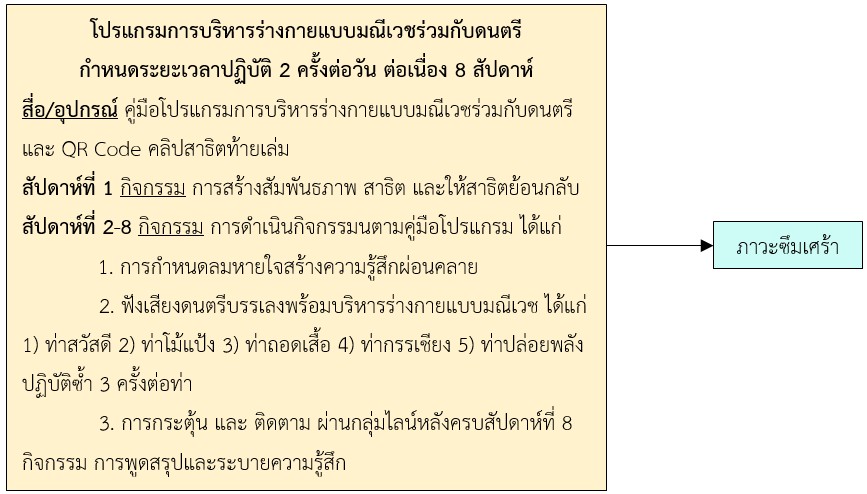
This quasi-experimental study aimed to examine the effect of a Maneevej exercise program combined with music on depression in older adults after the COVID-19 pandemic. The participants comprised 40 older adults who had experienced the COVID-19 pandemic and exhibited mild to moderate levels of depression. They were equally divided into an experimental group (n = 20) and a control group (n = 20). The experimental group participated in the Maneevej exercise program combined with music, following the program manual, twice daily for eight consecutive weeks. The control group received routine care according to the standard practices of healthcare facilities. The research instruments consisted of: 1) the Maneevej exercise program combined with music, 2) the Thai Geriatric Depression Scale, and 3) a personal data questionnaire. General data were analyzed using descriptive statistics. The differences in mean depression scores in the experimental group before and after the program were compared using paired t-test, and the differences between the experimental and control groups after the program were compared using independent t-test.
The results showed that the mean depression scores in the experimental group after the intervention decreased significantly compared to the baseline (p-value < 0.001). However, there was no statistically significant difference in the post-intervention mean depression scores between the experimental and control groups (p-value > 0.05). Therefore, healthcare professionals can implement this program to promote older adults’ mental health and help prevent depression in the community following the COVID 19 pandemic.
References
กรมสุขภาพจิต. (2563). แนวทางการฟื้นฟูจิตใจในสถานการณ์การระบาดของโรคติดเชื้อไวรัสโคโรนา 2019 (COVID-19) (Combat 4th Wave of COVID-19 : C4). กรุงเทพฯ: ห้างหุ้นส่วนจำกัด เอวัน ปริ้นติ้ง
กลุ่มฟื้นฟูสมรรถภาพสมอง. (2537). แบบวัดความเศร้าในผู้สูงอายุของไทย. สารศิริราช, 46(1), 1-8.
กระทรวงสาธารณสุข. (2564). รายงานสถานการณ์โควิด-19 ฉบับที่ 538. สืบค้นเมื่อ 24 มิถุนายน 2564 จาก https://ddc.moph.go.th/viralpneumonia/file/situation/situation-no538-240664.pdf.
คณะกรรมการจัดทำแบบทดสอบสมรรถภาพสมองเบื้องต้นฉบับภาษาไทย พ.ศ. 2542. (2545). แบบทดสอบสมรรถภาพสมองเบื้องต้น ฉบับภาษาไทย (MMSE-Thai 2002). กรุงเทพฯ: กรมการแพทย์ กระทรวงสาธารณสุข.
ฉัตรลดา ดีพร้อม และพัชราวรรณ จันทร์เพชร. (2563). ผลของโปรแกรมการส่งเสริมการออกกำลังกายด้วยนวัตกรรมพื้นบ้าน V-exercise ต่อสมรรถภาพทางกาย ระดับน้ำตาลในเลือดและภาวะซึมเศร้าในผู้สูงอายุที่เป็นโรคเบาหวาน. วารสารพยาบาลศาสตร์และสุขภาพ, 43(1), 109-120.
ธนาสิทธิ์ วิจิตราพันธ์. (2564). ความชุกและปัจจัยที่เกี่ยวข้องกับความเครียดและภาวะซึมเศร้าในสถานการณ์ แพร่ระบาดโรคโควิด-19 ของประชาชนเขตคลินิกหมอครอบครัวบ้านทุ่งเสี้ยว อำเภอสันป่าตอง จังหวัดเชียงใหม่. วารสารสุขภาพจิตแห่งประเทศไทย, 29(1), 12-21.
นภดล นิงสานนท์. (2554). มณีเวช...เพื่อชีวิตง่าย ๆ สบาย ๆ. วารสารมหาวิทยาลัยศรีนครินทรวิโรฒ (สาขาวิทยาศาสตร์และเทคโนโลยี), 3(5), 1-13.
นภดล นิงสานนท์ และสุรภา หังสพฤกษ์. (2561). ตำรามณีเวช Maneevej: New paradigm in healthcare เปลี่ยนกระบวนทัศน์ ปรับกระบวนคิด สร้างสมดุลชีวิต. สงขลา: นีโอพ้อยท์ (1995) จำกัด.
พนม คลี่ฉายา. (2564). การใช้เทคโนโลยีดิจิทัลของผู้สูงอายุและข้อเสนอเพื่อการเสริมสร้าง ภาวะพฤฒิพลัง และผลิตภาพของผู้สูงอายุไทย.วารสารนิเทศศาสตร์, 39(2), 56-78.
พีรวิชญ์ สุวรรณเวลา, สายฝน เอกวรางกูร และนัยนา หนูนิล. (2566). ผลของโปรแกรมดนตรีบำบัดต่อภาวะซึมเศร้าของผู้สูงอายุในชุมชน จังหวัดตรัง. วารสารวิจัยสุขภาพและการพยาบาล, 39(1), 1-14.
มณีรัตน์ เอี่ยมอนันต์ และจิราพร เกศพิชญวัฒนา. (2558). ผลของโปรแกรมการสร้างจินตภาพร่วมกับดนตรีต่อภาวะซึมเศร้าของผู้สูงอายุโรคเบาหวาน. วารสารพยาบาล, 65(2), 49-56.
มณีรัตน์ เอี่ยมอนันต์, น้ำฝน ปฎิการมณฑล, ทินกร จังหาร และประวีณา อินทรวงค์.(2562). ผลของโปรแกรมกิจกรรมดนตรีต่อภาวะซึมเศร้าของผู้สูงอายุโรคเรื้อรัง. วารสารพยาบาลศาสตร์ มหาวิทยาลัยคริสเตียน, 6(1), 15-26.
สุทธิชัย จิตะพันธ์กุล และคณะ. (2544). หลักสำคัญของเวชศาสตร์ผู้สูงอายุ. กรุงเทพฯ: สาขาวิชาเวชศาสตร์ผู้สูงอายุ และพฤฒาวิทยา ภาควิชาอายุรศาสตร์คณะแพทยศาสตร์ จุฬาลงกรณ์มหาวิทยาลัย.
สุภาพ อารีเอื้อ, อินทิรา รูปสว่าง, ทีปทัศน์ ชินตาปัญญากุล, ยุวดี สารบูรณ์, ศิริรัตน์ อินทรเกษม และวรรณา กวินวงศ์โกวิท. (2564). การติดตามการเปลี่ยนแปลงมิติสุขภาพของผู้สูงอายุไทยในช่วงก่อนระบาดของโรคโควิด-19 ช่วงระบาด และฐานวิถีชีวิตใหม่. นนทบุรี: สถาบันวิจัยระบบสาธารณสุข.
สุรีย์ สิมพลี และพรรณี บัญชรหัตถกิจ. (2562). ผลของโปรแกรมการเสริมสร้างความรอบรู้ด้านสุขภาพร่วมกับ การออกกำลังกายโดยท่าบริหารมณีเวชประยุกต์เพื่อป้องกันการหกล้มในผู้สูงอายุจังหวัดบุรีรัมย์. วารสารสุขศึกษา, 42(145), 69-82.
วรางคณา โตโพธิ์ไทย. (2563). สื่อสังคมเพื่อการเรียนรู้สำหรับผู้สูงอายุ. วารสารเทคโนโลยีและสื่อสารการศึกษา, 15(19), 1-14.
วิไลวรรณ ทองเจริญ (บ.ก.). (2558). ศาสตร์และศิลป์การพยาบาลผู้สูงอายุ. (พิมพ์ครั้งที่ 2). ม.ป.ท.: โครงการ ตำราคณะพยาบาลศาสตร์ มหาวิทยาลัยมหิดล.
อารีรัตน์ นวลแย้ม และ นวรัตน์ ไวชมภู. (2563). การพัฒนารูปแบบการบริหารร่างกายด้วยศาสตร์มณีเวช สำหรับผู้ป่วยปวดหลังส่วนล่าง โรงพยาบาลหาดใหญ่. วารสารสาธารณสุขและวิทยาศาสตร์สุขภาพ, 3(2), 1-12.
อารีรัตน์ นวลแย้ม, อารียา หวังดี, จันทร์ปภัสร์ เครือแก้ว, มณฑกา ธีรชัยสกุล และกฤษณ์ พงศ์พิรุฬห์. (2564). การศึกษาประสิทธิผลของการดูแลรักษาสุขภาพด้วยศาสตร์มณีเวช: การทบทวนงานวิจัยอย่างเป็นระบบ. วารสารการแพทย์แผนไทยและการแพทย์ทางเลือก, 19(3), 702-712.
American College of Sports Medicine. (2018). ACSM’s Guidelines for exercise testing and prescription. Philadelphia: Wolters Kluwer.
Chiu, H. L., et al. (2017). Effectiveness of light therapy in cognitively impaired persons: A metanalysis of randomized controlled trials. Journal of the American Geriatrics Society, 65(10), 2227-2234. https://doi.org/10.1111/jgs.14990
Cohen, J. (1988). Statistical power analysis for the behavioral sciences (2nd ed.). New Jersey: Erlbaum.
Dai, L. L., et al. (2020). Anxiety and depressive symptoms among COVID-19 patients in Jianghan Fangcang Shelter Hospital in Wuhan, China. PloS One, 15(8), e0238416. https://doi.org/10.1371/journal.pone.0238416
Faul, F., Erdfelder, E., Lang, A. G., & Buchner, A. (2007). G* Power 3: A flexible statistical power analysis program for the social, behavioral, and biomedical sciences. Behavior Research Methods, 39(2), 175-191.https://doi.org/10.3758/BF03193146
Freeman, R. (2016). Music and the brain’s reward and bonding system. Retrieved June 1, 2022 from https://www.psychologytoday.com/us/blog/neurosagacity/201604/music-and-the-brains-reward-and-bonding-systems.
Kandola, A., Ashdown-Franks, G., Hendrikse, J., Sabiston, C. M., & Stubbs, B. (2019). Physical activity and depression: Towards understanding the antidepressant mechanisms of physical activity. Neuroscience & Biobehavioral Reviews, 107, 525-539. https://doi.org/10.1016/j.neubiorev.2019.09.040
Kongkasuwan, R., Voraakhom, K., Pisolayabutra, P., Maneechai, P., Boonin, J., & Kuptniratsaikul, V. (2016). Creative art therapy to enhance rehabilitation for stroke patients: A randomized controlled trial. Clinical Rehabilitation, 30(10), 1016-1023. https://doi.org/10.1177/0269215515607072
Rajkumar, R. P. (2020). COVID-19 and mental health: A review of the existing literature. Asian Journal of Psychiatry, 52, 102066. https://doi.org/10.1016/j.ajp.2020.102066
Renaud-Charest, O., et al. (2021). Onset and frequency of depression in post-COVID-19 syndrome: A systematic review. Journal of Psychiatric Research, 144, 129-137. https://doi.org/10.1016/j.jpsychires.2021.09.054
Siette, J., et al. (2021). A national survey on COVID-19 second-wave lockdowns on older adults’ mental wellbeing, health-seeking behaviours and social outcomes across Australia. BMC Geriatrics, 21, 1-16. http://doi.org/10.1186/s12877-021-02352-1
Solanki, M.S., Zafar, M., & Rastogi, R. (2015). Review: Music as a therapy: Role in psychiatry. Asian Journal of Psychiatry, 6(3), 193-199. https://doi.org/10.1016/j.ajp.2012.12.001
World Health Organization. (2017). Depression and other common mental disorders: Global health estimates. Retrieved May 1, 2025 from https://apps.who.int/iris/bitstream/ handle/10665/254610/WHO-MSD-MER-2017.2- eng.pdf.
Downloads
Published
How to Cite
Issue
Section
License
Copyright (c) 2025 Journal of Nursing and Public Health Research

This work is licensed under a Creative Commons Attribution-NonCommercial-NoDerivatives 4.0 International License.
1. บทความหรือข้อคิดเห็นใด ๆ ที่ปรากฏในวารสารวิจัยการพยาบาลและการสาธารณสุข ที่เป็นวรรณกรรมของผู้เขียน บรรณาธิการไม่จำเป็นต้องเห็นด้วย
2. บทความที่ได้รับการตีพิมพ์ถือเป็นลิขสิทธิ์ของ วารสารวิจัยการพยาบาลและการสาธารณสุข