
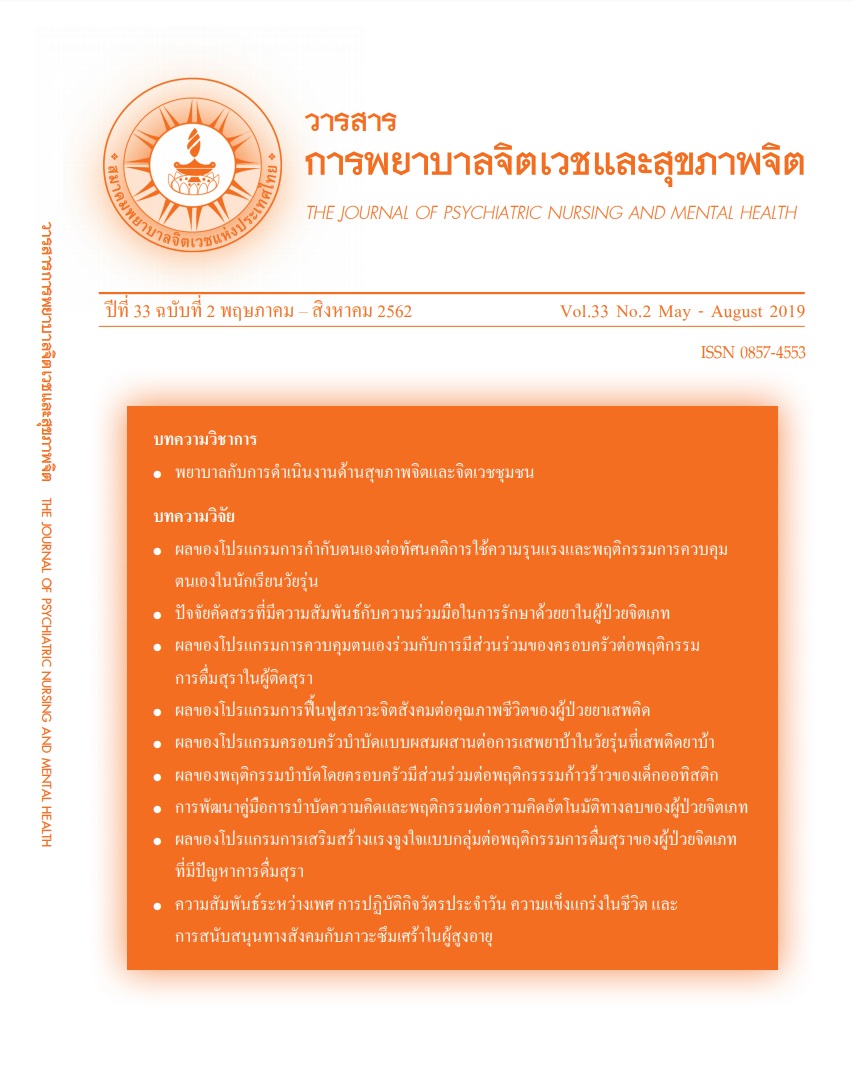
THE RELATIONSHIPS BETWEEN GENDER, ACTIVITIES OF DAILY LIVING, RESILIENCE, AND SOCIAL SUPPORT AND DEPRESSION AMONG OLDER PERSONS
Article Sidebar
Main Article Content
Abstract
Objective: This descriptive correlational research aimed at investigating the relationships between gender, activities of daily living, resilience, and social support and depression among older persons.
Methods: The participants consisted of 242 older persons in a community in Ubon Ratchathani Province. Data were collected by five questionnaires comprising of a demographic data questionnaires, Barthel Activity of Daily Living Index, Resilience Inventory, Multi-dimensional Scale of Perceived Social Support, and Thai Geriatric Depression Scale. Data were analyzed using frequency, percentage, mean, Spearman’s rank-order correlation, and Chi-square.
Results: The findings revealed that activities of daily living was negatively correlated with depression (rs = - .161; p < .05). Resilience and social support were negatively correlated with depression (rs = - .509, - .277; p < .001). There was no relationship between gender and depression (X2 = .264, p = .608). Results from this study could be applied to promote resilience and to reduce depression in older persons in the community.
Article Details
บทความที่ได้รับการตีพิมพ์แล้ว เป็นลิขสิทธิ์ของสมาคมพยาบาลจิตเวชแห่งประเทศไทย
References
กรมสุขภาพจิต กระทรวงสาธารณสุข. (2557ข). รายงานจำนวนการฆ่าตัวตายของประเทศไทยแยกตามช่วงอายุ. เข้าถึงเมื่อ 13 มกราคม 2560, จาก http://www.dmh.go.th/ report/suicide/age.asp
กรมสุขภาพจิต กระทรวงสาธารณสุข. (2559). จำนวนและอัตราผู้ป่วยสุขภาพจิตต่อประชากร100,000 คน. เข้าถึงเมื่อ 1 มกราคม 2560, จาก http://www.dmh.go.th/report/report1.asp
กาญจนา กิริยางาม. (2553). ปัจจัยที่เกี่ยวข้องกับภาวะซึมเศร้าในผู้สูงอายุในแผนกอายุรกรรม. วิทยานิพนธ์ปริญญาพยาบาลศาสตรมหาบัณฑิต สาขาการพยาบาลผู้ใหญ่, บัณฑิตวิทยาลัย, มหาวิทยาลัยมหิดล.
จินตนา เหลืองศิริเธียร. (2550). การศึกษาความสัมพันธ์ระหว่างการสนับสนุนทางสังคมกับภาวะซึมเศร้าของผู้สูงอายุในจังหวัดเพชรบูรณ์. สารนิพนธ์การศึกษามหาบัณฑิต สาขาจิตวิทยาพัฒนาการบัณฑิตวิทยาลัย, มหาวิทยาลัยศรีนครินทรวิโรฒ.
ช่อผกา สุทธิพงศ์ และศิริอร สินธุ. (2012). ปัจจัยทำนายภาวะซึมเศร้าในผู้สูงอายุหลังเป็นโรคหลอดเลือดสมองในเขตชุมชนเมือง. วารสารพยาบาลศาสตร์, 30(1), 28-39.
ชัดเจน จันทรพัฒน์, สุนุตตรา ตะบูนพงศ์, และวันดี สุทธรังสี. (2547). ความสัมพันธ์ระหว่างปัจจัยคัดสรรกับภาวะซึมเศร้าในผู้สูงอายุใน โรงพยาบาลทั่วไปภาคใต้ของไทย. วารสารสุขภาพจิตแห่งประเทศไทย, 12(2), 80-89.
ชัยวัฒน์ อินไชยา. (2558). ปัจจัยทำนายภาวะซึมเศร้าในผู้สูงอายุ. วิทยานิพนธ์ปริญญาพยาบาลศาสตรมหาบัณฑิต สาขาวิชาการพยาบาล สุขภาพจิตและจิตเวช, บัณฑิตวิทยาลัย, มหาวิทยาลัยมหิดล.
ดาราวรรณ ต๊ะปินตา. (2555). ภาวะซึมเศร้า: การบำบัดและการให้การปรึกษาโดยการปรับความคิดและพฤติกรรม. เชียงใหม่: วนิดา การพิมพ์.
เทพฤทธิ์ วงศ์ภูมิ และอุมาพร อุดมทรัพยากุล. (2554). ความชุกของโรคซึมเศร้าในประชากรสูงอายุจังหวัดเชียงใหม่. วารสารสมาคม จิตแพทย์แห่งประเทศไทย, 56(2), 10-116.
บุษราคัม จิตอารีย์. (2555). ปัจจัยที่มีอิทธิพลต่อภาวะซึมเศร้าในผู้สูงอายุในชุมชนจังหวัดนครปฐม. วิทยานิพนธ์ปริญญาพยาบาลศาสตรมหาบัณฑิต สาขาวิชาการพยาบาล เวชปฏิบัติชุมชน, บัณฑิตวิทยาลัย, มหาวิทยาลัยคริสเตียน.
พัชรินทร์ นินทจันทร์. (2558). ความแข็งแกร่งในชีวิต. ใน พัชรินทร์ นินทจันทร์ (บรรณาธิการ), ความแข็งแกร่งในชีวิต แนวคิด การประเมิน และการประยุกต์ใช้ (หน้า 3-32). กรุงเทพฯ: จุดทอง.
พัชรินทร์ นินทจันทร์, โสภิณ แสงอ่อน, จริยา วิทยศุภร, นพวรรณ เปียซื่อ, ทัศนา ทวีคูณ, และพิสมัย อรทัย. (2552). คู่มือการเสริมสร้างความแข็งแกร่งในชีวิต. โครงการพัฒนา ศักยภาพประชากรไทย คณะแพทยศาสตร์โรงพยาบาลรามาธิบดี มหาวิทยาลัยมหิดล. กรุงเทพฯ: จุดทอง.
พัชรินทร์ นินทจันทร์, โสภิณ แสงอ่อน, และทัศนา ทวีคูณ. (2555). โปรแกรมการเสริมสร้างความแข็งแกร่งในชีวิต (A Resilience- Ehancing Program). กรุงเทพฯ: จุดทอง.
พีรพนธ์ ลือบุญธวัชชัย. (2553). การบำบัดรักษาทางจิตสังคมสำหรับโรคซึมเศร้า. กรุงเทพฯ: ธนาเพรส.
มาโนช หล่อตระกูล. (2544). เรื่องน่ารู้เกี่ยวกับโรค ซึมเศร้า. กรุงเทพฯ: บียอนด์ เอ็นเทอร์ไพรซ์.
มุจรินทร์ พุทธเมตตา และรังสิมันต์ สุนทรไชยา. (2559). ปัจจัยคัดสรรที่มีความสัมพันธ์กับภาวะซึมเศร้าของผู้สูงอายุโรคซึมเศร้าในเขตภาคกลาง. วารสารการพยาบาลจิตเวช และสุขภาพจิต, 30(2), 69-81.
มูลนิธิสถาบันวิจัยและพัฒนาผู้สูงอายุไทย, (2558). สังคมสูงวัย. เข้าถึงเมื่อ 13 มกราคม 2559, จาก http://thaitgri.org/
เยาวรัตน์ ขันธวิชัย. (2544). ปัจจัยที่เป็นตัวทำนาย ภาวะซึมเศร้าของผู้สูงอายุโรคปอดอุดกั้น เรื้อรังในจังหวัดชลบุรี. วิทยานิพนธ์ปริญญา พยาบาลศาสตรมหาบัณฑิต สาขาวิชาการ พยาบาลผู้สูงอายุ, มหาวิทยาลัยบูรพา.
วิชุดา อุ่นแก้ว และปิยธิดา คูหิรัญญรัตน์. (2558). ความชุกของภาวะซึมเศร้าในผู้สูงอายุในเขตรับผิดชอบโรงพยาบาลส่งเสริมสุขภาพตำบลบ้านพร้าว อำเภอเมือง จังหวัด หนองบัวลำภู. วารสารการพัฒนาสุขภาพชุมชน มหาวิทยาลัยขอนแก่น, 3(4), 577-589.
วิไลวรรณ ทองเจริญ. (2558). ศาสตร์และศิลป์การพยาบาลผู้สูงอายุ. กรุงเทพฯ: เอ็นทีเพรส.
สมใจ โชติธนพันธุ์. (2550). การศึกษาความสัมพันธ์ระหว่างการสนับสนุนทางสังคมกับภาวะซึมเศร้าของผู้สูงอายุในสถานสงเคราะห์ผู้สูงอายุบ้านบางแค. สารนิพนธ์บัณฑิต ปริญญาพยาบาลศาสตรมหาบัณฑิต สาขาวิชาจิตวิทยาพัฒนาการ, บัณฑิตวิทยาลัย, มหาวิทยาลัยศรีนครินทรวิโรฒ
สมภพ เรืองตระกูล. (2554). ตำราจิตเวชศาสตร์พื้นฐานและโรคทางจิตเวช (พิมพ์ครั้งที่ 2). กรุงเทพฯ: เรือนแก้วการพิมพ์.
สมศักดิ์ ชุนหรัศมิ์. (2552). สถานการณ์ผู้สูงอายุ ไทย พ.ศ. 2558. กรุงเทพฯ: มูลนิธิสถาบันวิจัย และพัฒนาผู้สูงอายุไทย.
สายฝน เอกวรางกูร. (2554). รู้จัก เข้าใจ ดูแล ภาวะ ซึมเศร้า. กรุงเทพฯ: ส.เอเชียเพรส.
สำนักนโยบายและยุทธศาสตร์ กระทรวงสาธารณสุข. (2554). สถิติสาธารณสุข 2554. เข้าถึงเมื่อ 20 มกราคม 2560, จาก http://bps.moph.go.th.
สุชีรา ภัทรายุตวรรณ์. (2556). คู่มือวัดทางจิตวิทยา. (พิมพ์ครั้งที่ 5, หน้า 272). กรุงเทพฯ: ตรีเทพ
สุทธิชัย จิตะพันธ์กุล และคณะ. (2541). หลักสำคัญ ของเวชศาสตร์ผู้สูงอายุ. กรุงเทพฯ: จุฬาลงกรณ์มหาวิทยาลัย.
โสภิณ แสงอ่อน. (2558). ภาวะซึมเศร้า: ปัจจัยเสี่ยง ปัจจัยปกป้องและความแข็งแกร่งในชีวิต. ใน พัชรินทร์ นินทจันทร์ (บรรณาธิการ). ความแข็งแกร่งในชีวิต แนวคิด การประเมิน และการประยุกต์ใช้. กรุงเทพฯ: จุดทอง.
อาคม บุญเลิศ. (2559). ความชุกและปัจจัยที่สัมพันธ์กับภาวะซึมเศร้าของผู้สูงอายุโรคเรื้อรังในชุมชนเขตรับผิดชอบของสถานบริการ ปฐมภูมิสามเหลี่ยม จังหวัดขอนแก่น. ศรีนครินทร์เวชสาร, 31(1), 25-33.
Alexandrino-Silva, C., Alves, T. F., Tofoli, L. F., Wang, Y. P, & Andrade, L. H. (2011). Psychiatry - life events and social support in late life depression. Clinics, 66(2), 233-238.
Ang, S., & Malhotra, R. (2016). Association of received social support with depressive symptoms among older males and females in Singapore: Is personal mastery an inconsistent mediator. Social Science & Medicine, 15(3), 165-173.
Barry, L. C., Murphy, T. E., & Gill, T. M. (2011). Depression and functional recovery after a disabling hospitalization in older persons. Journal of the American Geriatrics Society, 59(7), 1320–1325. doi:10.1111/ j.1532-5415.2011. 03453.x
Bierman, A., & Statland, D. (2010). Timing, social support, and the effects of physical limitations on psychological distress in late life. Journal of Gerontology: Social Sciences, 65(5), 631-639.
Boen, H., Dalgard, O. S., Johansen, R., & Nord, E. (2012). A randomized controlled trial of a senior center group programme for increasing social support and preventing depression in elderly people living at home in Norway. BioMed Central Geriatrics, 12(20), 1-11.
Bozo, O., Toksabay, N. E., & Kurum, O. (2009). Activities of daily living, depression, and social support among elderly Turkish people. The Journal of Psychology, 143(2), 193-205.
Choi, N. G., & Ha, J. H. (2011). Relationship between spouse/partner support and depressive symptoms in older adults: Gender difference. Aging and Mental Health, 15(3), 307-317.
Chi, I., & Chou, K. L. (2001). Social support and depression among elderly Chinese people in Hong Kong. The International Journal of Aging and Human Development, 52(3), 231-252.
Cohen, J. (1988). Statistical power analysis for the behavioral sciences (2nd ed.). Hillsdale, NJ: Lawrence Erlbaum Associates.
Groberg, E. H. (1995). A guide to promoting resilience in children: Strengthening the human spirit. The Hague: The Bernard van Leer Foundation.
Grotberg, E. H. (1997). The International resilience project: Findings from the research and the effectiveness of interventions. Retrieved March 2, 2015 from http://resilnet.uiuc.edu/
Isaacs, B., & Akhtar, A. J. (1972). The set test: a rapid test of mental function in old people. Age Ageing, 1(4), 222-226. doi:10.1093/age¬ing/1.4.222
Lee, H. S., & Kim, C. (2016). Structural equation modeling to assess discrimination, stress, social support, and depression among the elderly woman in South Korea. Asian Nursing Research, 10, 182-188.
Leal, M. C. C., Apostolo, J. L. A., Mendes, A. M. O. C., & Marques, A. P. O. (2014). Prevalence of depressive symptoms and associated factors among institutionalized elderly. Acta Paul Enferm, 27(3), 208-214.
Li, J., Theng, L. L., & Foo, S. (2015). Does psychological resilience mediate the impact of social support on geriatric depression? An exploratory study among Chinese older adults in Singapore. Asian Journal of Psychiatry, 14, 22-27.
Li, N., Chen, G., Zeng, P., Pang, J., Gong, H., Han, Y., et al. (2016). Prevalence of depression and its associated factors among Chinese elderly people: A comparison study between community-based population and hospitalized population. Psychiatry Research, 243, 87-91.
Li, N., Pang, L., Chen, G., Song, X., Zhang, J., & Zhang, X. (2011). Risk factors for Depression in older adults in Beijing. Canadian Journal of Psychiatry, 56(8), 466-473.
Lim, M. L., Lim, D., Gwee, X., Nyunt, M. S. Z., Kumarb, R., & Ng, T. P. (2015). Resilience, stressful life events, and depressive symptomatology among older Chinese adults. Aging & Mental Health, 19(11), 1005-1014.
Lu, C., Yuan, L., Lin, W., Zhou, Y., & Pan, S. (2017). Depression and resilience mediates the effect of family function on quality of life of the elderly. Archives of Gerontology and Geriatrics, 71, 34-42.
Mahoney, F. I., & Barthel, D. W. (1965). Functional evaluation: The Barthel Index. Maryland State Medical Journal, 14, 61-65.
Mehta, M., Lenze, E., Hardy, S., Roumani, Y., Subashan, P., Huang, W., et al. (2008). Depressive symptoms in late life: Associations with apathy, resilience and disability vary between young-old and old-old. International Journal of Geriatric Psychiatry, 23, 238-243.
Olagunju, A.T., Olutoki, M. O., Ogunnubi, O. P., & Adeyemi, J. D. (2015). Late-life depression: Burden, severity and relationship with social support dimensions in a West African community. Archives of Gerontology and Geriatrics, 61(2015), 240-246.
Schure, M. B., Odden, M., & Goins, R. T. (2013). The association of resilience with mental and physical health among older American Indians: The native elder care study. American Indian and Alaska Native Mental Health Research, 20(2), 27–41.
Sinha, S. P., Shrivastava, S. R., & Ramasamy, J. (2013). Depression in an older adult rural population in India. Meddic Review, 15(4), 41-44.
Tsai, Y. F., Yeh, S. H., & Tsai, H. H. (2005). Prevalence and risk factors for depressive symptoms among community-dwelling elders in Taiwan. International Journal of Geriatric Psychiatry, 20, 1097-1102.
Unalan, D., Gocer, S., Basturk, M., Baydur, H., & Ozturk, A. (2015). Coincidence of low social support and high depressive score on quality of life in elderly. European Geriatric Medicine, 6, 319-324.
Vanderhorst, R. K., & McLaren, S. (2005). Social relationship as predictors of depression and suicidal ideation in older adults. Aging and Mental Health, 9(6), 517-525.
Wada, T., Ishine, M., Sakagami, T., Kita, T., Okumiya, K., Mizuno, et al. (2005). Depression, activities of daily living, and quality of life of community-dwelling elderly in three Asian countries: Indonesia, Vietnam, and Japan. Archives of Gerontology and Geriatrics, 41, 271-280.
Wang, J., & Zhao, X. (2012). Family functioning and social support for older patients with depression in an urban area of Shanghai, China. Archives of Gerontology and Geriatrics, 55(3), 574-579.
Wongpakaran, T., Wongpakaran, N., & Ruktrakul, R. (2011). Reliability and validity of the Multidimentional Scale of Perceived Social Support (MSPSS): Thai version. Clinical Practice and Epidemiology in Mental Health, 7, 161-166.
World Health Organization. (2008). WHO global burden of disease: 2004 update. Retrieved February 2, 2016, from http.//www.who. int/healthinfo/gobal_burden_disease/ GBO_report_2004update_full.pdf
Zimet, G. D., Dahlem, N. W., Zimet, S. G., & Farley, G. K. (1998). The Multidimentional scale of perceived social support. Journal of Personality Assessment, 52(1), 30-41.
