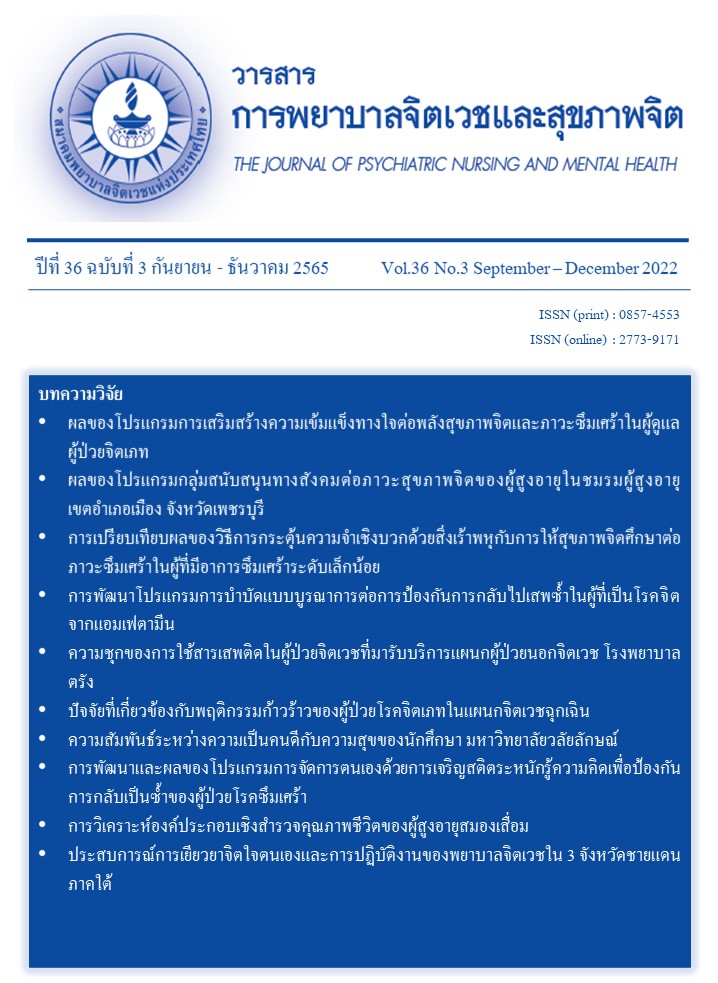
ผลของโปรแกรมกลุ่มสนับสนุนทางสังคมต่อภาวะสุขภาพจิตของผู้สูงอายุในชมรมผู้สูงอายุ เขตอำเภอเมือง จังหวัดเพชรบุรี
Article Sidebar
Main Article Content
บทคัดย่อ
วัตถุประสงค์ : เพื่อเปรียบเทียบ 1) ภาวะสุขภาพจิตของผู้สูงอายุในชมรมผู้สูงอายุ เขตอำเภอเมือง จังหวัดเพชรบุรีก่อนและหลังได้รับโปรแกรมกลุ่มสนับสนุนทางสังคม 2) ภาวะสุขภาพจิตของผู้สูงอายุในชมรมผู้สูงอายุ เขตอำเภอเมือง จังหวัดเพชรบุรี ระหว่างกลุ่มทดลองที่ได้รับโปรแกรมกลุ่มสนับสนุนทางสังคมกับกลุ่มควบคุมที่ได้รับการดูแลตามปกติ
วิธีการศึกษา : การวิจัยกึ่งทดลองในครั้งนี้ เป็นการศึกษาผลของโปรแกรมสนับสนุนทางสังคมต่อภาวะสุขภาพจิตของผู้สูงอายุ กลุ่มตัวอย่างคือ ผู้สูงอายุในชมรมผู้สูงอายุ เขตอำเภอเมือง จังหวัดเพชรบุรีซึ่งมีคุณสมบัติครบตามเกณฑ์ จำนวน 60 คน จับคู่สุ่มเข้ากลุ่มทดลองและกลุ่มควบคุม กลุ่มละ 30 คน กลุ่มทดลองได้รับโปรแกรมกลุ่มสนับสนุนทางสังคม ที่ผู้วิจัยได้พัฒนาขึ้นตามแนวคิดของเฮาส์ (House,1981) ประกอบไปด้วยทั้งหมด 8 กิจกรรม ดำเนินกิจกรรม 1 ครั้ง/สัปดาห์ ครั้งละ 90 นาที ส่วนกลุ่มควบคุมได้รับการดูแลตามปกติ ประเมินผลโดยใช้แบบประเมินภาวะสุขภาพจิตผู้สูงอายุฉบับสมบูรณ์ วัดผล 2 ครั้ง คือ ก่อนการทดลอง และสิ้นสุดการทดลองทันที วิเคราะห์ข้อมูลโดยใช้สถิติเชิงพรรณนา และสถิติทดสอบค่าที
ผลการศึกษา : 1) ค่าเฉลี่ยคะแนนภาวะสุขภาพจิตของกลุ่มทดลองหลังได้รับโปรแกรมสนับสนุนทางสังคม มีค่าคะแนนเฉลี่ยสูงกว่าก่อนการทดลอง อย่างมีนัยสำคัญทางสถิติที่ระดับ .001 และ 2) ผลต่างค่าเฉลี่ยคะแนนภาวะสุขภาพจิต ระหว่างก่อนและหลังการได้รับสนับสนุนทางสังคมของกลุ่มทดลองสูงกว่ากลุ่มควบคุม อย่างมีนัยสำคัญทางสถิติที่ระดับ .001
สรุป : โปรแกรมกลุ่มสนับสนุนทางสังคมสามารถส่งเสริมการมีภาวะสุขภาพจิตที่ดีในผู้สูงอายุได้ โดยสามารถเป็นอีกทางเลือกหนึ่งในการป้องกันปัญหาภาวะสุขภาพจิตของผู้สูงอายุในชุมชนได้
Article Details

อนุญาตภายใต้เงื่อนไข Creative Commons Attribution-NonCommercial-NoDerivatives 4.0 International License.
บทความที่ได้รับการตีพิมพ์แล้ว เป็นลิขสิทธิ์ของสมาคมพยาบาลจิตเวชแห่งประเทศไทย
