
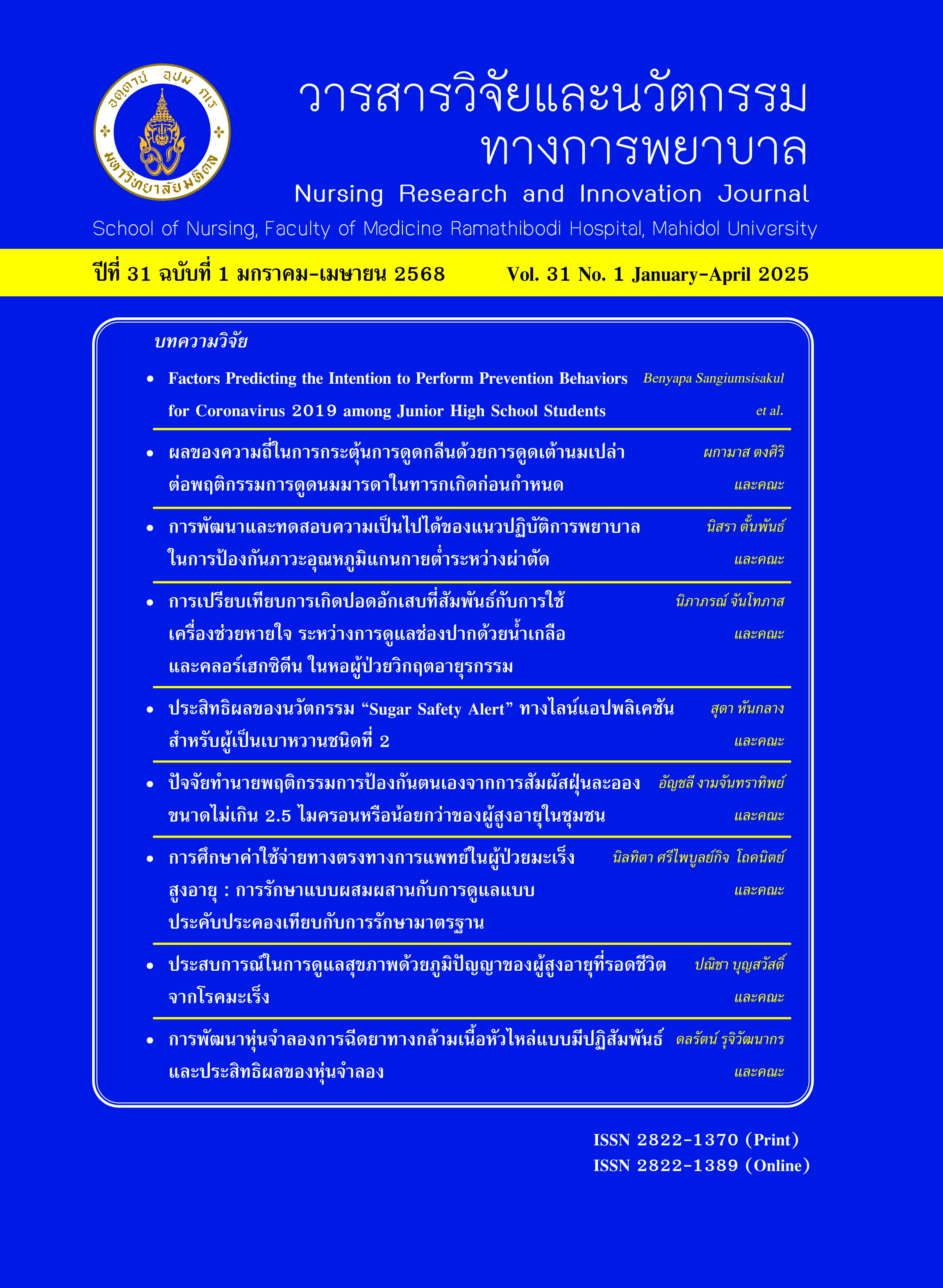
การเปรียบเทียบการเกิดปอดอักเสบที่สัมพันธ์กับการใช้เครื่องช่วยหายใจระหว่างการดูแลช่องปากด้วยน้ำเกลือและคลอร์เฮกซิดีน ในหอผู้ป่วยวิกฤตอายุรกรรม*
Article Sidebar
Main Article Content
บทคัดย่อ
ภาวะปอดอักเสบที่สัมพันธ์กับการใช้เครื่องช่วยหายใจ (ventilator associated pneumonia) คือ ภาวะปอดอักเสบที่เกิดขึ้นกับผู้ป่วยที่ได้รับการใส่เครื่องช่วยหายใจมากกว่า 2 วันปฏิทินเป็นต้นไปการเกิดภาวะปอดอักเสบฯ ส่งผลกระทบต่อตัวผู้ป่วย ทำให้เพิ่มระยะเวลาในการรักษาตัวในโรงพยาบาลมากขึ้น ค่าใช้จ่ายในการดูแลรักษาพยาบาลและมีอัตราการเสียชีวิตเพิ่มขึ้นและภาวะปอดอักเสบฯ ทำให้เกิดเชื้อดื้อยาเพิ่มขึ้น เพิ่มระยะเวลาในการนอนในหอผู้ป่วยวิกฤตและทำให้การใส่ท่อช่วยหายใจยาวนานขึ้น ซึ่งการดูแลทำความสะอาดช่องปากก็เป็นส่วนหนึ่งในการลดเชื้อโรคที่เป็นสาเหตุของการเกิดภาวะปอดอักเสบฯได้ ผู้ป่วยที่ใส่เครื่องช่วยหายใจจะได้รับการทำความสะอาดช่องปากด้วยน้ำยาคลอร์เฮกซิดีน แต่พบว่าผลกระทบจากการใช้น้ำยาคลอร์เฮกซิดีนมีผลข้างเคียงของการใช้น้ำยาในส่วนเฉพาะที่และระบบการทำงานต่างๆของร่างกาย โดยพบว่าเมื่อมีการสำลักน้ำยาคลอเฮกซิดีนลงสู่ปอด อาจเป็นอันตรายต่อเนื้อเยื่อปอดได้ ทำให้เกิดภาวะหายใจลำบากเฉียบพลันและอาจเกิดปฏิกิริยาการแพ้น้ำยาคลอร์เฮกซิดีน จนไปถึงปฎิกิริยาแพ้อย่างรุนแรง และปัจจุบันได้มีการศึกษาถึงประสิทธิภาพและความปลอดภัยของน้ำยาคลอร์เฮกซิดีนในการป้องกันการเกิดภาวะปอดอักเสบฯ มีการศึกษาถึงการดูแลช่องปากในผู้ป่วยที่ใช้เครื่องช่วยหายใจโดยการใช้น้ำยาหรือสารละลายอื่นๆ ผลการศึกษาเปรียบเทียบการดูแลช่องปากด้วยน้ำยาชนิดต่างๆ เช่น น้ำเกลือและโพวิโดนไอโอดีน พบว่าการเกิดภาวะปอดอักเสบฯไม่แตกต่างกัน ดังนั้นทีมวิจัยจึงเลือกศึกษาเปรียบเทียบการนำน้ำเกลือมาใช้ในการดูแลช่องปากว่าสามารถป้องกันการเกิดภาวะปอดอักเสบฯ ได้ไม่ด้อยไปกว่าการดูแลช่องปากด้วยน้ำยาคลอร์เฮกซิดีน เนื่องจากสามารถป้องกันและลดผลกระทบจากอันตรายจากการใช้น้ำยาคลอเฮกซิดีนได้ การวิจัยนี้มีวัตถุประสงค์เพื่อ 1) ศึกษาเปรียบเทียบการเกิดปอดอักเสบที่สัมพันธ์กับการใช้เครื่องช่วยหายใจระหว่างการดูแลช่องปากด้วยน้ำเกลือและคลอร์เฮกซิดีน 2)ศึกษาผลข้างเคียงระหว่างการดูแลช่องปากด้วยน้ำเกลือและคลอร์เฮกซิดีน 3)
ศึกษาภาวะสุขภาพช่องปากระหว่างการดูแลช่องปากด้วยน้ำเกลือและคลอร์เฮกซิดีน การวิจัยครั้งนี้เป็นการทดลองแบบสุ่มที่มีกลุ่มควบคุมแบบทดสอบที่แสดงความไม่ด้อยไปกว่ากัน (Non-inferiority randomized controlled trial)โดยปฏิบัติตามแนวทางการป้องกันภาวะปอดอักเสบสัมพันธ์กับการใช้เครื่องช่วยหายใจ โดยใช้กรอบแนวคิดจากการทบทวนวรรณกรรม กลุ่มตัวอย่างในการศึกษา คือ
กลุ่มผู้ป่วยที่เข้ารับการรักษาในหอผู้ป่วยวิกฤตอายุรกรรมโดยมีคุณสมบัติตามเกณฑ์ คือ 1) ผู้ป่วยที่ใช้เครื่องช่วยหายใจมากกว่า 2 วันปฏิทินเป็นต้นไป 2) ผู้ป่วยที่มีอายุมากกว่า 18 ปี ขึ้นไป 3) ผู้ป่วยที่มีค่าเกร็ดเลือดมากกว่า 50,000 เซลล์ต่อลูกบาศก์มิลลิเมตร และกำหนดเกณฑ์คัดกลุ่มตัวอย่างออก คือ 1) ผู้ป่วยที่มีการแพ้คลอร์เฮกซิดีนและ/หรือมีแผลในปาก 2) ผู้ป่วยใส่ท่อช่วยหายใจซ้ำภายใน 24 ชั่วโมง 3)
ผู้ป่วยที่กลับเข้ามารักษาซ้ำและเคยเข้าร่วมการศึกษาวิจัยแล้ว 4) ผู้ป่วยที่ต้องเข้ารับการผ่าตัด 5) ผู้ที่ได้รับการวินิจฉัยว่าเกิดภาวะปอดอักเสบฯ ก่อนเข้าร่วมการวิจัย โดยทำการศึกษาระหว่างเดือนกุมภาพันธ์ ปี พ.ศ. 2565 ถึงเดือนเมษายน ปี พ.ศ. 2566 การกำหนดขนาดกลุ่มตัวอย่างโดยใช้โปรแกรมคอมพิวเตอร์สำเร็จรูป Power and Sample Size
Calculators กำหนดระดับความเชื่อมั่นที่ยอมรับได้ค่า (α) = .05 และกำหนดอำนาจการทดสอบ(1-β) = .80 กำหนดขนาดของ Non-inferiority margin (δ) = .05 ได้ขนาดตัวอย่างกลุ่มละ 69 ราย
และเพื่อป้องกันการสูญเสียตัวอย่างระหว่างการศึกษาจึงได้เพิ่มกลุ่มตัวอย่างอีกร้อยละ 10 จึงมีกลุ่มตัวอย่างทั้งหมดจำนวน 158 ราย โดยสุ่มตัวอย่างแบบเป็นกลุ่มย่อย 2 กลุ่ม กลุ่มละ 79 ราย และได้ทำการสุ่มกลุ่มตัวอย่างด้วยวิธีแบ่งกลุ่มผู้ป่วยเป็นกลุ่มย่อย (Block randomization)
เครื่องมือที่ใช้ในการเก็บข้อมูล ได้แก่ แบบบันทึกข้อมูลทั่วไป
แบบบันทึกข้อมูลการวินิจฉัยภาวะปอดอักเสบฯ และแบบบันทึกข้อมูลสุขภาพช่องปาก วิเคราะห์ข้อมูลด้วยสถิติไคแสควร์และสถิติการทดสอบแมน-วิทนีย์ ยู สถิติการทดสอบที และสถิติฟิชเชอร์ ผลการศึกษา พบว่าทั้ง 2 กลุ่ม กลุ่มละ 79 ราย มีลักษณะพื้นฐานไม่แตกต่างกัน การเกิดปอดอักเสบที่สัมพันธ์กับการใช้เครื่องช่วยหายใจระหว่างการดูแลช่องปากด้วยน้ำเกลือและคลอร์เฮกซิดีนพบว่า กลุ่มน้ำเกลือ คิดเป็นร้อยละ 6.30 กลุ่มคลอร์เฮกซิดีนคิดเป็นร้อยละ 7.60ไม่แตกต่างกันอย่างมีนัยสำคัญทางสถิติ สัดส่วนความแตกต่างกันของการเกิดภาวะปอดอักเสบ ฯ
ของกลุ่มน้ำเกลือเมื่อเทียบกับกลุ่ม 0.12% คลอร์เฮกซิดีนเท่ากับ -1.30 % (95% CI -9.20 to 6.70%)การเกิดเยื่อบุช่องปากอักเสบในกลุ่มน้ำเกลือและคลอร์เฮกซิดีนคิดเป็นร้อยละ 0 และ 7.60 ตามลำดับ
แตกต่างกันอย่างมีนัยสำคัญทางสถิติ คะแนนสุขภาพช่องปากทั้งสองกลุ่มส่วนใหญ่อยู่ในเกณฑ์ไม่สะอาดระดับปานกลาง คะแนนสุขภาพช่องปากในกลุ่มน้ำเกลือและคลอร์เฮกซิดีนคิดเป็นร้อยละ 64.56 และ49.37 ภาวะสุขภาพช่องปากทั้ง 2 กลุ่ม ไม่แตกต่างกันอย่างมีนัยสำคัญทางสถิติ สรุปผลการศึกษา ยังไม่สามารถสรุปได้ว่าการดูแลช่องปากด้วยน้ำเกลือมีโอกาสเกิดภาวะปอดอักเสบ ฯแตกต่างกับการใช้น้ำยาคลอร์เฮกซิดีน แต่พบผลข้างเคียงจากการใช้น้ำยาคลอร์เฮกซิดีนคือการเกิดเยื่อบุช่องปากอักเสบ ดังนั้น ควรมีการศึกษาวิจัยในบริบทหรือหน่วยงานอื่นเพื่อตรวจสอบข้อค้นพบจากการศึกษานี้หรือทำการศึกษาในระยะยาว และควบคุมปัจจัยที่อาจมีผลกับสภาพช่องปากให้เคร่งครัดมากขึ้น
คำสำคัญ : คลอร์เฮกซิดีน น้ำเกลือ การดูแลช่องปาก เยื่อบุช่องปากอักเสบ ปอดอักเสบที่สัมพันธ์กับการใช้เครื่องช่วยหายใจ
Article Details

อนุญาตภายใต้เงื่อนไข Creative Commons Attribution-NonCommercial-NoDerivatives 4.0 International License.
บทความ ข้อมูล เนื้อหา รูปภาพ ฯลฯ ที่ได้รับการตีพิมพ์ในรามาธิบดีพยาบาลสาร ถือเป็นลิขสิทธิ์ของวารสาร หากบุคคลหรือหน่วยงานใดต้องการนำทั้งหมดหรือส่วนหนึ่งส่วนใดไปเผยแพร่หรือเพื่อกระทำการใด ใด จะต้องได้รับอนุญาตเป็นลายลักษณ์อักษรจากรามาธิบดีพยาบาลสารก่อนเท่านั้น
เอกสารอ้างอิง
National Healthcare Safety Network (NHSN). Patient safety component manual. patient safety component manual; 2024 [cited 2024 September 9]. Available from:https://www.cdc.gov/nhsn/pdfs/pscmanual/pcsmanual_current.pdf
Chulalongkorn hospital. Incidence of vap in micu1 year 2016-2018. QA Linked chart. Bangkok: hospital; 2018.(in thai)
Arabi Y, Al-Shirawi N, Memish Z, Anzueto A.Ventilator-associated pneumonia in adults in developing countries: a systematic review. IJID. 2008;12(5):505-12.
Arvanitis M, Anagnostou T, Kourkoumpetis TK, Ziakas PD, Desalermos A, Mylonakis E. The impact of antimicrobial resistance and aging in vap outcomes:experience from a large tertiary care center. PLoS One.2014;9(2):e89984.
Klompas M, Branson R, Cawcutt K, Crist M, Eichenwald EC, Greene LR, et al. Strategies to prevent ventilator-associated pneumonia, ventilator-associated events, and nonventilator hospital-acquired pneumonia in acute-care hospitals: 2022 Update. Infection Control & Hospital Epidemiology. 2022;43(6):687–713. doi:10.1017/ice.2022.88
Urbenjaphol P, Asanok A, Tengphu L, Vinitchai D and Chaiprem M. Clinical nursing practice guideline on oral hygiene care in intubated patients: clinical nursing practice guideline on oral hygiene care in intubated patients. Clinical nursing practice guideline, CNPG # 5-2. Bangkok: V.S.S.group limited partnership; 2021; 80-95. (in thai).
Grap MJ, Munro C. Oral care for acutely and critically III patients. Critical Care Nurse. 2017;37(3): e19-21.
Villar CC, Pannuti CM, Nery DM, Morillo CM, Carmona MJ, Romito GA. Effectiveness of intraoral chlorhexidine protocols in the prevention of ventilator-associated pneumonia: meta-analysis and systematic review. Respir Care. 2016;61(9):1245-59.
Klompas M, Li L, Kleinman K, Szumita PM, Massaro AF. Associations between ventilator bundle components and outcomes. JAMA Intern Med. 2016;176(9):1277-83.
Plantinga NL, Wittekamp BHJ, Leleu K, Depuydt P, Van den Abeele AM, Brun-Buisson C, et al. Oral mucosal adverse events with chlorhexidine 2% mouthwash in ICU.Intensive Care Med. 2016;42(4): 620-1.
Klompas M, Speck K, Howell MD, Greene LR, Berenholtz SM. Reappraisal of routine oral care with Chlorhexidine gluconate for patients receiving mechanical ventilation:systematic review and meta-analysis. JAMA Intern Med.2014;174(5):751-61.
Jafari S, Ranjbar H, Kamrani F, Alavi- Majd H, Yaghmaei F. Effects of chlorhexidine and normal saline on dental plaque formation in icu patients: a comparative study. Adv Nurs Midwifery. 2007;17(56):40-9
Seguin P, Tanguy M, Laviolle B, Tirel O, Mallédant Y.Effect of oropharyngeal decontamination by Povidone-iodine on ventilator-associated pneumonia in patients with head trauma. Crit Care Med. 9-1514:)5(34;2006.
Hitosugi T, Tsukamoto M, Yokoyama T. Pneumonia due to aspiration of povidine iodine after preoperative disinfection of the oral cavity. J Oral Maxillofac Surg.11-507:)4(23;2019.
Kheiawsawang M, Sopaporm O, Siripitayakunkit A,Sutherasan Y. The effects of nursing practice guidelines to prevent ventilator associated pneumonia in medical intensive care unit, Ramathibodi hospital. Mahidol R2R e-Journal 2019;7:98-109. doi: 10.14456/ jmu.2020.9
HyLown Consulting LLC [Internet]. Atlanta: Compare 2 proportions 2-sample non-inferiority or superiority;c2013-2022 [cited 2022 Mar 3]. Available from:https://powerandsamplesize.com/ Calculators/Compare-2-Proportions/2-Sample-Non-Inferiorityor-Superiority
Tantipong H, Morkchareonpong C, Jaiyindee S,Thamlikitkul V. Randomized controlled trial and meta-analysis of oral decontamination with 2%Chlorhexidine solution for the prevention of ventilator-associated pneumonia. Infection control and hospital epidemiology.Cambridge University press; 2008;29(2):131–6.
Sealedenvelope Ltd.2024 [Internet]. Create a blocked randomisation list. [cited 2022 Jan 10]. Available from:https:// www. sealedenvelope.com/simple-randomiser/v1/lists.
Saechua T, Kongwattananon M, Bauthong J,Kitbunyonglers S, Petpichetchian W. Effects of an oral care programme on oral hygiene and ventilator-associated pneumonia amongst critically ill patients: a randomised controlled trial. Journal of Thailand Nursing and Midwifery Council. 2018;33(4):46-63. (in thai).
Bellissimo-Rodrigues WT, Menegueti MG, de Macedo LD, Basile-Filho A, Martinez R, Bellissimo-Rodrigues F. Oral mucositis as a pathway for fatal outcome among critically ill patients exposed to chlorhexidine: post hoc analysis of a randomized clinical trial. Crit Care.2019;23(1):1-3.
Feider LL, Mitchell P, Bridges E. Oral care practices for orally intubated critically ill adults. Am J Crit Care.2010;19(2):175-83.
Huynh NC, Everts V, Leethanakul C, Pavasant P,Ampornaramveth RS. Rinsing with saline promotes human gingival fibroblast wound healing in vitro. PLOS ONE.2016;11(7): e0159843.
Özden D, Türk G, Düger C, Güler EK, Tok F, Gülsoy Z.Effects of oral care solutions on mucous membrane integrity and bacterial colonization. Nurs Crit Care.86-78:)2(19;2014.
Dale CM, Rose L, Carbone S, Pinto R, Smith OM, Burry L, et al. Effect of oral Chlorhexidine de-adoption and implementation of an oral care bundle on mortality for mechanically ventilated patients in the intensive care unit (CHORAL): a multi-center stepped wedge cluster-randomized controlled trial. Intensive Care Med.2021;47(11):1295-302.
Singh P, Arshad Z, Srivastava VK, Singh GP, Gangwar RS. Efficacy of oral care protocols in the prevention of ventilator-associated pneumonia in mechanically ventilated patients. Cureus. 2022;14(4):e23750.
