ความรอบรู้ด้านสุขภาพเกี่ยวกับคุณค่าทางโภชนาการกับพฤติกรรมการบริโภคอาหาร จากการใช้บริการส่งอาหารของนักเรียนชั้นมัธยมศึกษาชั้นปีที่ 4 - 6 ในจังหวัดชลบุรี
คำสำคัญ:
ความรอบรู้ด้านสุขภาพ, พฤติกรรมการบริโภคอาหาร, บริการส่งอาหารบทคัดย่อ
การศึกษาเชิงวิเคราะห์แบบภาคตัดขวางนี้มีวัตถุประสงค์เพื่อศึกษาความสัมพันธ์ของความรอบรู้ด้านสุขภาพเกี่ยวกับคุณค่าทางโภชนาการกับพฤติกรรมการบริโภคอาหารจากการใช้บริการส่งอาหาร ของนักเรียนชั้นมัธยมศึกษาชั้นปีที่ 4 – 6 โดยกลุ่มตัวอย่างเป็นนักเรียนชั้นมัธยมศึกษาตอนปลาย ในโรงเรียนแห่งหนึ่งในเขตพื้นรับผิดชอบของโรงพยาบาลส่งเสริมสุขภาพตำบลบ้านหัวโกรก จำนวน 96 คน เก็บข้อมูลโดยใช้แบบสอบถามชนิดถามตอบด้วยตนเอง สถิติที่ใช้ในการวิเคราะห์ข้อมูลได้แก่ สถิติเชิงพรรณนา ได้แก่ ร้อยละ ค่าเฉลี่ย และส่วนเบี่ยงเบนมาตรฐาน และสถิติเชิงอนุมาน ได้แก่ สถิติสัมประสิทธิ์สหสัมพันธ์แบบเพียร์สัน โดยกำหนดระดับนัยสำคัญทางสถิติที่ 0.05
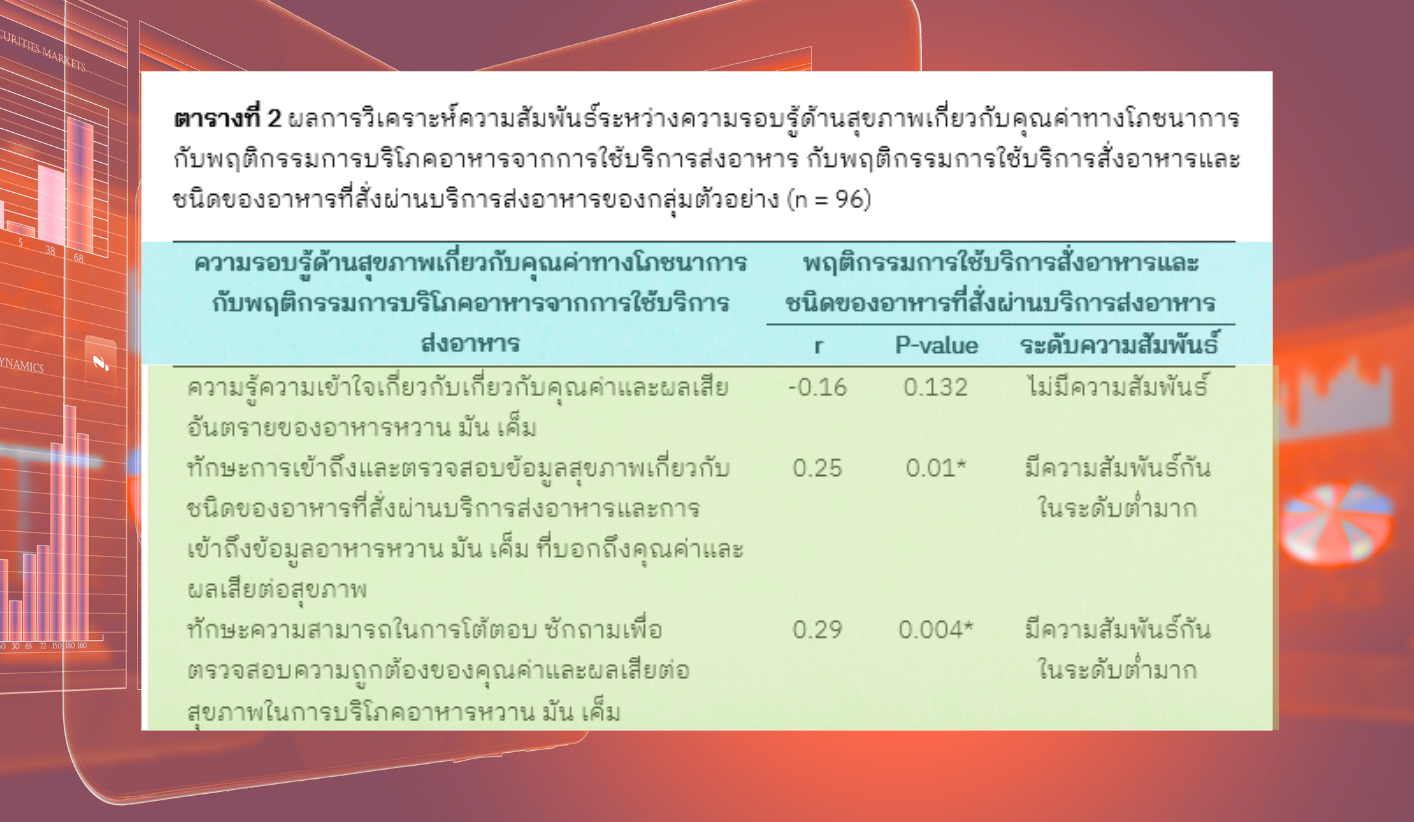
ผลการศึกษาพบว่า ความรอบรู้ด้านสุขภาพ ได้แก่ ทักษะการปรับเปลี่ยนพฤติกรรม (r = 0.26) ทักษะการเข้าถึงและตรวจสอบข้อมูลสุขภาพ (r = 0.25) ทักษะความสามารถในการโต้ตอบ ซักถามเพื่อตรวจสอบความถูกต้อง (r = 0.29) และทักษะการให้คำแนะนำ (r = 0.33) มีความสัมพันธ์กับพฤติกรรมการบริโภคอาหารจากการใช้บริการส่งอาหารโดยมีความสัมพันธ์อย่างมีนัยสำคัญทางสถิติที่ระดับ < 0.05 ดังนั้น ควรมีการส่งเสริมและพัฒนาความรอบรู้ด้านสุขภาพผ่านการให้ข้อมูลที่ถูกต้องและเข้าถึงง่าย พร้อมทั้งสนับสนุนให้ผู้บริโภคโดยเฉพาะในกลุ่มเด็กวัยเรียนมีทักษะในการตรวจสอบและตัดสินใจเลือกอาหารที่มีประโยชน์ต่อสุขภาพด้วยตนเอง เพื่อให้ผู้บริโภคมีพฤติกรรมการบริโภคอาหารที่ดีขึ้นจากการใช้บริการส่งอาหาร ซึ่งจะช่วยลดผลกระทบเชิงลบต่อสุขภาพในระยะยาว
เอกสารอ้างอิง
Bandura, A. (1977). Toward a unifying theory of behavioral change. Psychological Review, 84(2), 191–215.
Bhandari, P. (2021, August 16). Multistage sampling : introductory guide & examples. https://www.scribbr.com/methodology/multistage-sampling/
Buntanapeerat, P. (2017). Factors affecting consumer choice of food delivery services in the Bangkok metropolitan area, Thailand [Unpublished master’s thesis]. Thammasat University. (in Thai)
Bureau of Dental Health. (2018). Health literate society. Bureau of Dental Health.
Chachvarat, T., Phawong, W., & Nunta, S. (2018). Teenagers health behaviors. Nursing Public Health and Education Journal, 19(3), 107-120. (in Thai)
Department of Health. (2020). Guidelines for developing health literate school: HLS. Department of Health. (in Thai)
Food and Agriculture Organization of the United Nations and World Health Organization. (2024). What are healthy diets? World Health Organization and Food and Agriculture Organization of the United Nations.
Hinkle, D. E., Wiersma, W., & Jurs, S. G. (2003). Applied statistics for the behavioral sciences (5th ed.). Houghton Mifflin.
Kantar Worldpanel. (2020). COVID-19: Vietnam’s consumer changes and retail movements. https://www.kantar.com/inspiration/coronavirus/covid-19-vietnam-consumer-changes-and-retail-movements/
Kickbusch, S. (2001). Health literacy: Addressing the health and education divide. Health Promotion International, 16(3), 289–297.
Lowantha, P., Maneepun, P., Thechatakerng, P., & Srinaruewan, P. (2021, February 5). The consumer decision making on food delivery service in Chiang Mai [Paper presentation]. Business transition to the new normal, Chiang Mai. (in Thai)
Manprasert, S. (2020). Coronavirus outbreak impact on Thai economy. https://www.krungsri.com/th/krungsri-the-coach/investments/investment-knowledge/economic-covid-impact (in Thai)
Nutbeam, D. (2000). Health literacy as a public health goal: A challenge for contemporary health education and communication strategies into the 21st century. Health Promotion International, 15(3), 259–267.
Petpradubsook, T. (2020). Factors influencing the behavior of using food ordering services via smartphone applications of consumers in Bangkok [Unpublished master’s thesis]. Srinakharinwirot University.
Sasitha, R., Ivanovitch, K., & Boonshuyar, C. (2022). Nutrition literacy and eating behavior of undergraduate students of faculty of public health, Thammasat University. The Public Health Journal of Burapha University, 17(1), 28-43. (in Thai)
Sørensen, K., Van den Broucke, S., Fullam, J., Doyle, G., Pelikan, J., Slonska, Z., Brand, H., & (HLS-EU) Consortium Health Literacy Project European. (2012). Health literacy and public health: A systematic review and integration of definitions and models. BMC Public Health, 12, 80–93.
Srisa-ard, B. (2010). Basic research (8th ed.). Suweeriyasarn. (in Thai)
World Health Organization. (2006). Adolescent nutrition: a review of the situation in selected South-East Asian countries. World Health Organization.
ดาวน์โหลด
เผยแพร่แล้ว
รูปแบบการอ้างอิง
ฉบับ
ประเภทบทความ
สัญญาอนุญาต
ลิขสิทธิ์ (c) 2025 วารสารสาธารณสุขและวิทยาศาสตร์สุขภาพ

อนุญาตภายใต้เงื่อนไข Creative Commons Attribution-NonCommercial-NoDerivatives 4.0 International License.
บทความทุกบทความที่ได้รับการตีพิมพ์ถือเป็นลิขสิทธิ์ของ วารสารสาธารณสุข