การพัฒนารูปแบบการส่งเสริมคุณภาพชีวิตผู้สูงอายุโดยการมีส่วนร่วมของครอบครัว ในพื้นที่โรงพยาบาลส่งเสริมสุขภาพตำบลบ้านกระทูน-พิปูนล้นเกล้า อำเภอควนกาหลง จังหวัดสตูล
คำสำคัญ:
รูปแบบการส่งเสริมคุณภาพชีวิตผู้สูงอายุ, การมีส่วนร่วมของครอบครัวบทคัดย่อ
การวิจัยครั้งนี้เป็นการวิจัยเชิงปฏิบัติการ เพื่อพัฒนารูปแบบการส่งเสริมคุณภาพชีวิตผู้สูงอายุโดยการมีส่วนร่วมของครอบครัว ในพื้นที่โรงพยาบาลส่งเสริมสุขภาพตำบลบ้านกระทูน-พิปูนล้นเกล้า อำเภอควนกาหลง จังหวัดสตูล ดำเนินการ 2 ระยะ คือ 1 ระยะเตรียมการ ศึกษาสถานการณ์ชุมชน และความต้องการส่งเสริมคุณภาพชีวิตผู้สูงอายุ และ 2 ระยะการดำเนินการพัฒนารูปแบบ 4 ขั้นตอน ได้แก่ 1) การวางแผน 2) การปฏิบัติการ 3) การสังเกตการณ์ และ 4) การสะท้อนผล กลุ่มตัวอย่างเป็นผู้สูงอายุ 84 คน คัดเลือกแบบอย่างง่าย เก็บข้อมูลโดยใช้แบบประเมินคุณภาพชีวิตผู้สูงอายุ และแบบประเมินความพึงพอใจ โดยมีค่าความตรงเชิงเนื้อหา .90 และ .81 ตามลำดับ และค่าสัมประสิทธิ์แอลฟาครอนบาค .89 วิเคราะห์ข้อมูลเชิงปริมาณด้วยสถิติพรรณนาและ Paired-sample t-test ส่วนข้อมูลเชิงคุณภาพวิเคราะห์เชิงเนื้อหา
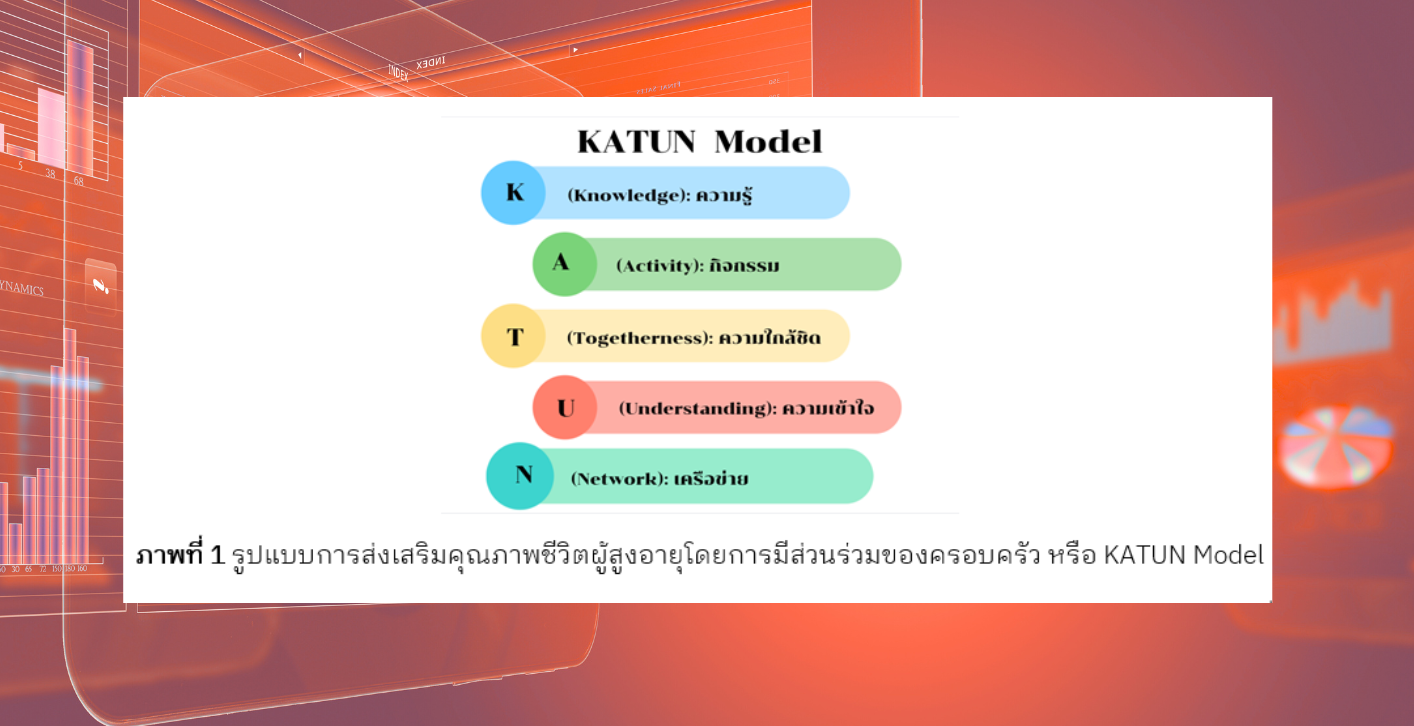
ผลการศึกษาพบว่า รูปแบบการส่งเสริมคุณภาพชีวิตผู้สูงอายุประกอบด้วย 3 ขั้นตอน 1) วางแผนโดยการมีส่วนร่วมของผู้นำชุมชน เจ้าหน้าที่สาธารณสุข ผู้สูงอายุ และตัวแทนครอบครัว กำหนดกิจกรรมครอบคลุม 5 องค์ประกอบหลักของ KATUN Model ได้แก่ K-Knowledge, A-Activity, T-Togetherness, U-Understanding, และ N-Network 2) ปฏิบัติการเน้นสมาชิกในครอบครัวมีส่วนร่วมอย่างจริงจังในทุกกิจกรรม และ 3) ติดตามผล เมื่อดำเนินโครงการแล้วพบว่า ผู้สูงอายุมีคุณภาพชีวิตโดยรวมสูงขึ้นอย่างมีนัยสำคัญทางสถิติที่ระดับ .05 (t = 3.790) และระดับความพึงพอใจหลังเข้าร่วมโครงการส่วนใหญ่อยู่ในระดับสูง (ร้อยละ 72.62)
เอกสารอ้างอิง
Bureau of Elderly Health. (2023). Bureau of Elderly Health Annual Report 2024. Bureau of Elderly Health, Department of Disease Control, Ministry of Public Health. Retrieved 11, 2023 from https://online.fliphtml5.com/cyqny/hmox/#p=1
Health Data Center, Satun Provincial Health Office. (2024). Population by Sex, Age Group, Annual, Satun Province, Fiscal Year 2024. Retrieved 11, 2023 from https://hdc.moph.go.th/stn/public/main
Department of Older Persons. (2023). Elderly Statistics June 2023. Retrieved 11, 2023 from https://www.dop.go.th/th/statistics_side?content=1&sub=2
Department of Older Persons. (2023). The 3rd National Plan of Action for Older Persons (B.E. 2566-2580). Retrieved 11, 2023 from https://www.dop.go.th/download/laws/th1653553501-843_0.pdf
Huaysai, W., & Chusuton, S. (2023). Factors Predicting the Quality of Life of Older Adults in the Elderly Club of Bang Nok Kwaek Subdistrict, Bang Khonthi District, Samut Songkhram Province. Journal of Public Health, 32(1), 63-72.
Kas-udom, P., Aphiyanlangkar, K., Chanjaroen, K., & Wae, N. (2018). Family Roles in Promoting the Quality of Life of Older Adults in a Changing Situation. Journal of Nursing and Public Health Network Southern Region, 5(3), 300-310.
Kemmis, S., & McTaggart, R. (2005). Participatory Action Research: Communicative Action and the Public Sphere. In N. K. Denzin & Y. S. Lincoln (Eds.), The Sage Handbook of Qualitative Research (3rd ed., pp. 559-603). Sage Publications.
Khunno, J. (2021). Basic Research Methods for Health Sciences. Chulalongkorn University Press.
Kongmaneekan, J., Sirilak, P., & Nusorn, N. (2020). Environmental Management for Older Adults Health Promotion. Journal of Boromarajonani College of Nursing, Uttaradit, 12(1), 28-38.
Konkaew, K., Thongliam, P., & Subprasert, S. (2019). Predictive Factors of Quality of Life in Homebound Elderly, Khlong Khlung District, Kamphaeng Phet Province. Journal of Public Health, 28(3), 394-401.
Mahatnirankul, S., Tantipivattanakul, V., Phompaisanchai, V., Wongsuwan, K., & Promanarangkul,
V. (1997). World Health Organization Quality of Life Indicators Thai version (WHOQOL – BREF – THAI) . Department of Mental Health, Ministry of Public Health. Retrieved 11, 2023 from https://dmh.go.th/test/download/files/whoqol.pdf
Makateppong, W., Naenudon, A., & Phuangsamai, P. (2022). The Development of a Family Role Model in Caring for Elderly Patients with Hypertension through Family Participation. Thai Journal of Cardio-Thoracic Nursing, 33(2), 101-116.
Palaseuk, R., & Thanomchayathawat, B. (2017). Family Models in Caring for the Elderly. Journal of Nursing and Public Health Network Southern Region, 4(3), 135-150.
Wangsan, R., Worachina, K., & Prom-in, C. (2024). Family and Promoting the Quality of Life of Older Adults. Journal of Health Education, 47(2), 1-14.
Wilawan, J., Laokhompruttajan, J, Laokhompruttajan, T., Boonnao, Y., & Boonserm, P. (2022). The Effect of Socio-Cultural Program for Promoting Quality of Life and Depressive Prevention in The Elderly, Na Fai Subdistrict, Mueang Chaiyaphum District, Chaiyaphum Province. Journal of Health Systems Research, 15(1), 181-195.
The WHOQOL Group. (1993). The Development of the World Health Organization Quality of Life Assessment Instrument (The WHOQOL). In J. Orley & W. Kuyken (Eds.), Quality of life assessment: International perspectives: Proceedings of the joint meeting organized by the World Health Organization and the Foundation IPSEN in Paris, July 2-3 1993 (pp.41-57). Springer-Verlag. Retrieved 11, 2023 from https://link.springer.com/chapter/10.1007/978-3-642-79123-9_4
ดาวน์โหลด
เผยแพร่แล้ว
รูปแบบการอ้างอิง
ฉบับ
ประเภทบทความ
สัญญาอนุญาต
ลิขสิทธิ์ (c) 2025 วารสารสาธารณสุขและวิทยาศาสตร์สุขภาพ

อนุญาตภายใต้เงื่อนไข Creative Commons Attribution-NonCommercial-NoDerivatives 4.0 International License.
บทความทุกบทความที่ได้รับการตีพิมพ์ถือเป็นลิขสิทธิ์ของ วารสารสาธารณสุข