ปัจจัยทำนายความเสี่ยงสูงต่อการก่อความรุนแรง (SMI-V) ในผู้ป่วยยาและสารเสพติด : การศึกษาย้อนหลังในสถาบันบำบัดรักษาและฟื้นฟูผู้ติดยาเสพติดแห่งชาติบรมราชชนนี
คำสำคัญ:
ความเสี่ยงสูงต่อการก่อความรุนแรง (SMI-V), สารเสพติด, ปัจจัยทำนาย, การศึกษาย้อนหลังบทคัดย่อ
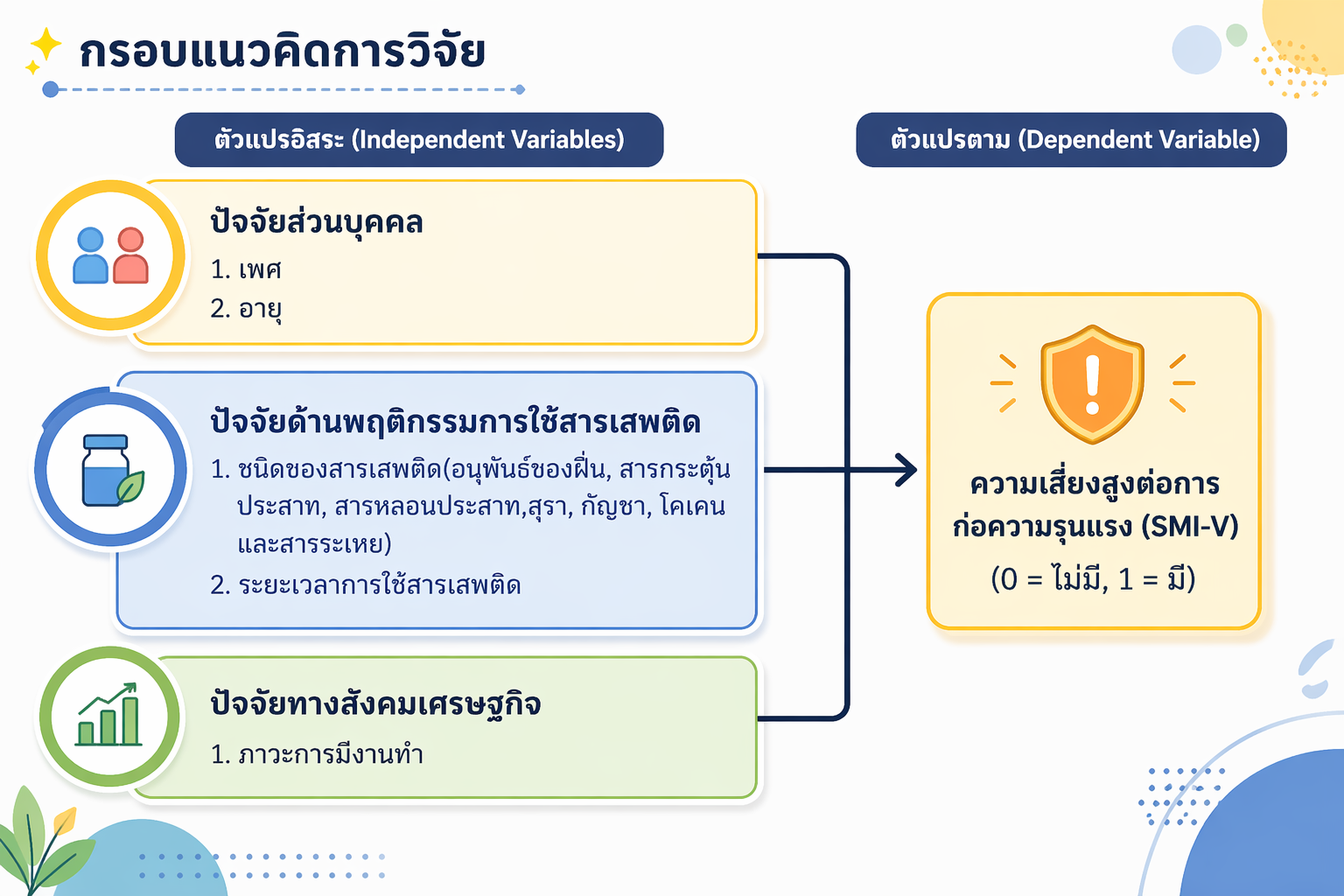
การวิจัยนี้มีวัตถุประสงค์เพื่อศึกษาปัจจัยทำนายความเสี่ยงสูงต่อการก่อความรุนแรง (SMI-V) ในผู้ป่วยยาและสารเสพติด การศึกษาเป็นแบบย้อนหลัง (Retrospective study) โดยใช้ข้อมูลเวชระเบียนของผู้ป่วยจำนวน 4,507 ราย ที่เข้ารับการบำบัดรักษาในสถาบันบำบัดรักษาและฟื้นฟูผู้ติดยาเสพติดแห่งชาติบรมราชชนนี ระหว่างเดือนมกราคม 2566 ถึงเดือนมีนาคม 2567 วิเคราะห์ข้อมูลด้วยสถิติเชิงพรรณนาและการถดถอยโลจิสติก
ผลการศึกษาพบว่าปัจจัยที่มีความสัมพันธ์กับความเสี่ยงสูงต่อการก่อความรุนแรงอย่างมีนัยสำคัญทางสถิติ ได้แก่ การใช้สารเสพติดชนิดกัญชา (OR = 3.762), สารกระตุ้นประสาท (OR = 3.148), สุรา (OR = 2.077), ภาวะว่างงาน (OR = 1.784) และระยะเวลาการใช้สารเสพติดที่เพิ่มขึ้น ขณะที่การใช้สารอนุพันธ์ของฝิ่นมีความสัมพันธ์เชิงลบกับความเสี่ยง (OR = 0.637) ผลการศึกษาชี้ให้เห็นว่าชนิดของสารเสพติด ระยะเวลาการใช้ และสถานะการจ้างงาน เป็นปัจจัยสำคัญที่สามารถใช้ในการคัดกรองและเฝ้าระวังผู้ป่วยกลุ่มเสี่ยง เพื่อพัฒนามาตรการป้องกันและลดความรุนแรงในระดับบุคคลและสังคม
เอกสารอ้างอิง
Bhalotra, S., Britto, D. G. C., Pinotti, P., & Sampaio, B. (2025). Job displacement, unemployment benefits and domestic violence. The Review of Economic Studies, 92(6), 3649–3681. doi:10.1093/restud/rdaf004
Chananiramitphon, S. (2021). Nursing care for patients with violent behaviors from methamphetamine use: A case study. Retrieved from https://inb.moph.go.th/MyPDF/16.pdf (in Thai)
Chroback, K. M. (2022). The Effects of Substance Use on Violence. A Dissertation Submitted in Partial Fulfillment of the Requirements for the Degree of Doctor of Philosophy, Texas Tech University.
Chumnanuksron, A., & Chintapanyakun, T. (2025). Factors influencing aggressive behavior in psychiatric patients with substance abuse at U Thong Hospital. Journal of Health and Nursing, Ubon Ratchathani University, 4(1), 29–44. (in Thai)
Moulin, V., Framorando, D., Gasser, J., & Dan-Glauser, E. (2022). The Link Between Cannabis Use and Violent Behavior in the Early Phase of Psychosis: The Potential Role of Impulsivity. Frontiers in Psychiatry, 13, 746287. doi:10.3389/fpsyt.2022.746287
Narcotics Control Division. (2023). Methamphetamine. Retrieved from https://narcotic.fda.moph.go.th/information-about-drugs/metamphetamine (in Thai)
Sousa, C. (2025). The contemporaneous impact of unemployment and income inequality on violent vs property crime rates in New England: A panel data and machine learning approach. Empirical Economic Bulletin, 18, 149–174.
Tongsamsi, K., & Tongsamsi, I. (2019). Family violence resulting alcohol misuse: An analysis of Thai newspapers’ reports during 2011–2015. Walailak Journal of Social Sciences,12(1), 61 – 90.
United Nations Office on Drugs and Crime. (2023). World Drug Report 2023. United Nations publication.
Varshney, M., Mahapatra, A., Krishnan, V., Gupta, R., & Deb, K. S. (2016). Violence and mental illness: what is the true story?. Journal of epidemiology and community health, 70(3), 223–225. doi:10.1136/jech-2015-205546
Volkow, N. D., Compton, W. M., Blanco, C., Einstein, E. B., & Han, B. (2024). Associations of cannabis use, use frequency, and cannabis use disorder with violent behavior among young adults in the United States. International Journal of Drug Policy, 128, 104431. doi:10.1016/j.drugpo.2024.104431
World Health Organization. (2018). Global status report on alcohol and health 2018. Geneva, Switzerland: Author.
Zhong, S., Yu, R., & Fazel, S. (2020). Drug Use Disorders and Violence: Associations With Individual Drug Categories. Epidemiologic reviews, 42(1), 103–116. doi:10.1093/epirev/mxaa006
ดาวน์โหลด
เผยแพร่แล้ว
รูปแบบการอ้างอิง
ฉบับ
ประเภทบทความ
สัญญาอนุญาต
ลิขสิทธิ์ (c) 2026 วารสารสาธารณสุขและวิทยาศาสตร์สุขภาพ

อนุญาตภายใต้เงื่อนไข Creative Commons Attribution-NonCommercial-NoDerivatives 4.0 International License.
บทความทุกบทความที่ได้รับการตีพิมพ์ถือเป็นลิขสิทธิ์ของ วารสารสาธารณสุข