Role of Robotic Rehabilitation for Stroke Patients in Taksin Hospital, Bangkok, Thailand
Keywords:
Stroke rehabilitation, Robot-assisted therapy, Post stroke upper limb impairmentAbstract
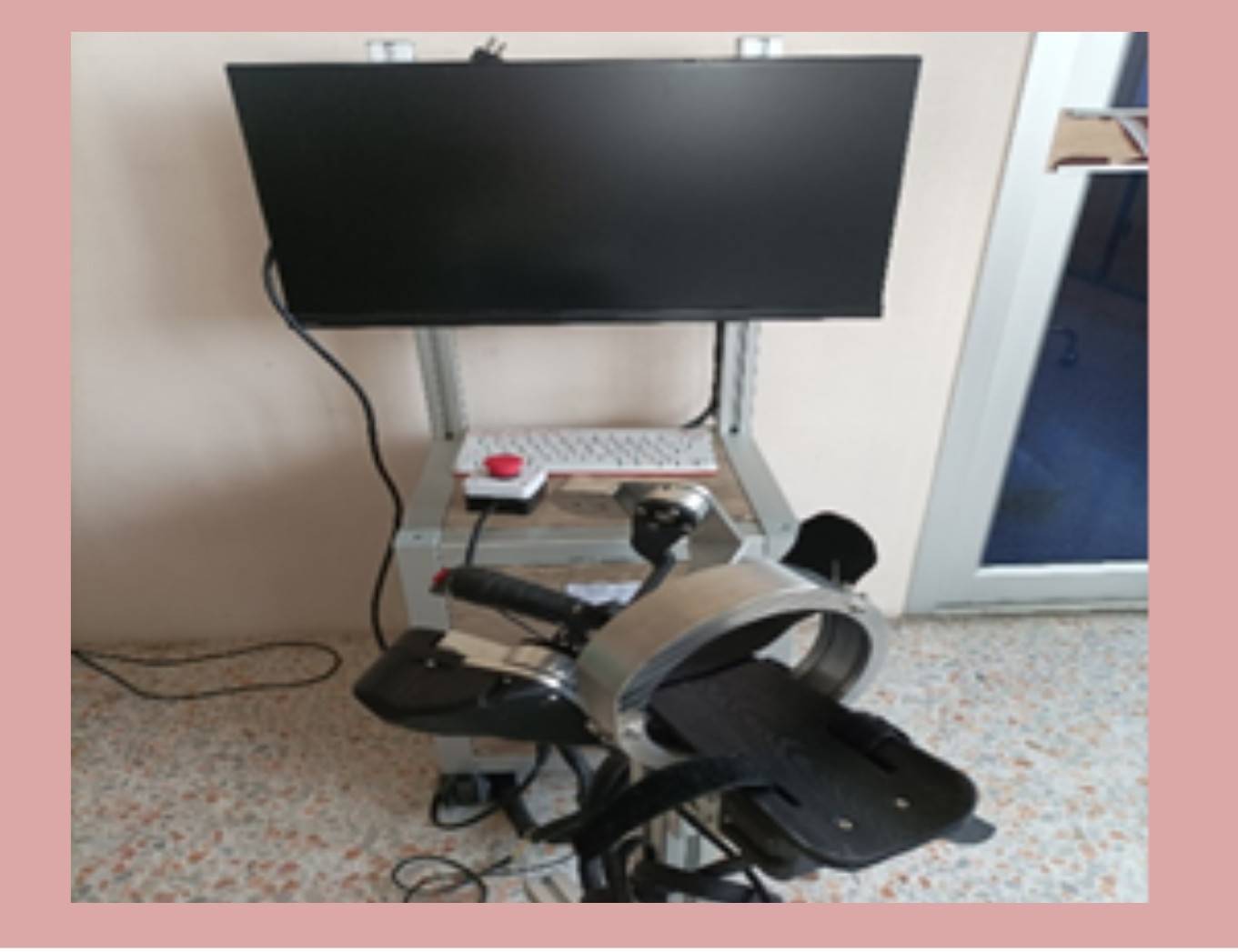
The incidence of stroke among patients increases gradually with age. The loss of function among stroke patients’ upper extremities often results in the inability to perform activities of daily living. This situation causes an economic problem, especially on aging society. The prevalence of disability among people will increase in an aging society. Nowadays, there is a new technology of robot-assisted therapy in stroke rehabilitation. Robot-assisted therapy has high accuracy, precision, repeatability and may involve virtual reality. The Department of Physical Medicine and Rehabilitation at Taksin Hospital, which is a public hospital operated by the Medical Service Department, Bangkok Metropolitan Administration, has utilized robotic rehabilitation in stroke patients. There are 2 devices in the department, which are donated by Chulalongkorn University: exoskeletons-based rehabilitation devices and end-effector-type robotic devices. The combination of robot-assisted therapy and conventional therapy are used in post- stroke patients with upper limb impairment who meet the inclusion criteria. Robot-Assisted therapy is important to improve patients’ quality of life. The efficacy of robot-assisted therapy regarding treatment time and satisfaction is good at Taksin Hospital. However, there are robotic home-based rehabilitation systems in foreign countries due to the Covid-19 pandemic. There are some limitations about the home-based design in Taksin Hospital.
References
Akbari, A., Haghverd, F., & Behbahani, S. (2021). Robotic Home-Based Rehabilitation Systems Design:
From a Literature Review to a Conceptual Framework for Community-Based Remote Therapy
During COVID-19 Pandemic. Front Robot AI, 8, 612331. doi:10.3389/frobt.2021.612331
Baniqued, P. D. E., Stanyer, E. C., Awais, M., Alazmani, A., Jackson, A. E., Mon-Williams, M. A., . . . Holt, R. J. (2021). Brain–computer interface robotics for hand rehabilitation after stroke: A systematic review. Journal of neuroengineering and rehabilitation, 18(1), 1-25.
Bertani, R., Melegari, C., De Cola, M. C., Bramanti, A., Bramanti, P., & Calabro, R. S. (2017). Effects of robot-assisted upper limb rehabilitation in stroke patients: a systematic review with meta-analysis. Neurol Sci, 38(9), 1561-1569. doi:10.1007/s10072-017-2995-5
Chang, W. H., & Kim, Y. H. (2013). Robot-assisted Therapy in Stroke Rehabilitation. J Stroke, 15(3), 174-181. doi:10.5853/jos.2013.15.3.174
Coupland, A. P., Thapar, A., Qureshi, M. I., Jenkins, H., & Davies, A. H. (2017). The definition of stroke. Journal of the Royal Society of Medicine, 110(1), 9-12.
Fasoli, S. E., Krebs, H. I., Ferraro, M., Hogan, N., & Volpe, B. T. (2004). Does shorter rehabilitation limit potential recovery poststroke? Neurorehabil Neural Repair, 18(2), 88-94. doi:10.1177/0888439004267434
Iqbal, J., & Baizid, K. (2015). Stroke rehabilitation using exoskeleton-based robotic exercisers: Mini Review. Biomedical Research, 26(1), 197-201.
Masiero, S., Celia, A., Rosati, G., & Armani, M. (2007). Robotic-assisted rehabilitation of the upper limb after acute stroke. Arch Phys Med Rehabil, 88(2), 142-149. doi:10.1016/j.apmr.2006.10.032
Naghdi, S., Ansari, N. N., Mansouri, K., & Hasson, S. (2010). A neurophysiological and clinical study of Brunnstrom recovery stages in the upper limb following stroke. Brain Inj, 24(11), 1372-1378. doi:10.3109/02699052.2010.506860
Seth, N., Johnson, D., Taylor, G. W., Allen, O. B., & Abdullah, H. A. (2015). Robotic pilot study for analysing spasticity: clinical data versus healthy controls. J Neuroeng Rehabil, 12, 109. doi:10.1186/s12984-015-0103-8
Villafane, J. H., Taveggia, G., Galeri, S., Bissolotti, L., Mulle, C., Imperio, G., . . . Negrini, S. (2018). Efficacy of Short-Term Robot-Assisted Rehabilitation in Patients With Hand Paralysis After Stroke: A Randomized Clinical Trial. Hand (N Y), 13(1), 95-102. doi:10.1177/1558944717692096
Yue, Z., Zhang, X., & Wang, J. (2017). Hand Rehabilitation Robotics on Poststroke Motor Recovery. Behav Neurol, 2017, 3908135. doi:10.1155/2017/3908135
Zhang, K., Chen, X., Liu, F., Tang, H., Wang, J., & Wen, W. (2018). System Framework of Robotics in Upper Limb Rehabilitation on Poststroke Motor Recovery. Behav Neurol, 2018, 6737056. doi:10.1155/2018/6737056
Downloads
Published
How to Cite
Issue
Section
License
Copyright (c) 2022 Thai Journal of Public Health and Health Sciences

This work is licensed under a Creative Commons Attribution-NonCommercial-NoDerivatives 4.0 International License.
บทความทุกบทความที่ได้รับการตีพิมพ์ถือเป็นลิขสิทธิ์ของ วารสารสาธารณสุข