Prevalence of Obesity and Factors Associated with Recurrent Supraventricular Tachycardia in Trang Hospital
Keywords:
Obesity, Body Mass Index, Supraventricular Tachycardia, PrevalenceAbstract
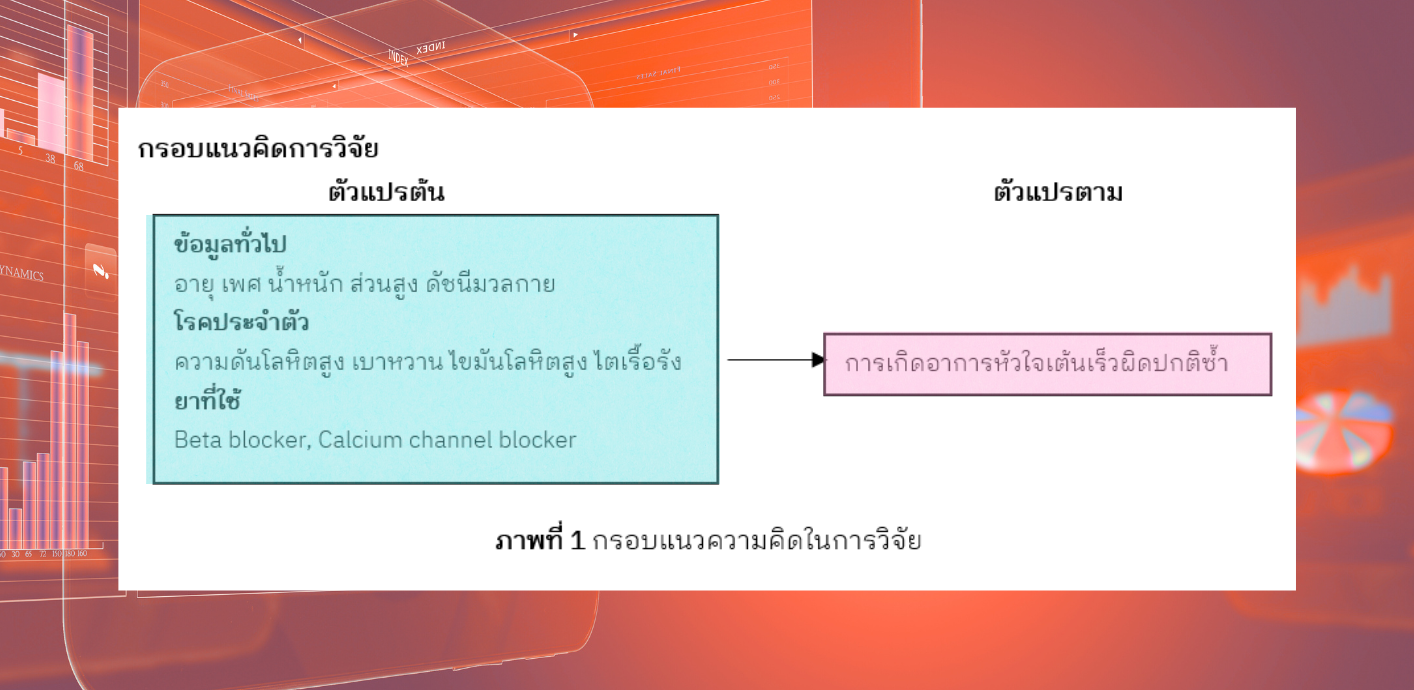
This study is a retrospective descriptive study to examine the prevalence of obesity and factors associated with recurrent supraventricular tachycardia (SVT) in Trang Hospital. Data were collected by reviewing patient records using the HOSxP program of patients who visited Trang Hospital from January 2019 to December 2024. A total sample size consisted of 363 patients. Data collected included sex, age, weight, body mass index (BMI), comorbidities, and medications. Data were analyzed using statistics such as frequency, percentage, and mean, along with multiple logistic regression analysis.
The results showed that the prevalence of obesity among patients with SVT in Trang Hospital was 41.6%. The highest BMI recorded was 41.62, and the average BMI of all patients was 24.68. The most common comorbidity was dyslipidemia (49.6%), followed by hypertension (44.9%) and diabetes mellitus (18.5%). During the follow-up period, 108 patients (29.8%) had recurrent episodes of SVT, with the number of recurrent episodes ranging from one to seven times. Univariable analysis showed that the following factors were significantly associated with recurrent SVT: diabetes mellitus (Odds Ratio [OR] = 1.79; 95% Confidence Interval [CI]: 1.03–3.11; P = 0.037), dyslipidemia (OR = 1.74; 95% CI: 1.11–2.75; P = 0.016), and the use of calcium channel blocker (OR = 2.09; 95% CI: 1.32–3.30; P = 0.001). Multivariable logistic regression analysis showed that the use of a calcium channel blocker was the only significant predictive factor associated with recurrent SVT (Adjusted OR = 2.11; 95% CI: 1.32–3.36; P = 0.002). The findings of this study can be used to educate patients on self-care, such as encouraging weight reduction and considering the use of a beta-blocker instead of a calcium channel blocker, which may potentially reduce the recurrence of SVT.
References
Aroonsiriwattana, S. (2015). Treatment of Radiofrequency Ablation of Cardiac Arrhythmia in Suratthani Hospital. Region 11 Medical Journal, 29(1), 137–143.
Bah,MNM., Zahari,N., Boparam,BK., Sapian,MH. (2024). The Incidence and Factors Associated with the Recurrence of Supraventricular Tachycardia in Children: 15 Years Experience from Middle-Income Country. Pediatr Cardiol. 2024 Feb;45(2):292-299.
Brady,TM. (2016). The Role of Obesity in the Development of Left Ventricular Hypertrophy Among Children and Adolescents. Curr Hypertens ,18(1):3.
Conen,D., Adam,M., Roche,F., Barthelemy,JC., Dietrich,DF., Imboden,M. et al. (2012). Premature atrial contractions in the general population: frequency and risk factors. Circulation. 126, 2302–8.
Finn,BP., Fraser,B., O'Connell,SM. (2018) Supraventricular tachycardia as a complication of severe diabetic ketoacidosis in an adolescent with new-onset type 1 diabetes. BMJ Case Rep. 2018 Mar 15;2018:bcr2017222861.
Gowd,BM., Thompson,PD. (2012). Effect of female sex on cardiac arrhythmias. Cardiol Rev. Nov-Dec, 20(6):297-303.
Hafeez,Y., Rodriguez, BSQ., Ahmed,I., Grossman,SA. (2024). Paroxysmal Supraventricular Tachycardia. Retrieved December 1,2024, from://www.ncbi.nlm.nih.gov/books/NBK507699/
Brugada,J., Katritsis,DG., Arbelo,E., Arribas,F., Bax,JJ., Lundqvist,CB. et al. (2020). ESC Guidelines for the management of patients with supraventricular tachycardia. European Heart Journal, 41(5), 1 February,655–720.
McCully,BH., Hasan,W., Streiff,CT., Houle,JC., Woodward,WR., Giraud,GD et al. (2013). Sympathetic cardiac hyperinnervation and atrial autonomic imbalance in diet-induced obesity promote cardiac arrhythmias. Am J Physiol Heart Circ Physiol. 305, H1530–7.
Patel,K., Reddy,R., Sau,A., Sivanandarajah,P., Ardissino,M., Ng,F. (2022) - Obesity as a risk factor for cardiac arrhythmias: BMJ Medicine 2022;1:e000308.
Pathak,RK., Mahajan,R., Lau,DH., Sanders,P. (2015). The implications of obesity for cardiac arrhythmia mechanisms and management. Can J Cardiol.;31:203–210
Patti, L., Horenstein, MS., Ashurst, JV. (2025). Supraventricular Tachycardia. Retrieved July 7,2025, from https://www.ncbi.nlm.nih.gov/books/NBK441972/
Prasopsantawee,D., Uwattanasakul, W. (2023). A Case Study of the Care of a Patient Receiving Adenosine Injection for Supraventricular Tachycardia (SVT). Thai Pharm Health Sci J Vol. 18No. 3, Jul. –Sep.2023.
Rech,MA., Gottlieb,M. (2023). Calcium Channel Blockers Should be First-Line Treatment for Hemodynamically Stable Suppraventricular Trachycardia Ann Emerg Med. 2024 Apr;83(4):394-395.
Sakboonyarat, B., Poovieng, J. & Rangsin, R. (2024). Association between obesity and new-onset heart failure among patients with hypertension in Thailand. J Health Popul Nutr 43, 33.
Schreuder,MM., Sunamura,M., Lennep,JE. (2019). Supraventricular tachycardia and the menstrual cycle. Case Rep Womens Health. 2019 Oct 22;24:e00153.
Stambler,BS. (2023). Self-administered intranasal etripamil using a symptom-prompted, repeat-dose regimen for atrioventricular-nodal-dependent supraventricular tachycardia (RAPID): A multicentre, randomised trial. Lancet 2023 Jul 8; 402:118.
Taiwong,A., Sanchan,M., Talerd,W., Somprom,S., Peangjai,R. (2018). Supraventricular tachycardia (SVT): Nurse Role’s in Assessment and Care. Mahasarakham Hospital Journal, 15(2) (May - August) 2018
World Health Organization.(2025). Obesity and overweight. Retrieved July 7,2025, from https://www.who.int/news-room/fact-sheets/detail/obesity-and-overweight
Zeljkovic,I., Dula,K., Babacanli,A., Kruljac,I., Mustapic,V., Brkljacic,DC. et al. (2019). High prevalence of hyperlipidaemia in patients with AV re-entry tachycardia and AV nodal reentry tachycardia. Sci Rep 9, 11502.
Downloads
Published
How to Cite
Issue
Section
License
Copyright (c) 2025 Thai Journal of Public Health and Health Sciences

This work is licensed under a Creative Commons Attribution-NonCommercial-NoDerivatives 4.0 International License.
บทความทุกบทความที่ได้รับการตีพิมพ์ถือเป็นลิขสิทธิ์ของ วารสารสาธารณสุข