การพัฒนาและศึกษาความเป็นไปได้ของโปรแกรมส่งเสริมการรับรู้ความสามารถตนเองผ่าน แอปพลิเคชันไลน์ต่อพฤติกรรมการป้องกันแผลเบาหวานที่เท้าในผู้ป่วยเบาหวานที่ควบคุมไม่ได้
-
คำสำคัญ:
ผู้ป่วยเบาหวานที่ควบคุมไม่ได้, พฤติกรรมการป้องกันแผลเบาหวานที่เท้า, การรับรู้ความสามารถตนเอง, แอปพลิเคชันไลน์, การพัฒนาและศึกษาความเป็นไปได้บทคัดย่อ
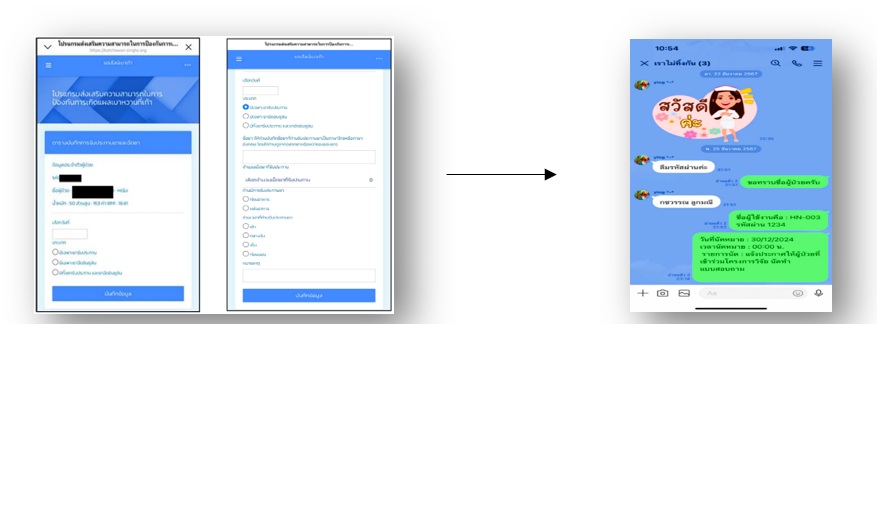
การวิจัยและพัฒนานี้มีวัตถุประสงค์เพื่อศึกษาความเป็นไปได้ในการใช้งานและการยอมรับของผู้ใช้ของโปรแกรมส่งเสริมการรับรู้ความสามารถตนเองผ่านแอปพลิเคชันไลน์ “เบาเท้า” รวมทั้งประเมินความเข้าใจ ความคิดเห็น และปัญหาอุปสรรคในการนำเนื้อหาไปใช้ในการปฏิบัติพฤติกรรมการป้องกันแผลเบาหวานที่เท้าในผู้ป่วยเบาหวานชนิดที่ 2 ที่ควบคุมระดับน้ำตาลในเลือดไม่ได้ การวิจัยดำเนินการเป็น 2 ระยะ ได้แก่ 1) ระยะพัฒนาแอปพลิเคชันไลน์ และ2) ระยะทดสอบการใช้งานเครื่องมือก่อนนำไปใช้จริงในการทดลอง การศึกษาครั้งนี้นำเสนอผลระยะพัฒนาโปรแกรมส่งเสริมการรับรู้ความสามารถตนเองผ่านแอปพลิเคชันไลน์และระยะการประเมินความเป็นไปได้ในการใช้งาน (Feasibility) และการยอมรับของผู้ใช้ (Acceptability) โดยกลุ่มตัวอย่างคัดเลือกแบบเฉพาะเจาะจง (Purposive sampling) ตามเกณฑ์คุณสมบัติที่กำหนดจำนวน 10 ราย เข้าร่วมทดลองใช้งานแอปพลิเคชันเป็นระยะเวลา 2 สัปดาห์ เครื่องมือเนื้อหาในแอปพลิเคชันผ่านการตรวจสอบความตรงเชิงเนื้อหาโดยผู้ทรงคุณวุฒิ มีค่าดัชนีความตรงเชิงเนื้อหาเท่ากับ 1.00 ซึ่งเก็บรวบรวมข้อมูลโดยการสัมภาษณ์ภายหลังการทดสอบใช้งาน วิเคราะห์ข้อมูลปัจจัยส่วนบุคคลโดยใช้สถิติพรรณนา และข้อมูลเชิงคุณภาพจากการสัมภาษณ์วิเคราะห์ด้วยวิธีการวิเคราะห์เนื้อหา (Content analysis) ผลการศึกษานำเสนอในส่วนผลระยะพัฒนาโปรแกรมส่งเสริมการรับรู้ความสามารถตนเองผ่านแอปพลิเคชันไลน์และนำเสนอความเป็นไปได้ในการใช้งาน (Feasibility) และการยอมรับของผู้ใช้ (Acceptability) สามารถจำแนกประเด็นสำคัญออกเป็น 4 ประเด็นหลัก ได้แก่ 1) การใช้งานระบบและเทคนิค 2) คุณค่าและความเหมาะสมของเนื้อหา 3) ประสบการณ์การใช้งานและข้อเสนอแนะเพื่อการพัฒนา และ 4) ความพึงพอใจโดยรวมและการรับรู้ประโยชน์ ดังนั้นแอปพลิเคชันไลน์ “เบาเท้า” มีความเป็นไปได้ในการใช้งานและได้รับการยอมรับ ในระดับดี สามารถนำไปใช้เป็นเครื่องมือในการทดลองในระยะต่อไป อย่างไรก็ตามควรมีการเพิ่มจำนวนกลุ่มตัวอย่างและระยะเวลาการศึกษา เพื่อประเมินประสิทธิผลของโปรแกรมในการวิจัยหลักต่อไป
เอกสารอ้างอิง
Bandura, A. (1997). Self-efficacy: The exercise of control. W.H. Freeman.https://doi.org/10.5860/choice.35-1826
Billingham, S. A. M., Whitehead, A. L., & Julious, S. A. (2013). An audit of sample sizes for pilot and feasibility trials. BMC Medical Research Methodology, 13, Article 104. https://doi.org/10.1186/1471-2288-13-104
Chosiwasakul, K., Sriyot, P., Tapasanan, W., & Setthawaranon, N. (2023). Factors associated with foot ulcers among patients with Type 2 Diabetes in a diabetes clinic. Journal of Health Research and Nursing, 39(2), 184-194. (in Thai)
Davis, F. D. (1989). Perceived usefulness, perceived ease of use, and user acceptance of information technology. MIS Quarterly, 13(3), 319–340. https://doi.org/10.2307/249008
Department of Disease Control. (2021, November 12). Department of Disease Control campaigns for World Diabetes Day 2021: Raising awareness of diabetes care and ensuring thorough treatment. (in Thai)
Diabetes Association of Thailand under the Patronage of Her Royal Highness Princess Maha Chakri Sirindhorn. (2017, March 9). Preparation and Injection of Insulin [Video]. YouTube. https://www.youtube.com/watch?v=2fRfjb5DFN8&t=14s (in Thai)
Diabetes Association of Thailand under the Patronage of Her Royal Highness Princess Maha Chakri Sirindhorn, & Thai Endocrine Society. (2023). Clinical Practice Guideline for Diabetes. Bangkok: Srimuang Printing. (in Thai)
Gu, L., Jimma, B. L., & Mihretie, T. B. (2025). The effects of mobile health on self-management of patients with diabetes: A systematic review. SAGE Open Medicine, 13.https://doi.org/10.1177/20552076251382049
Health Education Unit, Pranangklao Hospital. (2023, June 2). Role models for diabetic patients [Video]. YouTube. https://www.youtube.com/watch?v=8zVoyjjCnTg&t=4s (in Thai)
Huadhun, K. (2017). Influence of LINE application on modern communication. Journal of Arts Management, 1(2), 75–88. (in Thai)
International Diabetes Federation. (2021). IDF Diabetes Atlas (10th ed.). https://diabetesatlas.org/atlas/tenth-edition/
Knowles, M. S. (1984). The adult learner: A neglected species (3rd ed.). Gulf Publishing.
Lee, J. L., & Kim, Y. (2024). Evaluation of mobile applications for patients with diabetes mellitus: A scoping review. Healthcare, 12(3), 368. https://doi.org/10.3390/healthcare12030368
Leon, A. C., Davis, L. L., & Kraemer, H. C. (2022). Guidelines for designing and evaluating feasibility pilot studies. NCBI. https://pmc.ncbi.nlm.nih.gov/articles/PMC8849521/
Ministry of Public Health. (2024). Standard surveillance report group and percentage of diabetic patients with good glycemic control. (in Thai)
Muangkum, S., Srisopa, P., Kunsongkeit, W., Polpinit, P., Wiseso, W., Chantamit-opas, C., & Deerochanawong, C. (2022). Factors influencing microvascular complications in persons with Type 2 Diabetes. The Journal of Faculty of Nursing Burapha University, 28(2), 74–84. (in Thai)
Nielsen, J. (1994). Usability engineering. Academic Press.Perski, O., Blandford, A., West, R., & Michie, S. (2017). Conceptualising engagement with digital behaviour changes interventions. Translational Behavioral Medicine, 7(2), 254–267. https://doi.org/10.1007/s13142-016-0453-1
Phumprawait, A., & Chawalitsupassanee, P. (2024). Factors related to the risk of foot ulcers and self-care behavior for preventing foot ulcers among patients with Type 2 Diabetes. Journal of Social Science and Cultural, 8(7), 287–297. (in Thai)
Saelai, M. (2024). Effectiveness of a self-efficacy enhancement program on blood sugar control behaviors and HbA1c levels among patients with uncontrolled Type 2 Diabetes at Sangkhlaburi Hospital, Kanchanaburi Province. Paholpolpayuhasena Hospital Journal, 12(2), 28–42. (in Thai)
Siriniyomchai, C., & Thanathornkerati, N. (2023). The nurse's role in promoting health literacy and foot care behaviors in persons with diabetes. Journal of Thammasat University Hospital, 8(1), 1–12. (in Thai)
Thai Public Broadcasting Service (Thai PBS). (2021, July 22). Food menu for diabetes control, Kon Su Rok program [Video]. YouTube. https://www.youtube.com/watch https://www.youtube.com/watch?v=z2kmp0nUH54 (in Thai)
Triamchaisri, S. K. (2018). Meditation practice for health healing (15th ed.). V Indy Design. (in Thai)
Usefi, S., Davoodi, F., Alizadeh, A., & Mohebi Fa, M. (2024). Online diabetes self-management education application for reducing HbA1c: A systematic review and meta-analysis. Clinical Diabetes and Endocrinology, 10, Article 9. https://doi.org/10.1186/s40842-024-00201-9
Venkatesh, V., Morris, M. G., Davis, G. B., & Davis, F. D. (2003). User acceptance of information technology: Toward a unified view. MIS Quarterly, 27(3), 425–478.https://doi.org/10.2307/30036540
World Health Organization. (2023, April 5). Diabetes. https://www.who.int/news-room/fact-sheets/detail/diabetes
Yingyongmethee, N., Yoocharoen, D., Sawangchai, J., Wonglaemthong, S., & Nimitpornchai, P. (2020). Effectiveness of SKT meditation therapy on blood sugar levels in patients with uncontrolled diabetes. Region 4-5 Medical Journal, 39(2), 228–239. (in Thai)
ดาวน์โหลด
เผยแพร่แล้ว
รูปแบบการอ้างอิง
ฉบับ
ประเภทบทความ
สัญญาอนุญาต
ลิขสิทธิ์ (c) 2026 วิทยาลัยพยาบาลบรมราชชนนี นครศรีธรรมราช

อนุญาตภายใต้เงื่อนไข Creative Commons Attribution-NonCommercial-NoDerivatives 4.0 International License.
บทความที่ได้รับการตีพิมพ์เป็นลิขสิทธิ์ของ วิทยาลัยพยาบาลบรมราชชนนี นครศรีธรรมราช
ข้อความที่ปรากฏในบทความแต่ละเรื่องในวารสารวิชาการเล่มนี้เป็นความคิดเห็นส่วนตัวของผู้เขียนแต่ละท่านไม่เกี่ยวข้องกับวิทยาลัยพยาบาลบรมราชชนนี นครศรีธรรมราช และบุคคลากรท่านอื่น ๆ ในวิทยาลัยฯ แต่อย่างใด ความรับผิดชอบองค์ประกอบทั้งหมดของบทความแต่ละเรื่องเป็นของผู้เขียนแต่ละท่าน หากมีความผิดพลาดใดๆ ผู้เขียนแต่ละท่านจะรับผิดชอบบทความของตนเองแต่ผู้เดียว