Development and Feasibility of a LINE-Based Self-Efficacy Program for Diabetic Foot Ulcer Prevention in Patients with Uncontrolled Diabetes Mellitus
-
Keywords:
Patients with Uncontrolled Diabetes Mellitus, Diabetic Foot Ulcer Prevention Behaviors, Self-Efficacy, LINE Application, Development and Feasibility StudyAbstract
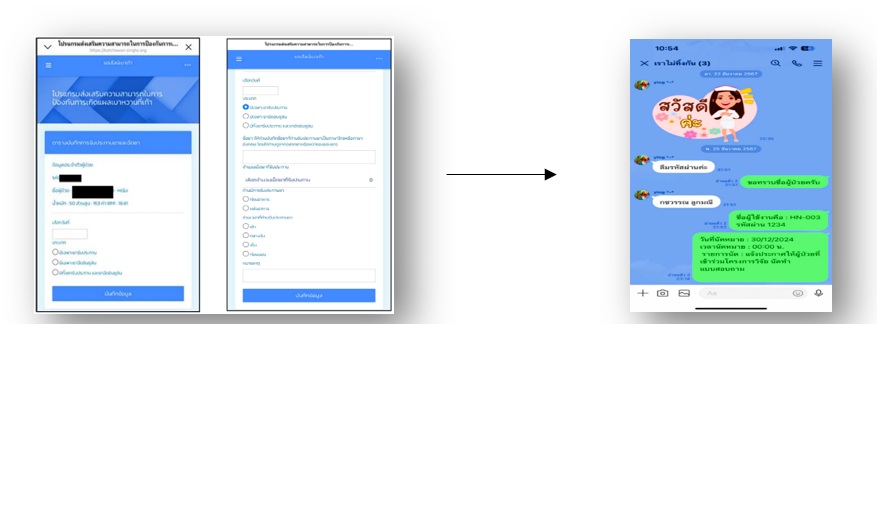
This research and development study aimed to examine the feasibility of use and user acceptability of a self-efficacy enhancement program delivered through the LINE application, “Bao Tao.” It also aimed to evaluate participants’ understanding, perceptions, and barriers to applying the content in diabetic foot ulcer prevention behaviors among patients with uncontrolled type 2 diabetes mellitus. The study was conducted in two phases: 1) the development of the LINE application and 2) the pilot testing phase prior to implementation in a full-scale study. This study presents the findings from the development phase of a self-efficacy program delivered through the LINE application and the phase of evaluating feasibility and user acceptability. The participants consisted of 10 individuals with uncontrolled type 2 diabetes mellitus, selected using purposive sampling based on predefined inclusion criteria. All participants used the application for a period of two weeks. The application content was validated by experts, yielding a content validity index of 1.00. Data was collected through post-intervention interviews. Demographic data were analyzed using descriptive statistics, while qualitative data were analyzed using content analysis. The study findings present the results of the development phase of a self-efficacy program delivered through the LINE application, as well as the evaluation of feasibility and user acceptability. The key issues can be categorized into four main themes: 1) system usability and technical aspects, 2) content usefulness and appropriateness, 3) user experience and suggestions for improvement, and 4) overall satisfaction and perceived benefits. In conclusion, the “Bao Tao” LINE application demonstrated good feasibility and user acceptability and and can be utilized as a tool for subsequent trial phases However, increasing the sample size and extending the study duration are recommended to evaluate the effectiveness of the program in future main research.
References
Bandura, A. (1997). Self-efficacy: The exercise of control. W.H. Freeman.https://doi.org/10.5860/choice.35-1826
Billingham, S. A. M., Whitehead, A. L., & Julious, S. A. (2013). An audit of sample sizes for pilot and feasibility trials. BMC Medical Research Methodology, 13, Article 104. https://doi.org/10.1186/1471-2288-13-104
Chosiwasakul, K., Sriyot, P., Tapasanan, W., & Setthawaranon, N. (2023). Factors associated with foot ulcers among patients with Type 2 Diabetes in a diabetes clinic. Journal of Health Research and Nursing, 39(2), 184-194. (in Thai)
Davis, F. D. (1989). Perceived usefulness, perceived ease of use, and user acceptance of information technology. MIS Quarterly, 13(3), 319–340. https://doi.org/10.2307/249008
Department of Disease Control. (2021, November 12). Department of Disease Control campaigns for World Diabetes Day 2021: Raising awareness of diabetes care and ensuring thorough treatment. (in Thai)
Diabetes Association of Thailand under the Patronage of Her Royal Highness Princess Maha Chakri Sirindhorn. (2017, March 9). Preparation and Injection of Insulin [Video]. YouTube. https://www.youtube.com/watch?v=2fRfjb5DFN8&t=14s (in Thai)
Diabetes Association of Thailand under the Patronage of Her Royal Highness Princess Maha Chakri Sirindhorn, & Thai Endocrine Society. (2023). Clinical Practice Guideline for Diabetes. Bangkok: Srimuang Printing. (in Thai)
Gu, L., Jimma, B. L., & Mihretie, T. B. (2025). The effects of mobile health on self-management of patients with diabetes: A systematic review. SAGE Open Medicine, 13.https://doi.org/10.1177/20552076251382049
Health Education Unit, Pranangklao Hospital. (2023, June 2). Role models for diabetic patients [Video]. YouTube. https://www.youtube.com/watch?v=8zVoyjjCnTg&t=4s (in Thai)
Huadhun, K. (2017). Influence of LINE application on modern communication. Journal of Arts Management, 1(2), 75–88. (in Thai)
International Diabetes Federation. (2021). IDF Diabetes Atlas (10th ed.). https://diabetesatlas.org/atlas/tenth-edition/
Knowles, M. S. (1984). The adult learner: A neglected species (3rd ed.). Gulf Publishing.
Lee, J. L., & Kim, Y. (2024). Evaluation of mobile applications for patients with diabetes mellitus: A scoping review. Healthcare, 12(3), 368. https://doi.org/10.3390/healthcare12030368
Leon, A. C., Davis, L. L., & Kraemer, H. C. (2022). Guidelines for designing and evaluating feasibility pilot studies. NCBI. https://pmc.ncbi.nlm.nih.gov/articles/PMC8849521/
Ministry of Public Health. (2024). Standard surveillance report group and percentage of diabetic patients with good glycemic control. (in Thai)
Muangkum, S., Srisopa, P., Kunsongkeit, W., Polpinit, P., Wiseso, W., Chantamit-opas, C., & Deerochanawong, C. (2022). Factors influencing microvascular complications in persons with Type 2 Diabetes. The Journal of Faculty of Nursing Burapha University, 28(2), 74–84. (in Thai)
Nielsen, J. (1994). Usability engineering. Academic Press.Perski, O., Blandford, A., West, R., & Michie, S. (2017). Conceptualising engagement with digital behaviour changes interventions. Translational Behavioral Medicine, 7(2), 254–267. https://doi.org/10.1007/s13142-016-0453-1
Phumprawait, A., & Chawalitsupassanee, P. (2024). Factors related to the risk of foot ulcers and self-care behavior for preventing foot ulcers among patients with Type 2 Diabetes. Journal of Social Science and Cultural, 8(7), 287–297. (in Thai)
Saelai, M. (2024). Effectiveness of a self-efficacy enhancement program on blood sugar control behaviors and HbA1c levels among patients with uncontrolled Type 2 Diabetes at Sangkhlaburi Hospital, Kanchanaburi Province. Paholpolpayuhasena Hospital Journal, 12(2), 28–42. (in Thai)
Siriniyomchai, C., & Thanathornkerati, N. (2023). The nurse's role in promoting health literacy and foot care behaviors in persons with diabetes. Journal of Thammasat University Hospital, 8(1), 1–12. (in Thai)
Thai Public Broadcasting Service (Thai PBS). (2021, July 22). Food menu for diabetes control, Kon Su Rok program [Video]. YouTube. https://www.youtube.com/watch https://www.youtube.com/watch?v=z2kmp0nUH54 (in Thai)
Triamchaisri, S. K. (2018). Meditation practice for health healing (15th ed.). V Indy Design. (in Thai)
Usefi, S., Davoodi, F., Alizadeh, A., & Mohebi Fa, M. (2024). Online diabetes self-management education application for reducing HbA1c: A systematic review and meta-analysis. Clinical Diabetes and Endocrinology, 10, Article 9. https://doi.org/10.1186/s40842-024-00201-9
Venkatesh, V., Morris, M. G., Davis, G. B., & Davis, F. D. (2003). User acceptance of information technology: Toward a unified view. MIS Quarterly, 27(3), 425–478.https://doi.org/10.2307/30036540
World Health Organization. (2023, April 5). Diabetes. https://www.who.int/news-room/fact-sheets/detail/diabetes
Yingyongmethee, N., Yoocharoen, D., Sawangchai, J., Wonglaemthong, S., & Nimitpornchai, P. (2020). Effectiveness of SKT meditation therapy on blood sugar levels in patients with uncontrolled diabetes. Region 4-5 Medical Journal, 39(2), 228–239. (in Thai)
Downloads
Published
How to Cite
Issue
Section
License
Copyright (c) 2026 Boromarajonani College of Nursing, Nakhon Si Thammarat

This work is licensed under a Creative Commons Attribution-NonCommercial-NoDerivatives 4.0 International License.
บทความที่ได้รับการตีพิมพ์เป็นลิขสิทธิ์ของ วิทยาลัยพยาบาลบรมราชชนนี นครศรีธรรมราช
ข้อความที่ปรากฏในบทความแต่ละเรื่องในวารสารวิชาการเล่มนี้เป็นความคิดเห็นส่วนตัวของผู้เขียนแต่ละท่านไม่เกี่ยวข้องกับวิทยาลัยพยาบาลบรมราชชนนี นครศรีธรรมราช และบุคคลากรท่านอื่น ๆ ในวิทยาลัยฯ แต่อย่างใด ความรับผิดชอบองค์ประกอบทั้งหมดของบทความแต่ละเรื่องเป็นของผู้เขียนแต่ละท่าน หากมีความผิดพลาดใดๆ ผู้เขียนแต่ละท่านจะรับผิดชอบบทความของตนเองแต่ผู้เดียว