ความสัมพันธ์ระหว่างความสามารถจัดการปัญหาทางจิตกับปัญหาสุขภาพจิต ทางด้านอารมณ์ ด้านลบของประชากรกลุ่มวัยทำงานในชุมชน อำเภองาว จังหวัดลำปาง
คำสำคัญ:
ปัญหาสุขภาพจิต, ทางอารมณ์ด้านลบ, ซึมเศร้า, วิตกกังวล, ความเครียดบทคัดย่อ
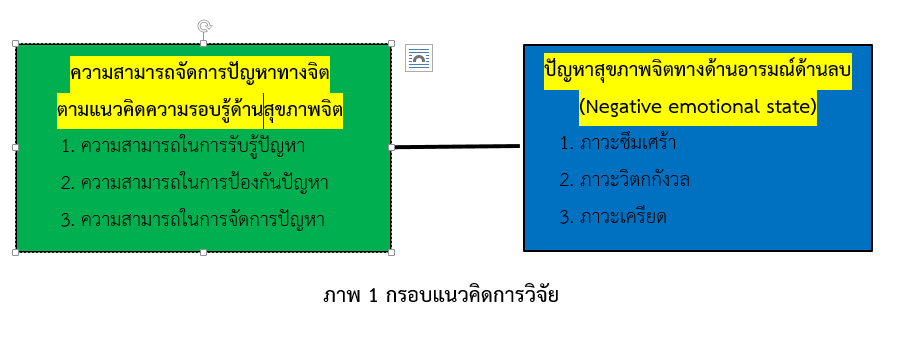
การวิจัยนี้เป็นงานวิจัยภาคตัดขวาง มีวัตถุประสงค์เพื่อศึกษาความสัมพันธ์ระหว่างความสามารถจัดการปัญหาทางจิตกับปัญหาสุขภาพจิตทางด้านอารมณ์ด้านลบของประชาชนวัยทำงานในชุมชน อำเภองาว จังหวัดลำปาง เก็บข้อมูลระหว่างเดือนพฤษภาคม – มิถุนายน พ.ศ. 2563 กลุ่มตัวอย่าง ได้แก่ ประชากรวัยทำงาน จำนวน 348 คน โดยการสุ่มตัวอย่างอย่างง่าย เครื่องมือวิจัยประกอบด้วย แบบประเมินความสามารถจัดการปัญหาทางจิตและการจัดการปัญหาทางจิต มีค่าความเชื่อมั่นของแบบประเมินเท่ากับ 0.88 และแบบประเมินปัญหาสุขภาพจิตทางด้านอารมณ์ด้านลบ มีค่าความเชื่อมั่น เท่ากับ 0.75 วิเคราะห์ข้อมูลโดยใช้สถิติเชิงพรรณนา และวิเคราะห์ค่าสัมประสิทธิ์สหสัมพันธ์แบบสเปียร์แมน
ผลการวิจัยพบว่า ประชากรวัยทำงานมีความชุกทางภาวะซึมเศร้า ร้อยละ 24.14 ภาวะวิตกกังวล ร้อยละ 33.91 และความเครียด ร้อยละ 10.06 ส่วนใหญ่ ร้อยละ 57.47 มีความสามารถจัดการปัญหาสุขภาพจิต อยู่ในระดับดี เมื่อศึกษาความสัมพันธ์ พบว่า ความสามารถจัดการปัญหาทางจิตในภาพรวมกับภาวะซึมเศร้าและความวิตกกังวล มีความสัมพันธ์กันในทางลบอยู่ในระดับต่ำมาก เมื่อพิจารณารายตัวแปร พบว่า การรับรู้ปัญหามีความสัมพันธ์กันในทางลบอยู่ในระดับต่ำกับอารมณ์ด้านลบทั้ง 3 ด้าน ส่วนการจัดการปัญหามีความสัมพันธ์กันในทางลบอยู่ในระดับต่ำกับภาวะซึมเศร้าและภาวะเครียด อย่างมีนัยสำคัญทางสถิติที่ 0.01
จากผลการศึกษา การส่งเสริมให้ประชาชนมีความสามารถในการประเมินการรับรู้ภาวะสุขภาพจิตของตนเองเมื่อเริ่มมีปัญหาสุขภาพจิต จะนำไปสู่การหาวิธีจัดการปัญหาและลดการเกิดภาวะซึมเศร้า วิตกกังวลและความเครียดได้
เอกสารอ้างอิง
Bartz, A. E. (1999). Basic Statistical Concepts: Merrill.
Bovopoulos, N., Jorm, A. F., Bond, K. S., Lamontagne, A. D., Reavley, N. J., & Kelly, C. M., et al. (2016). Providing Mental
Health First Aid in the Workplace: A Delphi Consensus Study. BMC Psychology, 4(1). https://doi:10.1186/s40359-
-0148-x.
Dahlberg, K. M., Waern, M., & Runeson, B. (2008). Mental Health Literacy and Attitudes in a Swedish Community
sample – Investigating the Role of Personal Experience of Mental Health Care. BMC Public Health, 8(1), 8.
https://doi:10.1186/1471-2458-8-8.
Farrer, L., Leach, L., Griffiths, K., Christensen, H., & Jorm, A. (2008). Age Differences in Mental Health Literacy. BMC
Public Health, 8, 125. https://doi:10.1186/1471-2458-8-125.
Ganasen, K. A., Parker, S., Hugo, C. J., Stein, D. J., Emsley, R. A., & Seedat, S. (2008). Mental Health Literacy: Focus on
Developing Countries. African Journal of Psychiatry, 11(1), 23-8. https://doi:10.4314/ajpsyv11i1. 30251.
GBD 2019 Mental Disorders Collaborators. (2022). Global, Regional, and National Burden of 12 Mental Disorders in
Countries and Territories, 1990–2019: A Systematic Analysis for the Global Burden of Disease Study 2019.
The Lancet Psychiatry, 9, 137-50.
Inchaithep, S., Punsawat, M., & Nuntana, P. (2018, November 8-10). Mental Health Literacy Among People In
Lampang Province, Thailand. In The 6th Asian Academic Society International Conference (AASIC) A
Transformative Community: Asia in Dynamism, Innovation, and Globalization. Mae Fah Luang University,
Chiangrai.
Jorm, A. F. (2000). Mental Health Literacy. British Journal of Psychiatry, 177(5), 396-401.
https://doi:10.1192/bjp.177.5.396.
Jorm, A. F., Korten, A. E., Jacomb, P. A., Christensen, H., Rodgers, B., & Pollitt, P. (1997). Mental Health Literacy: A
Survey of the Public's Ability to Recognise Mental Disorders and Their Beliefs About the Effectiveness of
Treatment. The Medical journal of Australia, 166(4), 182-186. https://doi:10.5694/j.1326-5377.1997.tb140071.
Jorm, A. F. (2012). Mental Health Literacy: Empowering the Community to Take Action for Better Mental Health.
American Psychologist, 67(3), 231-243. https://doi:10.1037/a0025957.
Kaewprom, C, Yuthavisut, S, Pratoom, L, & Boontum, A. (2014). Mental Health Literacy Among Village Health Workers
A Case Study of Two Sub-districts in Kloong, Chantaburi. Journal of health science research, 8(1), 10-16.
Komwong, D., Prasanthanakul, J., Wongwan, T., & Phanasathit, M. (2021). Preventive Behaviors and Mental Health
Problems of Population during the First Wave COVID-19 Pandemic: A Case Study of Health Region 1-2, Northern
Thailand. Lanna public health journal, 17(2), 1-13.
Lam, L. T. (2014). Mental Health Literacy and Mental Health Status in Adolescents: A Population Based Survey. Child
and Adolescent Psychiatry and Mental Health, 8(1), 26. https://doi:10.1186/1753-2000-8-26.
Madalyn, M., Henny, W., & Group, M. M. R. (2012). Mental Health Literacy in Canadian Young Adults: Results of a
National Survey. Canadian Journal of Community Mental Health, 31(1), 1-15. https://doi:10.7870/cjcmh-2012-
Oei, T. P., Sawang, S., Goh, Y. W., & Mukhtar, F. (2013). Using the Depression Anxiety Stress Scale 21(DASS-21) Across
Cultures. Int J Psychol, 48(6), 1018-1029. https://doi:10.1080/00207594. 2012.755535
Sooksompong, S., Kwansanit, P., Supanya, S., Chutha, W., Kittirattanapaiboon, P. & Udomittipong, D., et al. (2016).
The Thai National Mental Health Survey 2013: Prevalence of Mental Disorders in Megacities: Bangkok. Journal of
the Psychiatric Association of Thailand, 61(1), 75-88.
Thangkratok, P. (2020). Mental Health Literacy: Concept and Application for Mental Health Problem Prevention in
Older Adults. Chiang Mai Medical Journal, 59(3), 163-172.
Too, L. S., Spittal, M. J., Bugeja, L., Reifels, L., Butterworth, P., & Pirkis, J. (2019). The Association Between Mental
Disorders and Suicide: A Systematic Review and Meta-analysis of Record Linkage Studies. J Affect Disord, 259,
-313. https://doi:10.1016/j.jad.2019.08.054.
Venkataraman, S., Patil, R., & Balasundaram, S. (2019). Why Mental Health Literacy Still Matters: A Review.
International Journal Of Community Medicine And Public Health, 6(6), 2723. https://doi:10.18203/2394-
ijcmph20192350.
White, M., & Casey, L. (2017). Helping Older Adults to Help Themselves: The Role of Mental Health Literacy in Family
Members. Aging & Mental Health, 21(11), 1129-1137. https://doi:10.1080/ 13607863.2016.1206513.
Yu, Y., Liu, Z. W., Hu, M., Liu, X.G., Liu, H. M., & Yang, J., et al. (2015). Assessment of Mental Health Literacy Using a
Multifaceted Measure Among a Chinese Rural Population. BMJ Open, 5(10), e009054.
https://doi:10.1136/bmjopen-2015-00905.
ดาวน์โหลด
เผยแพร่แล้ว
รูปแบบการอ้างอิง
ฉบับ
ประเภทบทความ
สัญญาอนุญาต
ลิขสิทธิ์ (c) 2022 วิทยาลัยพยาบาลบรมราชชนนี นครศรีธรรมราช

อนุญาตภายใต้เงื่อนไข Creative Commons Attribution-NonCommercial-NoDerivatives 4.0 International License.
บทความที่ได้รับการตีพิมพ์เป็นลิขสิทธิ์ของ วิทยาลัยพยาบาลบรมราชชนนี นครศรีธรรมราช
ข้อความที่ปรากฏในบทความแต่ละเรื่องในวารสารวิชาการเล่มนี้เป็นความคิดเห็นส่วนตัวของผู้เขียนแต่ละท่านไม่เกี่ยวข้องกับวิทยาลัยพยาบาลบรมราชชนนี นครศรีธรรมราช และบุคคลากรท่านอื่น ๆ ในวิทยาลัยฯ แต่อย่างใด ความรับผิดชอบองค์ประกอบทั้งหมดของบทความแต่ละเรื่องเป็นของผู้เขียนแต่ละท่าน หากมีความผิดพลาดใดๆ ผู้เขียนแต่ละท่านจะรับผิดชอบบทความของตนเองแต่ผู้เดียว