ความรอบรู้ด้านสุขภาพ และปัจจัยที่มีความสัมพันธ์กับพฤติกรรมการป้องกันและเฝ้าระวัง โรคเรื้อนของอาสาสมัครสาธารณสุขประจำหมู่บ้านในพื้นที่มีข้อบ่งชี้ทางระบาดวิทยาโรคเรื้อน เขตสุขภาพที่ 11
คำสำคัญ:
ความรอบรู้ด้านสุขภาพ, พฤติกรรมการป้องกันโรค, โรคเรื้อน, อาสาสมัครสาธารณสุขประจำหมู่บ้านบทคัดย่อ
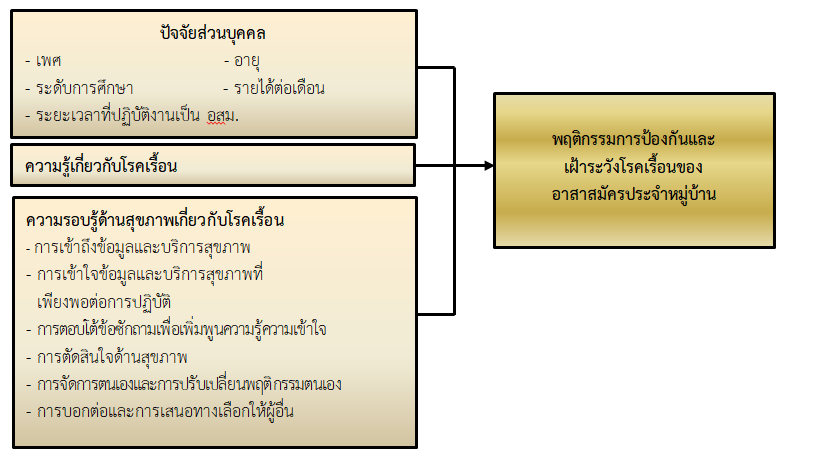
การวิจัยสำรวจภาคตัดขวางเชิงวิเคราะห์มีวัตถุประสงค์เพื่อศึกษา 1) ระดับความรอบรู้ด้านสุขภาพเกี่ยวกับโรคเรื้อน 2) ระดับพฤติกรรมการป้องกันและเฝ้าระวังโรคเรื้อน และ 3) ปัจจัยที่มีความสัมพันธ์กับพฤติกรรมการป้องกันและเฝ้าระวังโรคเรื้อนของอาสาสมัครสาธารณสุขประจำหมู่บ้าน ในพื้นที่มีข้อบ่งชี้ทางระบาดวิทยาโรคเรื้อน เขตสุขภาพที่ 11 กลุ่มตัวอย่างที่ศึกษาเป็น อสม. จำนวน 176 คน คัดเลือกกลุ่มตัวอย่างแบบสุ่มอย่างง่าย โดยการหยิบฉลากโดยไม่คืนที่ เครื่องมือที่ใช้เป็นแบบสอบถามที่ผู้วิจัยพัฒนาขึ้น มีค่า IOC เท่ากับ 0.67 – 1.00 ทดสอบค่าความเที่ยง KR-20 ความรู้โรคเรื้อน เท่ากับ 0.75 ความรอบรู้ด้านสุขภาพเกี่ยวกับโรคเรื้อน มีค่าความเชื่อมั่นสัมประสิทธิ์แอลฟ่าของครอนบาคเท่ากับ 0.96 และพฤติกรรมการป้องกันและเฝ้าระวังโรคเรื้อน เท่ากับ 0.79 วิเคราะห์ข้อมูลใช้สถิติ ร้อยละ ค่าเฉลี่ย ส่วนเบี่ยงเบนมาตรฐาน ค่าต่ำสุด และค่าสูงสุด และวิธีวิเคราะห์สมการถดถอยพหุคูณ
ผลการวิจัย พบว่า ความรอบรู้ด้านสุขภาพเกี่ยวกับโรคเรื้อน ของอาสาสมัครสาธารณสุขประจำหมู่บ้านส่วนใหญ่อยู่ในระดับดี (ร้อยละ 65.91) พฤติกรรมการป้องกันและเฝ้าระวังโรคเรื้อนของอาสาสมัครสาธารณสุขประจำหมู่บ้านส่วนใหญ่อยู่ในระดับไม่ดี (ร้อยละ 53.41) และปัจจัยที่มีความสัมพันธ์กับพฤติกรรมการป้องกันและเฝ้าระวังโรคเรื้อนอย่างมีนัยสำคัญทางสถิติ (p-value < 0.05) ได้แก่ ความรู้โรคเรื้อน (aOR= 1.89, 95%CI= 1.03 - 3.48) ความรอบรู้ด้านสุขภาพเกี่ยวกับโรคเรื้อน ด้านการเข้าถึงข้อมูลและบริการสุขภาพ (aOR= 2.64, 95%CI= 1.40 - 4.97) ด้านการโต้ตอบซักถามเพื่อเพิ่มความรู้ความเข้าใจ (aOR= 3.64, 95%CI= 1.69 -7.83) และด้านการตัดสินใจด้านสุขภาพ (aOR= 3.04, 95%CI= 1.41 - 6.55)
ข้อเสนอแนะ ควรอบรมฟื้นฟูความรู้โรคเรื้อนให้ อสม. โดยเน้นความรู้ในเรื่องการคัดกรองและ
การวินิจฉัยอาการเบื้องต้นของโรคเรื้อน เพื่อให้สามารถ ตรวจคัดกรองอาการเบื้องต้น ให้คำแนะนำ และส่งต่อเพื่อการตรวจวินิจฉัยเมื่อพบผู้สงสัยโรคเรื้อนในชุมชนได้ และจัดกิจกรรมส่งเสริมกระบวนการสร้างเสริมความรอบรู้ด้านสุขภาพเกี่ยวกับโรคเรื้อนให้แก่ อสม. ที่อยู่ในพื้นที่ที่มีข้อบ่งชี้ทางระบาดวิทยาโรคเรื้อน โดยเน้นทักษะด้านการเข้าถึงข้อมูลและบริการสุขภาพ การโต้ตอบซักถามเพื่อเพิ่มความรู้ความเข้าใจ และการตัดสินใจด้านสุขภาพ เพื่อให้ อสม. มีพฤติกรรมการป้องกันตนเองและเฝ้าระวังโรคเรื้อนในชุมชนได้ดียิ่งขึ้น
เอกสารอ้างอิง
Becker, M. H. (1990). Theoretical model of adherence and strategies for improvingadherence, In Shumaker, S. A., Schron, E. B., & Ockene, J. K. (Eds.). The hand book of health behavior change. New York: Springer Publishing.
Chotikawanitchakul, O., Pensuk, P., Nachairittiwong, S., & Unaratt, A. (2021). Health literacy and liver fluke prevention behaviors among secondary students in the secondary educational service area office region 9. Department of Health Service Support Journal, 17(1), 35-44.
Darun, P. & Khunpijan, N. (2016). Factors affecting health literacy and health behavior outcomes of working-age population in Porncharoen district, Bueng Kan province. Development of Communicable Disease Control Unit at District Level of Health Region 9, 22(1), 14-24.
Dee-mak, N. (2004). Factors related to leprosy prevention and control behaviors of people in Sampaniang subdistrict, Ban Phraek district, Phra Nakhon Si Ayutthaya province. Master of science program in health education. (in Thai)
Green, L. W. & Kreuter, M. W. (1992). CDC's planned approach to community health as an application of PRECEDE and an inspiration for PROCEED. Journal of Health Education, 23(3), 140-147.
Health Education Division. (2019). Health education program for promoting health literacy: community tuberculosis prevention for community health volunteers and people of working age. Nontaburi: Ministry of Public Health. (in Thai)
Krejcie, R. V. & Morgan, D. W. (1970). Determining sample size for research activities. Educational and Psychological Measurement, 30(3), 607- 610.
Ngasaengsai, P., Sornsiyon, P., & Pattharabenjaphon, S. (2014). A case study of health literacy of village health volunteers. Isan Journal of Pharmaceutical Sciences, 9(Supplement), 82-87.
Noordeen, S. K. (1995). Elimination of leprosy as a public health problem: progress and prospects. Bulletin of the World Health Organization, 73(1), 1-6.
Office of Disease Prevention and Control, Region 11. (2020). Summary of the leprosy control performance report for the fiscal year 2020. Region 11. (in Thai)
Rajapracha Samasai Institute, Department of Disease Control. (2013). Guidelines for screening of leprosy. Printing House of the National Bureau of Buddhism. (in Thai)
Rajapracha Samasai Institute, Department of Disease Control. (2021). Situation of leprosy in Thailand in 2021. Retrieved May 16, 2022, from http://www.thaileprosy.ddc.moph.
Sales, A. M., Leon, A. P. D., Duppre, N. C., Hacker, M. A., Nery, J. A. C., Sarno, E. N., et al. (2011). Leprosy among patient contacts: a multilevel study of risk factors. PLOS Neglected Tropical Disease, 5(3), 1-6.
Santhikarn, P., Tongsamsi, I., & Tansakun, K. (2019). Self protective behavior of leprosy family members in Narathiwat province. Princess of Naradhiwas Vniversity Journal, 11(3), 29-40.
Sueamak, P. (2011). Factors related to surveillance, prevention, and control avian influenza among village health volunteers in Muang district, Suratthani province. Journal of Yala Rajabhat University, 6(2), 150-60.
Tachavijitjaru, C., Srisuphonkornkun, A., & Changtet, S. (2018). Selected factors related to health intelligence of village health volunteers. Journal of the Royal Thai Army Nurses, 19(Supplement), 320-32.
Techaumuauywit, A. (2009). Self-care and factors related to self-care of older persons with leprosy. Master of nursing science thesis in gerontological nursing, graduated school, Khon Kaen University. (in Thai)
Thianthavorn, V. & Chitiang, N. (2021). Relationship between health literacy and behaviors to prevent COVID-19 among university students. Thai Journal of Public Health and Health Sciences, 4(2), 126-137.
Thongoiam, Y. (2016). Health status, health literacy and health behavior in eating and exercise of national housing authority in Bangkapi district, to attend 3 steps healthy NHA 2015 project. Journal of Department of Health Service Support. 2(1), 38-45.
Visanuyothin, S., Chatanuluk, C., Saengsuwan, S., Rojanavarapong, A., & Pornchanya, P. (2015). Health literacy of village health volunteer in Municipalitiy, Nakhonratchasima, Thailand. Journal of Public Health and Development, 13(1), 37-54.
ดาวน์โหลด
เผยแพร่แล้ว
รูปแบบการอ้างอิง
ฉบับ
ประเภทบทความ
สัญญาอนุญาต
ลิขสิทธิ์ (c) 2023 วิทยาลัยพยาบาลบรมราชชนนี นครศรีธรรมราช

อนุญาตภายใต้เงื่อนไข Creative Commons Attribution-NonCommercial-NoDerivatives 4.0 International License.
บทความที่ได้รับการตีพิมพ์เป็นลิขสิทธิ์ของ วิทยาลัยพยาบาลบรมราชชนนี นครศรีธรรมราช
ข้อความที่ปรากฏในบทความแต่ละเรื่องในวารสารวิชาการเล่มนี้เป็นความคิดเห็นส่วนตัวของผู้เขียนแต่ละท่านไม่เกี่ยวข้องกับวิทยาลัยพยาบาลบรมราชชนนี นครศรีธรรมราช และบุคคลากรท่านอื่น ๆ ในวิทยาลัยฯ แต่อย่างใด ความรับผิดชอบองค์ประกอบทั้งหมดของบทความแต่ละเรื่องเป็นของผู้เขียนแต่ละท่าน หากมีความผิดพลาดใดๆ ผู้เขียนแต่ละท่านจะรับผิดชอบบทความของตนเองแต่ผู้เดียว